RESEARCH
“A system is never the sum of its parts, it’s the product of their interactions” – Russell Ackoff
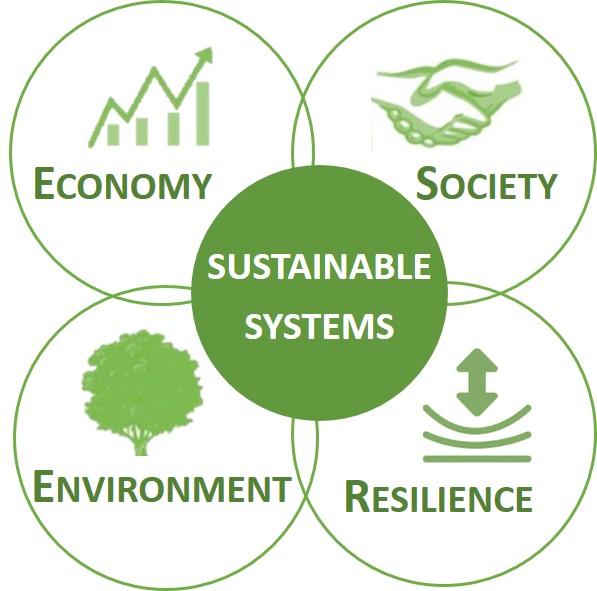
Millions of years of research and development have resulted in many brilliant biological solutions to human problems. While bio-inspired product designs are becoming more common using inspiration from nature for networks/systems design is still relatively rare. The methods by which biotic systems reach their environmentally sustainable state and their ability to survive unexpected disturbances, we in the Bio-inspired Systems Lab (BiSSL) hypothesize can support engineering systems. The events of the last few decades have shown a worrying increase in major environmental/social/health disruptions. The solutions that are desperately needed require a comprehensive systems approach, which thereby raises the level of design complexity e.g. the product’s design is formed in conjunction with its logistical systems and reuse possibilities, while factoring in flexibility for disruptions. A framework for such a systems-based approach to balance sustainability and resilience goals is needed.

The work in our group has demonstrated that biological ecosystem characteristics can lead to sustainability AND resilience improvements at multiple system scales. The specific aim of the research done in our group is to provide solutions to engineering systems problems that result in cost savings, increased efficiency and resilience, and reductions of environmental burdens. Our goal is to move ideas from biology to human systems design in such a way that they become real, implementable design tools and guidelines. We have a track record of design-focused research that addresses sustainability & resilience needs for human systems such as power grids, water distribution networks, supply chains, systems of systems (SoS), cyber-physical systems, industrial resource networks, net zero communities, and the circular economy. Our results support the view that these goals don’t need to be achieved at the expense of each other: i.e. you can have it all!
Current Projects
We are a computational design lab. A summary of the general principles of our work – using biological inspiration at a systems level to solve systems-level problems in engineering – can be found in this video
Resilient Systems & Systems of Systems

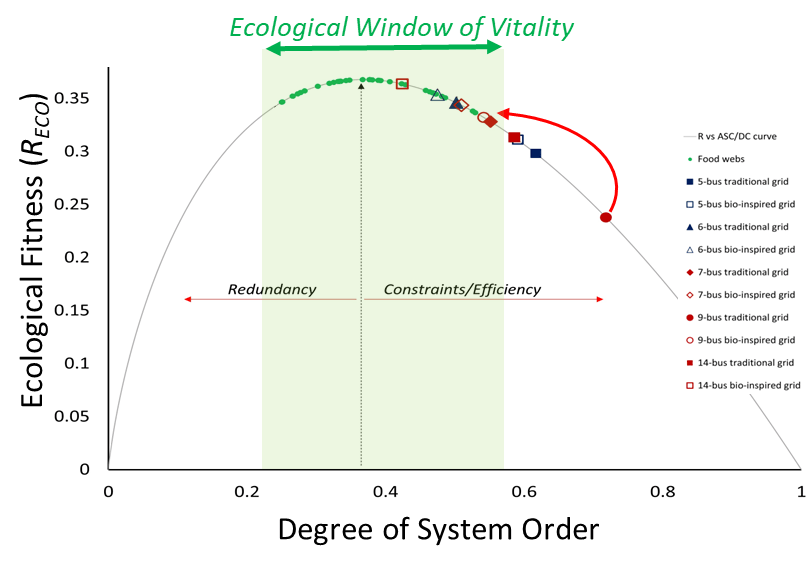
You can learn more about our bio-inspired systems of systems work, partially funded by the U.S. Systems Engineering Research Center (SERC), in their article “Ecology-Inspired Techniques for Resilient Design of Systems of Systems” (March 29, 2022).
Our bio-inspired resilient system design work is supported by the National Science Foundation and Layton’s CAREER grant “Resilient Engineering Systems Design Via Early-Stage Bio-Inspiration.”
Resilient Power Grids, Water Networks, Supply Chains, & Cyber-Physical Systems

You can hear about applying bio-inspired design to improve the resilience of power grids with Texas A&M Engineering’s podcast SoundBytes Season 1 Episode 29. It was also featured with ASME “How the Food Web Can Keep the Electricity Flowing” (Sep 29, 2020 by Jean Thilmany) and “How Food Webs May Improve Electric Grids” (Dec 5, 2022 by Michael Abrams), as well as Texas A&M’s College of Engineering “Pursuing greater resilience through nature-inspired power grids.”
This work started with a seed grant from Texas A&M University’s Energy Institute and is partially supported by funding and a collaboration with Sandia National Lab that is looking at cyber-physical power systems and a grant by the DOE.
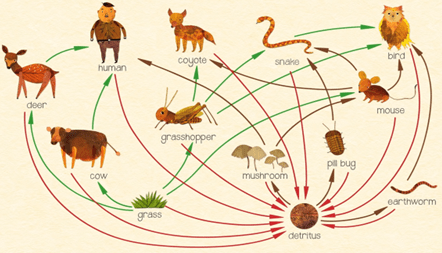
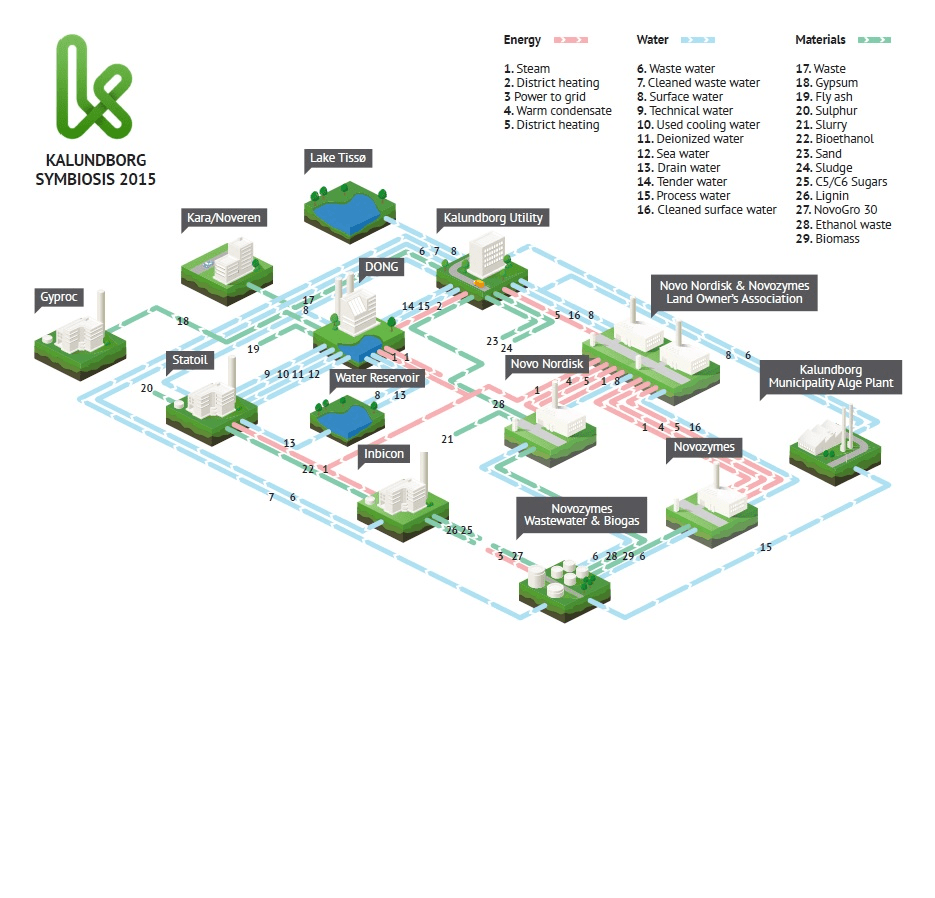
You can learn about how inspiration from the way ecological food webs function is helping to suggest route for improving our recycling/reuse/waste economy (also known as Circular Economy) with Texas A&M Engineering’s podcast SoundBytes Season 1 Episode 28.
You can learn more about our search to define sustainability-supporting design guidelines using biological food webs in Texas A&M Engineering News’ article “Following nature’s cue, researchers build successful, sustainable industrial networks” by Vandana Suresh (April 26, 2021)
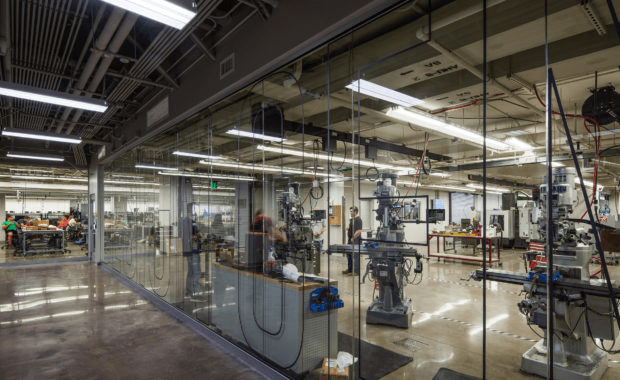
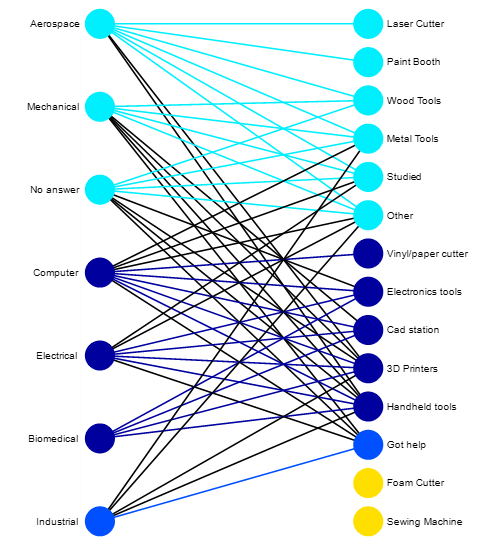
Inspiration from mutualistic networks in nature (plant-pollinator networks for example) are being used to better model and understand engineering makerspaces. The student-tool network models enable us to see the impact of different tools on student usage patterns and on the resilience of the makerspace to changes (such as with COVID-19). This work is funded by the National Science Foundation and more information can be found here.

The National Science Foundation’s Innovation Corps (I-Corps) program supports researchers in their entrepreneurial journeys. We are studying how participants’ networks grow change through the program, finding quantitative characteristics linked to entrepreneurial success.
The Bio-Inspired Engineering Design Process

Our success with applying bio-inspired design approaches to human engineered systems has made us interested in how to best support engineers in the use of bio-inspired design approaches for other problems. We’re looking to understand how biological information can be made more accessible for both inspiring novel engineering ideas and translation into technical functions.
Collaborators:
Dr. Rich Malak, Department of Mechanical Engineering, Texas A&M University
Dr. Ahmed Ali, Department of Architecture, Texas A&M University
Dr. Kate Davis, Department of Electrical & Computer Engineering, Texas A&M University
Dr. Kirk Winemiller, Department of Wildlife and Fisheries Science, Texas A&M University
Dr. Stewart Borrett, Department of Biology and Marine Biology, University of North Carolina Wilmington
Dr. John Reap, Department of Mechanical Engineering, Quinnipiac University
Dr. Julie Linsey, Department of Mechanical Engineering, Georgia Institute of Technology
Dr. Cynthia Hipwell, Department of Mechanical Engineering, Texas A&M University
Dr. Daniel McAdams, Department of Mechanical Engineering, Texas A&M University
Dr. Weiling He, Department of Architecture, Texas A&M University
Dr. Robert Puckett, Department of Entomology, Texas A&M University
Dr. Adam Rosenthal, Department of International Studies, Texas A&M University
Dr. Helen Reed, Department of Aerospace Engineering, Texas A&M University
Dr. Zhenxing Feng, Department of Chemical, Biological, and Environmental Engineering, Oregon State University
Dr. Kelsey Stoerzinger, Department of Chemical Engineering and Materials Science, University of Minnesota
Dr. Chih-hung (Alex) Chang, Department of Chemical, Biological, and Environmental Engineering, Oregon State University
Dr. Matt Kammer-Kerwick, Bureau of Business Research at the IC2 Institute, University of Texas at Austin
Dr. Murat Erkoc, Department of Industrial Engineering, University of Miami
Dr. Rusty Feagin, Department of Ecology and Conservation Biology, Texas A&M University
Dr. Burcu Salgin, Department of Architecture, Erciyes University
Dr. Shamina Hossain-McKenzie, Sandia National Laboratory
 BiSSL: Bio-inspired Systems Lab