Engineering design in the J. Mike Walker ’66 Department of Mechanical Engineering encompasses the state-of-the-art in how engineers design for now and the future, producing award winning research across a wide breadth of engineering design areas. The research groups in design include undergraduate, masters, and Ph.D. students, as well as post docs and research scientists. Reach out to specific faculty if you are interested.

High-Level Categorization of Research Themes:
| Group | Core Themes | Keywords |
|---|---|---|
1. BiSSL  | Bio-inspired systems, sustainability, resilience | Nature-inspired, network design & analysis |
2. DIGIT  | AI for engineering design | AI/ML, automation, ideation |
3. DSL  | Complex systems & optimization | Systems engineering, uncertainty, optimization |
4. PROSE  | Concept generation & early-stage design | Biomimicry, universal design, ideation |
5. CDL  | Computational tools for aerospace, materials | UAVs, analytics, materials, ML |
6. MIDL  | Human-computer interaction in design | CAD, AI, creativity, digital design |
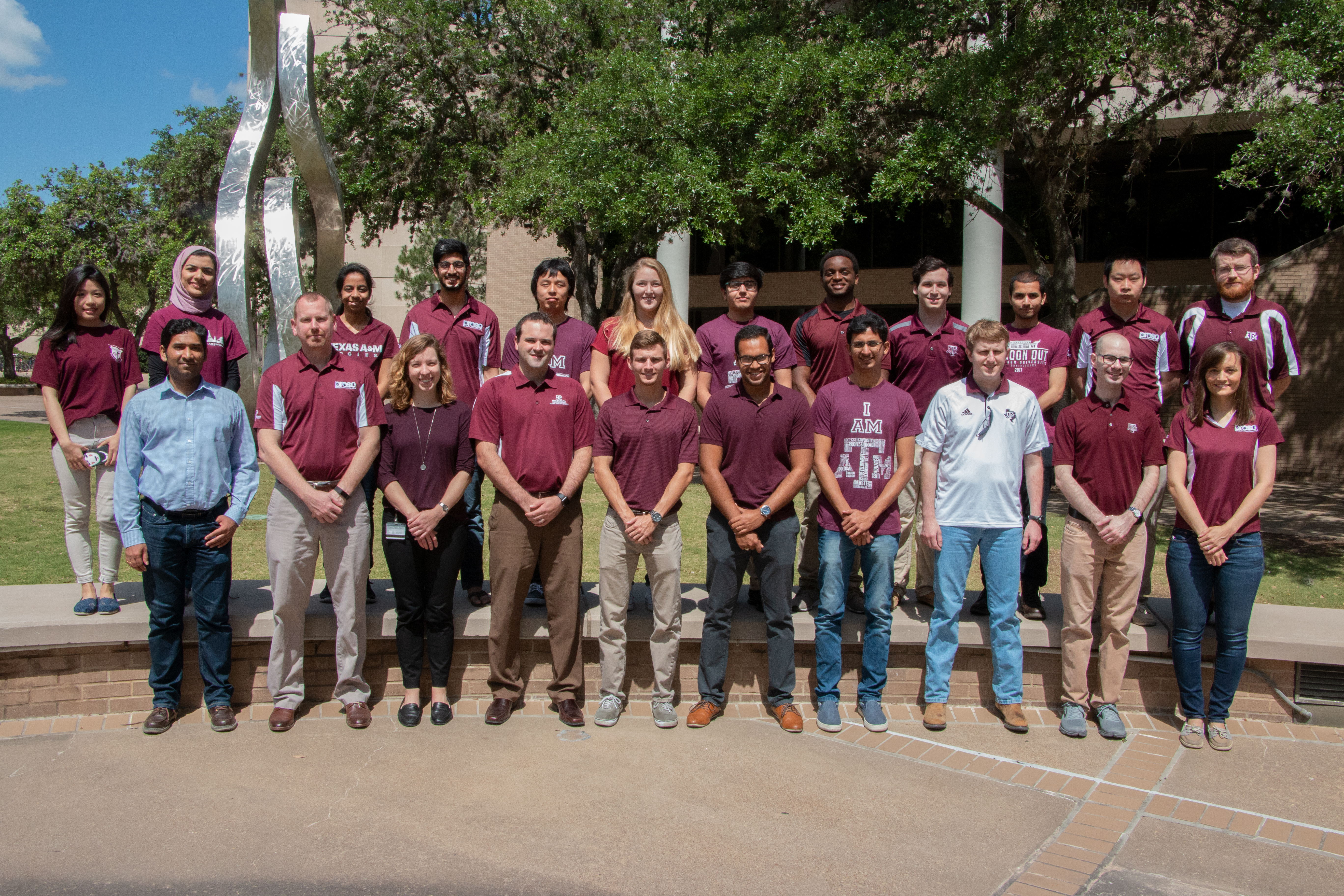
These groups together (along with some other groups in mechanical and aerospace engineering) form the Engineering Systems Design Group (ESD). We have biweekly group meetings in the fall and spring, hosting seminar speakers and events that help out our students! Past events/speakers have included:
- Student conference and thesis presentations
- 2026 Victor Gongora, Graduate and Professional School project coordinator, “Developing Your Research Elevator Pitch” workshop
- 2026 Dr. Leah Chong, Assistant Professor at UT Austin, seminar about the impact AI has on designers’ trust and decision making “Towards AI-Assisted Design that Works”
- 2026 University Writing Center, “Oral Presentation Skills” workshop
- 2026 Dr. Wei Chen, AI workshop/discussion/debate
- 2025 Dr. Jacquelyn Nagel, bio-inspired design expert, speaking about her career trajectory from academia as a full professor back to industry – seminar “Career Transitions Post Ph.D.”
- 2025 Dr. Sharli Kerns, science communication writer and specialist
- 2025 Dr. Andrew Schulz, post doc at the Max Planck Institute for Intelligent Systems, seminar “Neurodivergent Researchers, Living Abroad, and Elephant Bio-Inspiration”
- 2025 Dr. Phil Lasley, Division Head & Research Scientist at the Data Science & Visualization in the Texas A&M Transportation Institute (TTI), seminar “Good Visuals”
- 2023 Dr. Zhenghui Sha, Assistant Professor at UT Austin
- 2023 Dr. Blane Finningim, at the Manufacturing Demonstration Facility at ORNL
- 2020/2026 Dr. Vinayak Krishnamurthy, “Visual Communications in Research” workshop
- 2020 Dr. Daniel McAdams, writing a paper workshop
- 2020 Dr. Rich Malak, proposal idea generation workshop
- 2020 breakout discussions on AI in design, uncertainty
- 2020 Dr. Mark Fuge, Assistant Professor at University of Maryland, seminar “Lost in Space: Design Manifolds Can Accelerate Design and Optimization Iterations Several Fold”
Design Research Labs in Mechanical Engineering Include:
Bio-inspired SystemS Lab (BiSSL)

BiSSL uses biological inspiration to design and analyze systems for sustainability + resilience. Develop advanced techniques for extracting quantitative design guidance from nature’s systems, improving how we design/modify/understand our human engineered systems such as industrial resource networks, power grids, water distribution networks, supply chains, makerspaces, innovation processes, waste networks, and green buildings with Dr. Astrid Layton.
Design Innovation & Generative Intelligence (DIGIT) Lab
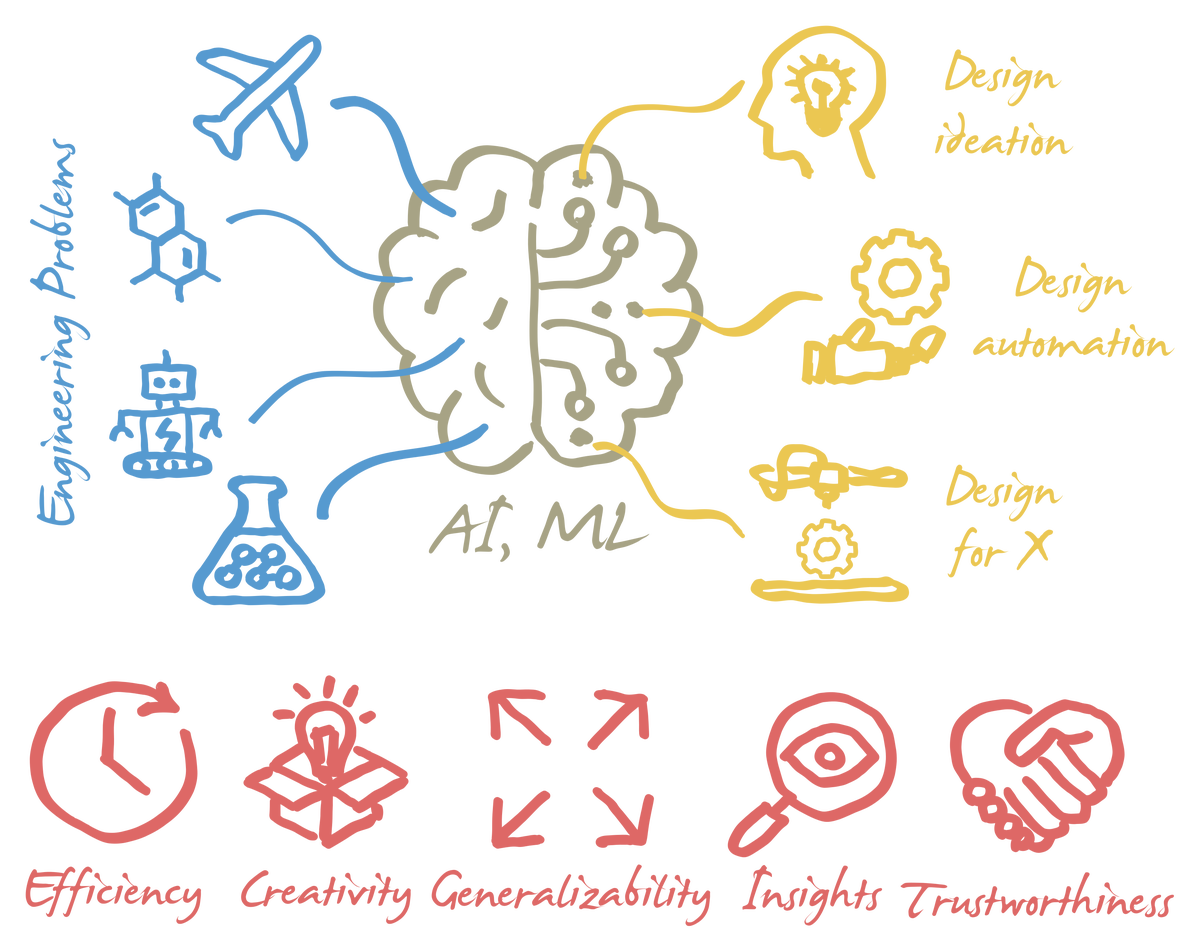
DIGIT studies how AI can design better materials, structures, and machines. Develop advanced AI and machine learning methods for engineering design, targeting some of today’s most challenging problems in design ideation, design automation, and design for X with Dr. Wei Chen.
Design Systems Lab (DSL)

Discover, study, and demonstrate new ways in which engineers can design complex systems. Research includes design optimization of structures involving active material elements, game-based techniques for evaluating systems engineering methods, and modeling the uncertain evolution of component technologies to support system-level decision making with Dr. Rich Malak.
PROduct Synthesis Engineering Laboratory (PROSE)

PROSE helps engineers during the initial design phases and develops design methods to facilitate concept generation for specific types of product spaces, such as biomimetic and universal product concepts with Dr. Dan McAdams.
Computational Design Laboratory (CDL)
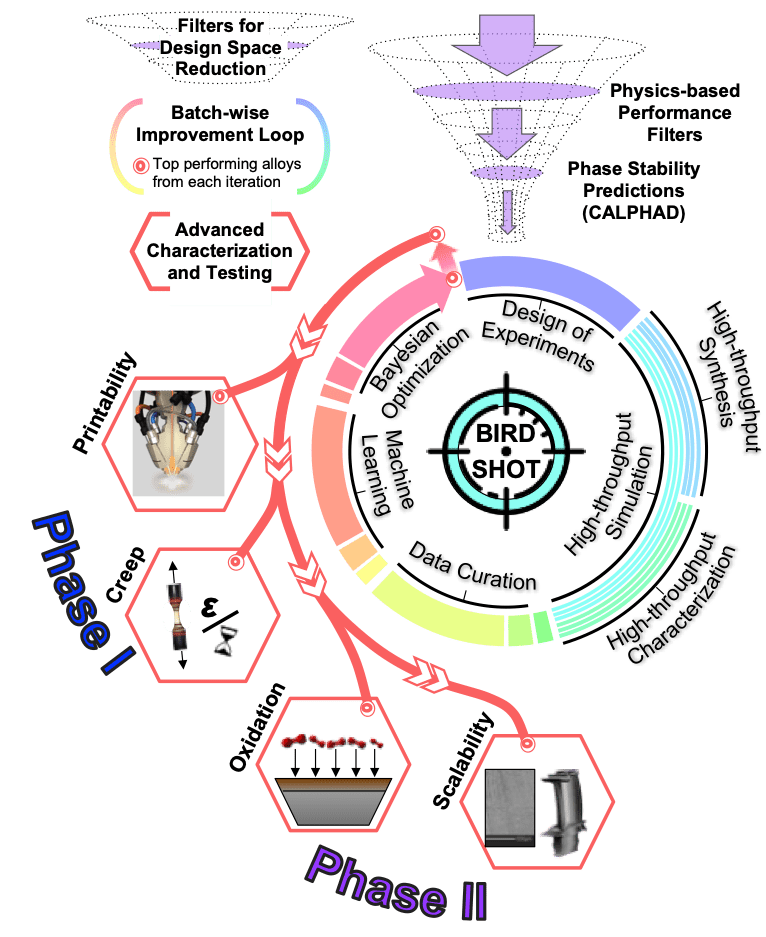
CDL focuses on advancing fundamental computational methodology for the design, analysis, and operation of complex engineered systems and to address challenges in enabling self-aware unmanned aerial vehicles and their use within intelligent sensor swarms, exploiting the breadth of available information sources for conceptual design of advanced aircraft, predictive analytics for gas turbine engines using machine learning, and the autonomous design and discovery of materials and material systems with Dr. Doug Allaire.
Mixed Initiative Design Lab (MIDL)

Develop novel computational frameworks for the representation, presentation, and manipulation of information pertaining to the design of digital and physical artifacts. At the intersection of computer-aided product design, human-computer interaction, and artificial intelligence our overarching goal is to augment human expression and creativity in product, industrial, and engineering design with Dr. Vinayak Krishnamurthy.
Design Faculty in Mechanical Engineering Include:
Dr. Astrid Layton
Associate Professor
Donna Walker Faculty Fellow
Dr. Vinayak Krishnamurthy
Associate Professor
J. Mike Walker ’66 Career Development Professor
Dr. Douglas Allaire
Associate Professor
Sallie and Don Davis ’61 Faculty Fellow
Dr. Daniel McAdams
Professor
Robert H. Fletcher Professor
Dr. Richard Malak
Professor
Associate Department Head for Graduate Programs
Dr. Wei Chen
Assistant Professor

Recent awards from the A&M MEEN Design Labs include…
2026
- TAMU College of Engineering Engineering Research Excellence Award Early-Career Level was awarded to Dr. Astrid Layton
- Dr. Richard Malak was awarded the G. Paul Pepper ’54 Professorship
2025
- ASME Design Theory & Methodology (DTM) Early Career Award from the Design Theory & Methodology technical committee was awarded to Dr. Astrid Layton. The award was given “For exemplary early-career contributions to research, education, and service in Design Theory and Methodology, advancing knowledge of bio-inspired network-based approaches to sustainability, resilience, and complex systems in engineering design.”
- ASME JCISE Associate Editor of the Year awarded to Dr. Vinayak Krishnamurthy
- TAMU 3 Minute Thesis Ph.D. Finalist went to Dr. Layton’s Ph.D. student Pepito Thelly
2024
- NSF CAREER Award from the Engineering Design and Systems Engineering (EDSE) division at NSF was awarded to Dr. Astrid Layton. The 5-year long award is for the grant titled “CAREER: Resilient Engineering Systems Design Via Early-Stage Bio-Inspiration.” NSF CAREER Awards, part of the NSF Faculty Early Career Development Program, are the most prestigious awards in support of early-career faculty who have the potential to serve as academic role models in research and education and to lead advances in the mission of their department or organization. Read more here.
- ASME IDETC-CIE Best Paper from the Advanced Vehicle Technologies Technical Committee was awarded to MIDL for “A Geometrico-Statistical Representation for Off-Road Environments Captured by LiDAR.”
- ASME Fellow was awarded to Dr. Doug Allaire
2023
- ASME IDETC-CIE Best Paper from the Computer-Aided Product and Process Development (CAPPD) Technical Committee was awarded to MIDL for their paper on generative design of self-similar structures.
- ASME IDETC-CIE Best Design Tool Showcase Award was awarded to MIDL for their demo on augmented reality for real-time machine diagnostics.
2022
- ASME IDETC-CIE Best Paper from the Computer-Aided Product and Process Development (CAPPD) Technical Committee was awarded to MIDL for their paper on “ShapOrator: Enabling Design Iteration for Young Designers Through Shape Verbalization” which can be found here.
- Reviewer Of The Year Award from the Journal of Mechanical Design was awarded to Dr. Wei Chen.
- ASME IDETC-CIE Best Paper from DAC was awarded to the DIGIT Lab for the paper “t-METASET: Task-Aware Generation of Metamaterial Datasets by Diversity-Based Active Learning” by Lee, Chan, Chen, Wang, and Chen which can be found here.
2021
- ASME CIE Young Engineer Award from the Computers and Information in Engineering (CIE) division was awarded to Dr. Vinayak Krishnamurthy. This esteemed national award recognizes up-and-coming researchers making outstanding developments on computers and information in engineering, read more here.
- NSF CAREER Award from the Engineering Design and Systems Engineering (EDSE) division at NSF was awarded to Dr. Vinayak Krishnamurthy. His project “Partitive Solid Geometry for Computer-Aided Design: Principles, Algorithms, Workflows & Applications” will establish the foundations of a new geometric modeling framework – partitive solid geometry – for the design of complex two- and three-dimensional geometric patterns. Read more here.
- Journal of Mechanical Design Editors’ Choice Honorable Mention was awarded to the DIGIT Lab for the paper “PaDGAN: Learning to Generate High-Quality Novel Designs” by Chen and Ahmed which can be found here.
2020
- ASME IDETC-CIE Best Paper from CIE’s SEIKM technical committee was awarded to the BiSSL group, in collaboration with Dr. Richard Malak and his DSL group, for their paper titled “Exploring System of Systems Resilience vs. Affordability Trade-Space Using a Bio-Inspired Metric” which can be found here.
- ASME IDETC-CIE Paper of Distinction from DAC was awarded to the Design Systems Lab for the paper “Efficient Parametric Optimization for Expensive Single Objective Problems” by Weaver-Rosen and Malak which can be found here.
- ASME IDETC-CIE Best Paper from DAC was awarded to the Design Systems Lab for the paper “Computational Design of Compositionally Graded Alloys for Property Monotonicity” by Kirk, Arroyave, and Malak which can be found here.
- ASME Design Theory & Methodology (DTM) Award was given to Dr. Dan McAdams to recognize sustained and meritorious contributions to research; education; service; training of researchers or practitioners; overall leadership in advancing the field; or any combination of these in the field of Design Theory and Methodology.
Undergrad/Grad Design Courses in Mechanical Engineering (MEEN) Include:
MEEN 210 – Geometric Modeling for Mechanical Design
Foundations of geometric modeling as applied to mechanical design through use of modern computer-aided design (CAD) and physical prototyping tools; basics of systematic design methodology; geometric visualization concepts: multiview orthographic, isometric, oblique, perspective; three-dimensional representations, surface and solid modeling; dimensioning and tolerancing; rapid prototyping using 3D printing.
MEEN 357 – Engineering Analysis for Mechanical Engineers
Practical foundation for the use of numerical methods to solve engineering problems; error estimation, Taylor series, numerical solution of linear and non-linear algebraic and differential equations; introduction to engineering optimization.
MEEN 401 – Introduction to Mechanical Engineering Design
The design innovation process; need definition, functional analysis, performance requirements and evaluation criteria, conceptual design evaluation, down-selected to an embodiment; introduction to systems and concurrent engineering; parametric and risk analysis, failure mode analysis, material selection, and manufacturability; cost and life cycle issues, project management.
MEEN 402 – Intermediate Design
Product detail design and development process including case studies; project management, marketing considerations, manufacturing, detailed design specifications; failure modes, application of codes and standards, selection of design margins; product (component) development guidelines; intellectual property, product liability and ethical responsibility.
MEEN 423 – Machine Learning for Mechanical Engineers
Machine learning techniques with applications to the analysis and design of mechanical, fluid, thermal, material and multidisciplinary systems; linear and kernel support vector machines; neural networks; Bayesian techniques; decision trees and random forests; dimension reduction and model selection; data management and learner validation strategies; tools and application studies.
MEEN 497 / 797 – Innovation Mindset and Skillsets for Design and Research
Exploration of the key behaviors of innovators and how to increase innovativeness in one’s work; exploration of additional learning orientations, including Design Thinking and Lean experimentation, and Leadership practices to increase innovation in teams.
MEEN 440 / 696 – Bio-Inspired Engineering Design
Expand the design space available to engineering by developing and understanding of how nature solves problems; study of effective bio-inspired design and biomimetic applications to draw solutions from nature; enhance concept generation through the use of bio-inspired design; use current state of the art methods in bioinspired design; view nature’s solutions to different problems from an engineering perspective.
MEEN 601 – Advanced Product Design
Design methodology, functional design, innovation, parameter analysis, design for reliability, manufacturability and strength; design project.
MEEN 602 – Modeling and Analysis of Mechanical Systems
State spaces and vector algebra with applications to static, dynamic and controls systems, state evolution, trajectories, ordinary differential equations; global and local balance laws and vector calculus to describe flowing/deforming systems; steady state and transient PDEs, statics and vibrations of strings and membranes, and the heat equation; numerical methods.
MEEN 632 – Advanced Computer-Aided Engineering
An integrated learning environment that is responsive to industrial need for mechanical engineers with multi-disciplinary design skills; three essentials emphasized in strong teamwork environment; design concept development, design optimization and effective communication via engineering drawings.
MEEN 683 – Multidisciplinary System Analysis and Design Optimization
Overview of principles, methods and tools in multidisciplinary system analysis and design optimization; engineering systems modeling for analysis, design and optimization; design variable selection, objective functions and constraints; subsystem identification and interface design; gradient-based and heuristic search methods; multi-objective optimization and Pareto optimality.
MEEN 703 – Generative Design – Principles, Algorithms and Applications
Theoretical and computational fundamentals of generative design; geometric theory, algorithms, processing and practical applications of generative design; discussion of different themes of generative design, including production systems, morphogenesis, evolutionary computing, self-organization, space-filling shapes and machine-learning based generative methods.
 BiSSL: Bio-inspired Systems Lab