Makerspaces are collaborative work spaces where students can go to learn, explore, make, and share ideas. They serve as a gathering point for tools, projects, mentors and expertise. You can explore everything from coding to robotics and 3D printing to laser cutting as you work on your projects. Some spaces are closely linked to courses while others welcome personal projects. Some spaces are run by empowered student managers while others have more structured staff management with student workers. The level of access to tools also varies, with some spaces restricting certain tools to staff operation and others encouraging training to ensure students can operate everything on their own.
Our NSF funded work titled “Benchmarking and Improving Makerspaces Using Quantitative Network Analysis” in collaboration with Dr. Julie Linsey at Georgia Tech, focuses on understanding makerspaces as an network made up of interacting students and tools. We’d like to thank the collaborations of the two makerspaces: at Texas A&M, the Fischer Engineering Design Center, and Georgia Tech, the Flowers Invention Studio.
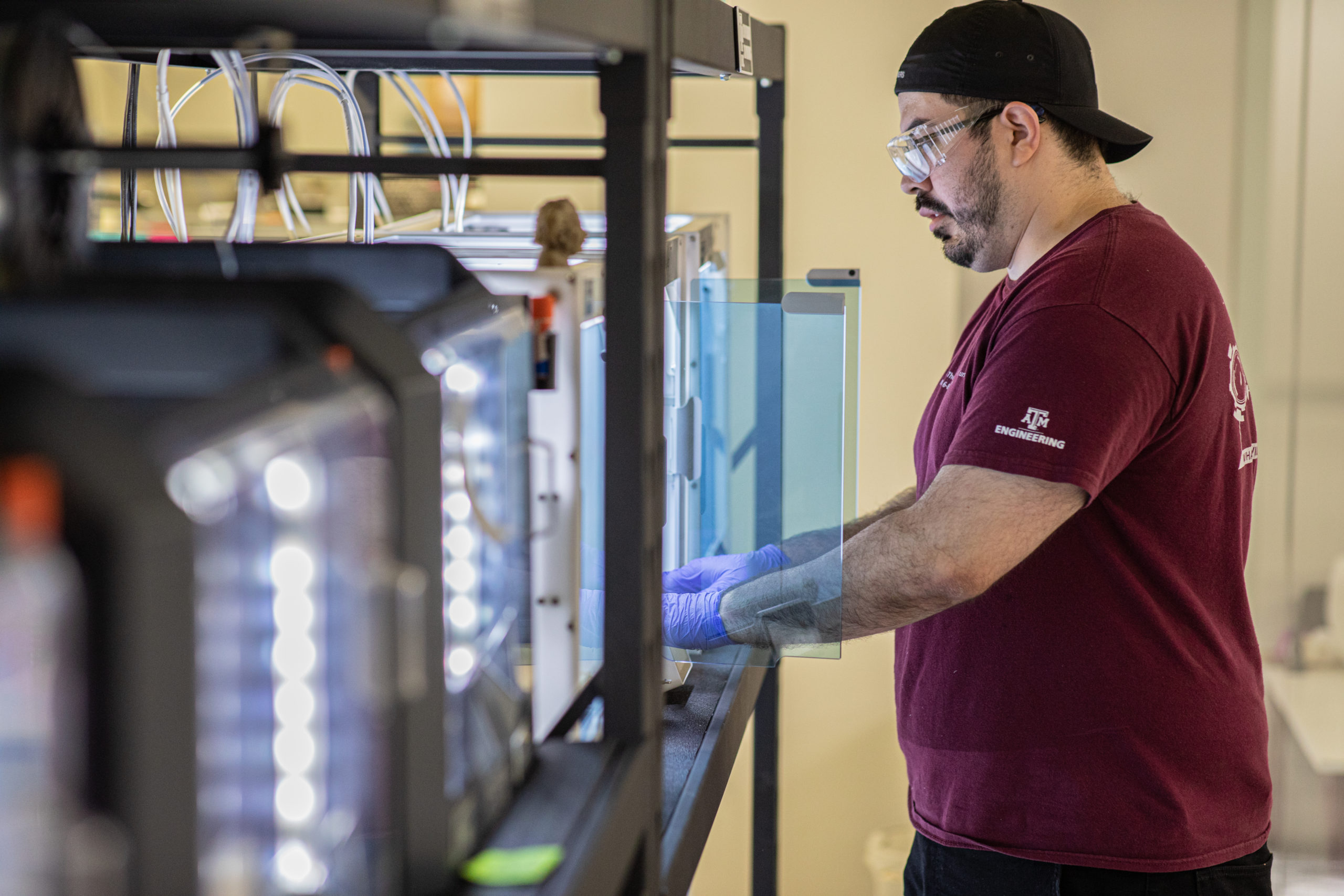


We’ve presented our modeling and analysis approach through 2 free ASEE workshops in ’25 & ’23:

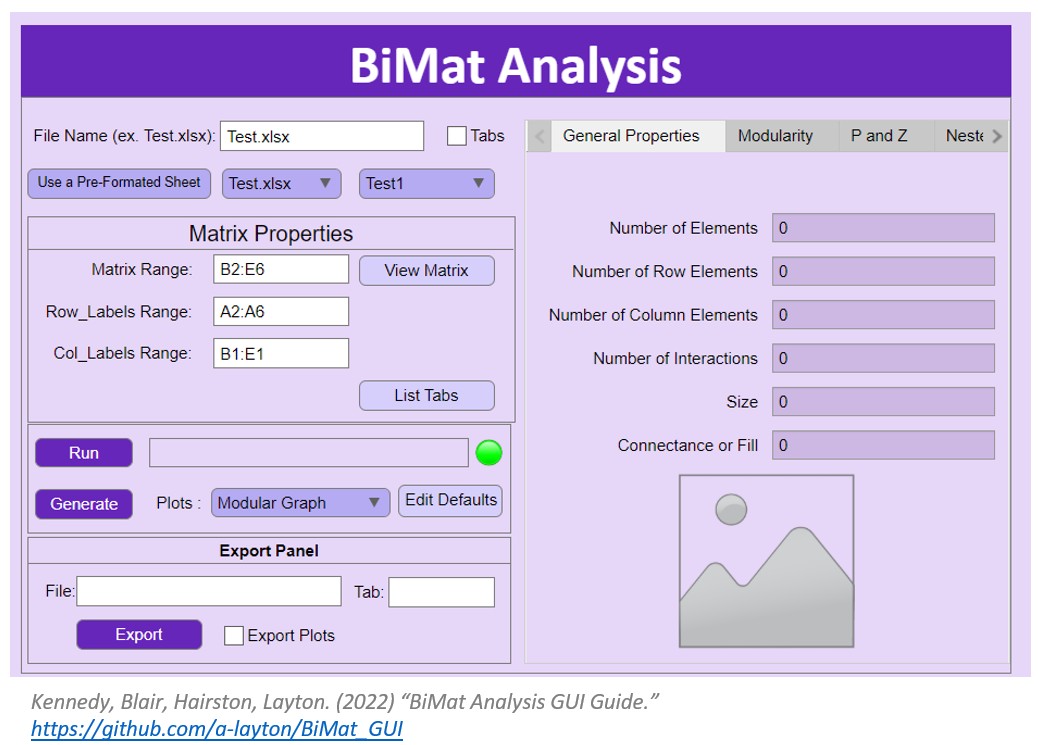
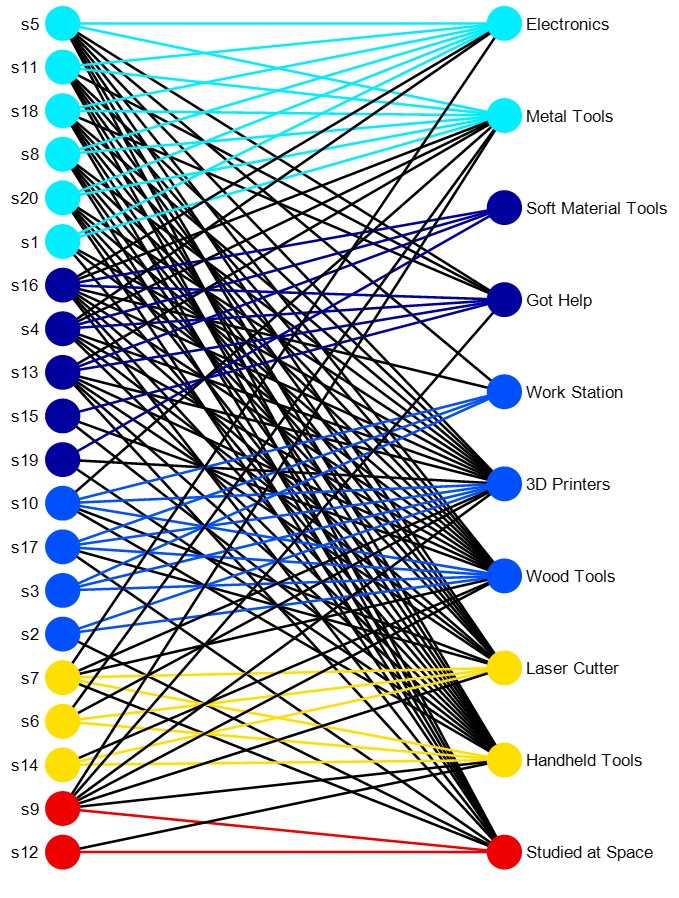


Our research has been widely published including:
This paper uses a new technique, tool-tool projections, to test for the value in understanding makerspaces. The result shows that the approach can highlight patterns in tool usage based on common users.
- (2024) Kaat, C., *S. Blair, A. Layton, and J. Linsey. “A Study of Makerspace Health and Student Tool Usage During and After the COVID-19 Pandemic.” Design Science. DOI: 10.1017/dsj.2024.11
This paper looks at 2 makerspaces during and after COVID-19, using surveys and quantitative metrics to understand how management changes impacted student use. The two makerspaces were found to have very different recovery responses, with both showing an initial decline in use and a negative impact. The results show that network analysis is a valuable method to evaluate the functionality of makerspaces and identify if and how much they change, potentially serving as indicators of unseen issues.
This work focuses on the quantitative modeling and analysis techniques, highlighting their relationships to network properties and each other. The results suggest that other case studies beyond makerspaces could benefit from the bipartite modeling and analysis.
- (2024) *Thelly, P., J. Linsey, A. Layton. “Bipartite Network Analysis for Understanding Makerspace Tool Usage Patterns.” 8th International Symposium on Academic Makerspaces (ISAM). Sheffield, UK.
This paper investigates the value of weighted interaction information (how many times a student uses a tool each semester) as opposed to just knowing which tools were used. The findings show that modularity may provide different information using weighted data as opposed to unweighted. Additional work is needed to understand the value of this more time intensive information.
Often it is difficult to tell if changes are causing overall improvements or not in makerspaces. Quantitative approaches can help. This paper looked at 3 spring semesters of end-of-semester data at 2 makerspaces, comparing modularity and nestedness changes at each and summarizing our grant work thus far. The impact of COVID-19 was clearly seen in the metrics. Recovery trends at the two schools were less clear but did show that one school was able to recover more quickly. The results validate that network metrics can quantitatively characterize makerspaces and clearly illustrate changes, due to COVID-19 in this case, providing evidence for their role in supporting makerspaces in place of tool usage data only (which is more challenging to observe such findings directly).
- *Blair, S. (2023-May) “A Bio-Inspired Network Approach to Improve Understanding of Engineering Makerspaces.” Mechanical Engineering M.S. Thesis, Texas A&M University, College Station, TX.
- Kaat, C. (2023-Aug.) “A Study of Students’ Tool Usage and Involvement within Academic Makerspaces.” Mechanical Engineering M.S. Thesis, Georgia Institute of Technology, Atlanta, GA.
- Banks, H. (2023-May) “A Comparison of Tool Use Rates in Two Makerspaces During COVID.” Mechanical Engineering M.S. Thesis, Georgia Institute of Technology, Atlanta, GA.
Three MS theses were produced from this work covering the systems modeling and analysis, tool usage patterns, and insights learned from quantifying the student-tool interactions in makerspaces.
This paper used a sub analysis technique of modularity, using a p-z analysis to identify tool roles in a makerspace. The results were compared across class years (sophomore-senior) and whether or not the makerspace was used for class-based use. The results found that 3D printers remained key “hub” tools across all 3 years, metal and handheld tools were added as hub tools in junior year, and wood tools and the CAD station were added senior year. The paper shows value in using survey information alongside the quantitative network metrics.
This paper looked at additional questions about “belonging” in a makerspace and connected the answers to how students used the makerspace. The findings identified high value in “studying inside the makerspace” and that engineering major also strongly impacted feelings of belonging. The results also found consistency with other works showing that female students reported a lower sense of comfort in the makerspace.
This paper looked at the impact of disruptions (COVID-19) as captured by nestedness and connectance metrics across 3 semesters (1 fall and 2 spring). The results were sorted by students who indicated they studied in the space vs. didn’t, between mechanical engineering students and non, and those who did and didn’t use the space for classes. Demographics among the survey population were also listed. The survey data highlighted the decrease in usage of specific tools, as well as the barriers students faced that may have caused these decreases in usage. Identification of which tools improved, such as metal tools, as restrictions were slowly lifted were also identified. The network metrics provided additional insights into the overall health of the makerspace, with the higher restriction COVID semesters seeing a decrease in both connectance and nestedness when compared to the lower restriction semesters.
This paper looked at the usage of specific tools versus the nestedness and connectance of the overall makerspace. The results across 3 semesters showed that the negative impacts of COVID-19 were clearly visible in the network metrics and that the “health” of the spaces could be seen to improve with time using the metrics.
- (2022) *Blair, S.; *G. Hairston; H. Banks; J. Linsey; A. Layton. “Makerspace Network Analysis for Identifying Student Demographic Usage.” International Symposium on Academic Makerspaces (ISAM). Atlanta, GA, USA. DOI: 10.18260/1-2–41476
The results in this paper looked at gender, race, and major using the bipartite network analysis to uncover if different usage patterns existed across the demographics as measured by modularity at one makerspace. The findings were encouraging, suggesting that gender, race, and major all had very low modularity values (on a scale of 0-1) indicating that the 3 demographics did not have different usage patterns among their variations.
This paper compared tool usage data at 2 schools over 1 semester, keeping track of whether the tool required training, was used by a course, and if students could use the tool without supervision. 11 general tool categories were found to occupy a range of different roles in the space, from being a “hub” tool to being a “connector” or “peripheral” tool. Adding in knowledge of the order in which students learned tools (the first 5 tools learned specifically), provided insight that a large number of tools were not being used at one school, with students mostly coming in to only use the 3D printer and metal tools – the hub tools. The other school saw the 3D printers and laser cutters as hub tools but still saw significant use across all other tools. The differences were attributed to highly different makerspace cultures.
This paper applies the bipartite analysis and model to a makerspace using a tool usage survey, walking the reader through the basic process. The process is shown for a hypothetical makerspace and then 1 semester of data for a makerspace is analyzed to better understand what tools get a student into a makerspace to begin with. The network analysis suggests potential key tools in the makerspace that can aid in engineering education: tools like hand tools and simpler 3D printers, for instance, serve as a critical starting to get students into the space and start making. The results suggest that laser cutters and woodworking tools serve as a steppingstone for students to get involved with more intimidating machining tools, which historically are difficult to promote. The paper starts to highlight the benefit of using network analyses to better understand makerspaces.
This paper was our first investigation into using quantitative metrics such as nestedness to understand makerspaces. A hypothetical makerspace was used to test the approach.

 BiSSL: Bio-inspired Systems Lab