The sustainable solutions, guidelines, measures and metrics that are desperately needed require a comprehensive systems approach. Frameworks need to balance sustainability and resilience goals and must be quantitative to support wider adoption. The work in our group has demonstrated that biological ecosystem characteristics can lead to sustainability AND resilience improvements at multiple system scales. This includes design guidance for things like Eco-Industrial Parks (EIPs), Eco-Industrial Networks (EINs), Net Zero Communities (NZCs) manufacturing systems, water networks, and supply chains. It has also focused on measures and metrics that support Circular Economy achievement.
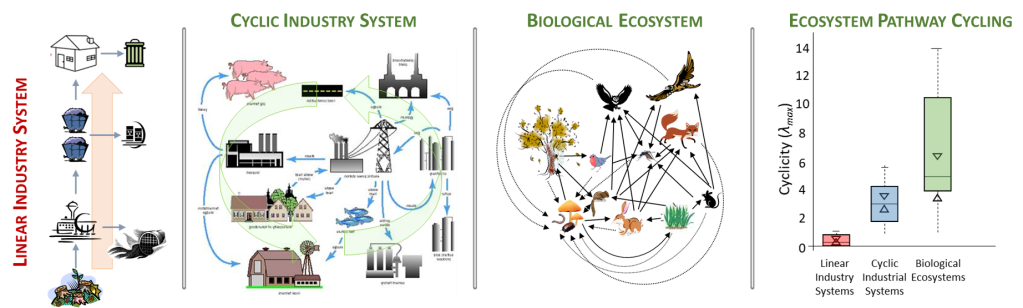

Our lab’s work is based on the hypothesis that quantitative design from biological ecosystems can teach us how to “keep products, materials, and components in use at their highest value at all times”– def. of circular economy, Ellen MacArthur Foundation. You can learn about how inspiration from the way ecological food webs function is helping to suggest route for improving our recycling/reuse/waste economy (also known as Circular Economy) with Texas A&M Engineering’s podcast SoundBytes Season 1 Episode 28.
You can learn more about our search to define sustainability-supporting design guidelines using biological food webs, including characteristics from the brown food chain (video below), in Texas A&M Engineering News’ article “Following nature’s cue, researchers build successful, sustainable industrial networks” by Vandana Suresh (April 26, 2021).
Our publications on this work include:
Improving and addressing analysis approaches used for green builds like LEED and urban settings:
- (2025) *Payne, E., and A. Layton. “grENA: Using an Ecological Network Analysis to Assess LEED Green Buildings’ Sustainability.” Journal of Industrial Ecology. DOI: 10.1111/jiec.70083
- (2024) *Payne, E.; A. Layton. “Integrating Machine Learning Into the Design of Green Building Systems.” ASME 2024 International Design Engineering Technical Conferences and Computers & Information in Engineering Conference (IDETC-CIE). Washington, D.C., USA.
- (2023) *Payne, E.; *Wagner, A.; Layton, A. “Resilience and Sustainability in Certified Green Buildings: Applying Ecosystem Concepts to Aid in More Dynamic Green Communities.” ASME 2023 International Design Engineering Technical Conferences and Computers & Information in Engineering Conference (IDETC-CIE). Boston, MA, USA. DOI: 10.1115/DETC2023-114798
- (2023) *Rodriguez, L.; *A. Chatterjee; A. Layton. “Ecological Decentralization for Improving the Resilient Design of Urban Water Distribution Networks.” 21st Annual Conference on Systems Engineering Research (CSER). Hoboken, New Jersey, USA. DOI: 10.1007/978-3-031-49179-5_40
- (2022) *Warrington, S.; Layton, A. “Ecosystem-Inspired Guidance for the Incorporation of Renewable Utilities in a Multi-Use Campus Network.” PLoS ONE 17(5): e0267431. DOI: 10.1371/journal.pone.0267431
- (2020) *Dave, T.; A. Layton. Extending the Use of Bio-Inspiration for Water Distribution Networks to Urban Settings. ASME International Design Engineering Technical Conferences (IDETC). St. Louis, MO, USA. (virtual due to COVID-19) DOI: 10.1115/DETC2020-22374
Circularity in manufacturing systems of different levels:
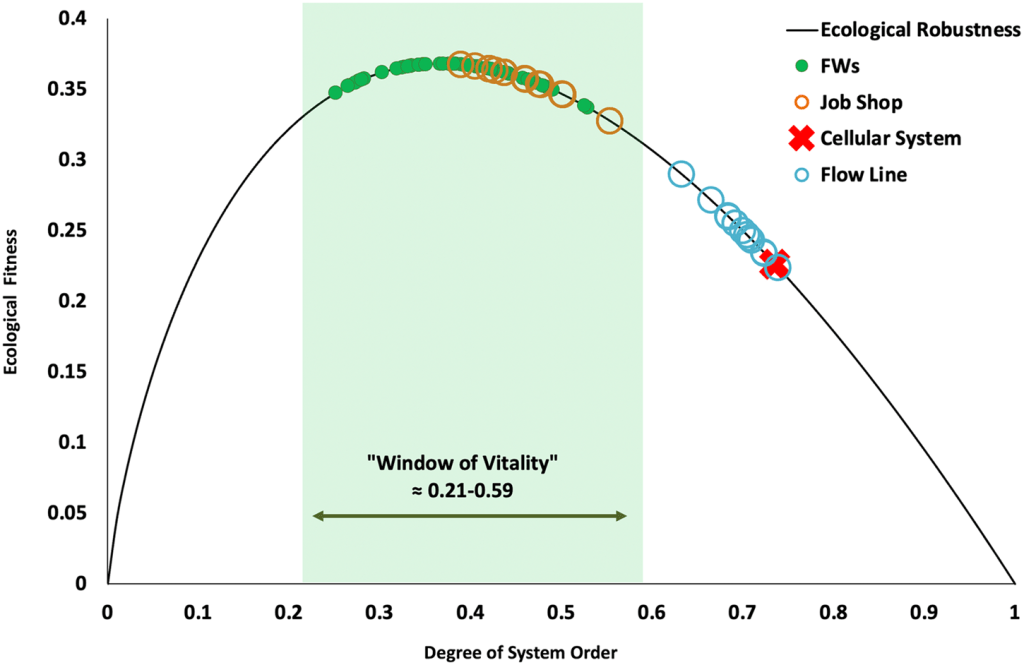
- (2025) *Hassan, H., *A. Chatterjee, *A. Bushagour, and A. Layton. “Potential for Digital Technologies and Additive Manufacturing to Support Lean Manufacturing and Circular Economy Synergies.” ASME 2025 International Design Engineering Technical Conferences and Computers & Information in Engineering Conference (IDETC-CIE). Anaheim, CA, USA.
- (2025) *Hassan, H., *A. Bushagour, *A. Chatterjee, A. Layton. “Quantitatively Supporting System-Level Sustainability and Resilience in Manufacturing.” ASME Manufacturing Science and Engineering Conference (MSEC). Greenville, SC, USA.
- (2024) *Hassan, H., *A. Bushagour, and A. Layton. “Resilient Circularity in Manufacturing: Synergies between Circular Economy and Reconfigurable Manufacturing.” ASME Journal of Manufacturing Science and Engineering. DOI: 10.1115/1.4065744
- (2024) *Hassan, H.; *Bushagour, A.; Layton, A. “Resilient Sustainability in Manufacturing: Synergies between Circular Economy and Reconfigurability.” ASME Manufacturing Science and Engineering Conference (MSEC). Knoxville, TN, USA.
- (2024) Banu, M., S. Behdad, D. Cooper, K. R. Haapala, C. Hu, H. Kim, A. Layton, B. S. Linke, and J. Zhang. “Joint Special Issue on Advances in Design and Manufacturing for Sustainability.” Journal of Mechanical Design. DOI: 10.1115/1.4064362 (2022 IF: 3.441) -cross listed- Journal of Manufacturing Science and Engineering. 146(2): 020201. DOI: 10.1115/1.4064363
- (2023) *Hassan, H.; *Payne, E.; Layton, A. “Quantifying the Sustainability and Robustness of Manufacturing Systems Using Energy and Ecological Network Analyses.” ASME 2023 International Design Engineering Technical Conferences and Computers & Information in Engineering Conference (IDETC-CIE). Boston, MA, USA. DOI: 10.1115/DETC2023-116490
- (2021) He, W.; Layton, A.; Creasy, T.; Borges, A.; *Williams, J. “Resistance to Opportunities of Plastic Recycling.” Enquiry The ARCC Journal for Architectural Research – Architecture, Waste, and the Circular Economy, 18 (2): 51-72. DOI: 10.17831/enqarcc.v18i2.1098
- (2021) Ali, A,; Layton, A.; Kio, P.; *Williams, J. “Matrix Trays: From Waste to Opportunities,” Journal of Cleaner Production, 300: 126813. DOI: 10.1016/j.jclepro.2021.126813
- (2013) Layton, A.; Bras, B.; Reap, J J.; Weissburg, M. Biologically inspired closed loop manufacturing networks. ASME 2013 International Mechanical Engineering Congress and Exposition. San Diego, CA.
Circular Economy (CE) advancement efforts:
- (2024) *Bushagour, A.; *Hassan, H.; Layton, A. “Cyclicity as an Early Circular Economy Design Tool for Emerging Technologies.” ASME Manufacturing Science and Engineering Conference (MSEC). Knoxville, TN, USA.
- *Bushagour, A. (2024-May) “Biological Ecosystem Inspired Approaches for Circular Economy Quantification.” Mechanical Engineering M.S. Thesis, Texas A&M University, College Station, TX.
- (2019) *Williams, J.; *S. Warrington; A. Layton. Waste Reduction: A review of common options and alternatives. ASME International Manufacturing Science and Engineering Conference. Erie, PA, USA.
- *Williams, J. (2019-Aug) “Opportunities of Applying System Analysis to the US Waste Management System: Bio-Inspired Solutions for a More Circular Economy.” Mechanical Engineering M.S. Thesis, Texas A&M University, College Station, TX.
Sustainability and resilience in industrial networks:
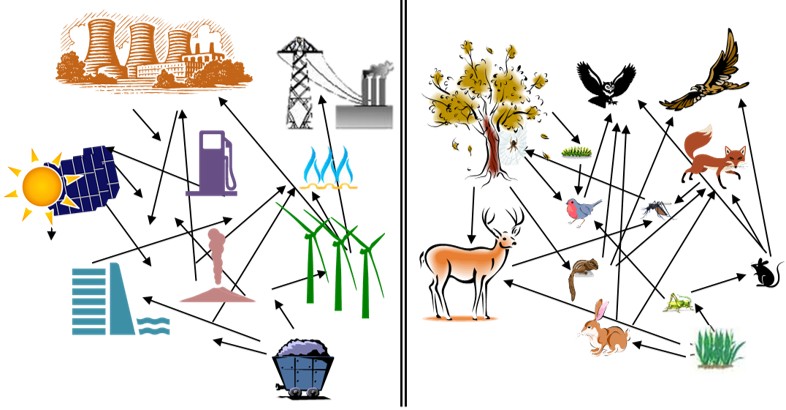

- (2021) *Hairston, G.; A. Layton. “An Eco-Industrial Park-Based Method for Net Zero Community Creation.” ASME 2021 International Design Engineering Technical Conferences and Computers & Information in Engineering Conference. (virtual due to COVID-19) DOI: 10.1115/DETC2021-71440
- (2021) *Chatterjee, A.; *Brehm, C.; Layton, A. “A Quantitative Benefits Evaluation of Ecologically-Inspired Nested Architectures for Industrial Networks,” Resources Conservation & Recycling, 167. DOI: 10.1016/j.resconrec.2021.105423
- (2020) *Chatterjee, A.; Layton, A. “Mimicking Nature for Resilient Resource and Infrastructure Network Design.” Reliability Engineering & System Safety. DOI: 10.1016/j.ress.2020.107142
- (2020) *Brehm, C.; Layton, A. “Nestedness in Eco-Industrial Networks: Exploring Linkage Distribution to Promote Sustainable Industrial Growth.” Journal of Industrial Ecology, 1-14. DOI: 10.1111/jiec.13057
- (2019) *Brehm, C.; A. Layton. Designing eco-industrial parks in a nested structure to mimic mutualistic ecological networks. The 26th CIRP Conference on Life Cycle Engineering. J. W. Sutherland. West Lafayette, IN, USA.
- (2017) Reap, J.; Layton, A. “Lessons from Living Systems for the Development of Sustainable Industrial Resource Networks.” Journal of Energy Challenges and Mechanics 4, no. 1 (2017): 1-10.
- (2017) Layton, A.; Bras, B.; Weissburg, M. “Improving Performance of Eco-Industrial Parks.” International Journal of Sustainable Engineering 10, no. 4-5 (2017): 250-59.
- (2016) Layton, A.; Bras, B.; Weissburg, M. Designing Industrial Networks using Ecological Food Web Metrics. Environmental Science & Technology, 50(20): 11243-11252, 2016. DOI: 10.1021/acs.est.6b03066
- (2016) Layton, A.; Bras, B.; Weissburg, M. Ecological Principles and Metrics for Improving Material Cycling Structures in Manufacturing Networks. ASME Journal of Manufacturing Science and Engineering, 130(10): 101002-101014, 2016. DOI: 10.1115/1.4033689
- (2016) Layton, A.; Bras, B.; Weissburg, M. Industrial ecosystems and food webs: An expansion and update of existing data for eco-industrial parks and understanding the ecological food webs they wish to mimic. Journal of Industrial Ecology, 2015. DOI: 10.1111/jiec.12283
- (2017) Layton, A.; B. Bras; M. Weissburg. Designing Sustainable Manufacturing Networks: The role of exclusive species in achieving ecosystem-type performance. ASME 2017 International Design Engineering Technical Conference. Cleveland, OH.
- (2016) Bras, B.; Layton, A.; Weissburg, M. Improving Performance of Eco-Industrial Parks. SDM 3rd International Conference on Sustainable Design and Manufacturing. Crete, Greece.
- (2015) Layton, A.; Bras, B.; Weissburg, M. Ecological robustness as a design principle for sustainable industrial systems. ASME 2015 International Design Engineering Technical Conferences. Boston, MA.
Sustainable and resilient industrial water networks:
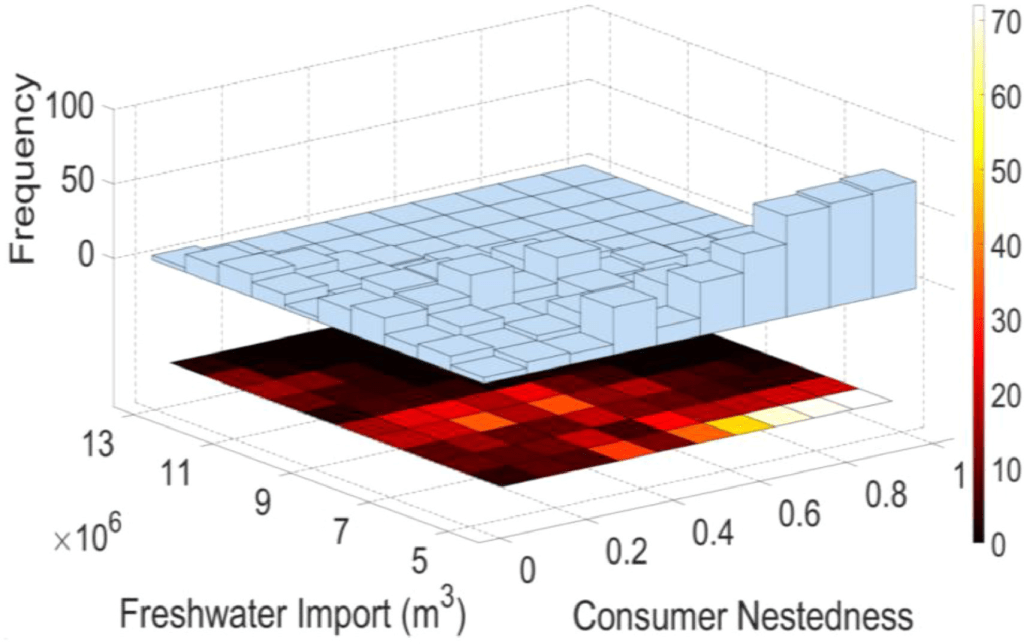
- (2020) *Dave, T.; Layton, A. “Designing Ecologically-Inspired Robustness into a Water Distribution Network.” Journal of Cleaner Production, 254(1): 120057. DOI: 10.1016/j.jclepro.2020.120057
- (2021) *Chatterjee, A.; *Brehm, C.; Layton, A. “A Quantitative Benefits Evaluation of Ecologically-Inspired Nested Architectures for Industrial Networks,” Resources Conservation & Recycling, 167. DOI: 10.1016/j.resconrec.2021.105423
- (2020) ; *Brehm, C.; *A. Chatterjee; A. Layton. Mimicking the nested structures of ecosystems in the design of industrial water networks. 27th CIRP Life Cycle Engineering (LCE) Conference. Grenoble, France. (virtual due to COVID-19) DOI: 10.1016/j.procir.2020.01.104
- (2019) *Dave, T.; A. Layton. Bio-inspired design for resilient water distribution networks. The 26th CIRP Conference on Life Cycle Engineering. S. Skerlos. West Lafayette, IN, USA.
Sustainable and resilient supply chains:
- (2021) *Wilson, T.; *Chatterjee, A.; Layton, A. “Developing a Supply Chain Modeling Approach to Facilitate Ecology-Inspired Design for Sustainability and Resilience.” ASME 2021 International Design Engineering Technical Conferences and Computers & Information in Engineering Conference. (virtual due to COVID-19) DOI: 10.1115/DETC2021-70782
- (2020) *Chatterjee, A.; Layton, A. “Mimicking Nature for Resilient Resource and Infrastructure Network Design.” Reliability Engineering & System Safety. DOI: 10.1016/j.ress.2020.107142
- (2020) *Chatterjee, A.; A. Layton. Bio-inspired Design for Sustainable and Resilient Supply Chains. 27th CIRP Life Cycle Engineering (LCE) Conference. Grenoble, France. (virtual due to COVID-19) DOI: 10.1016/j.procir.2020.01.127
 BiSSL: Bio-inspired Systems Lab