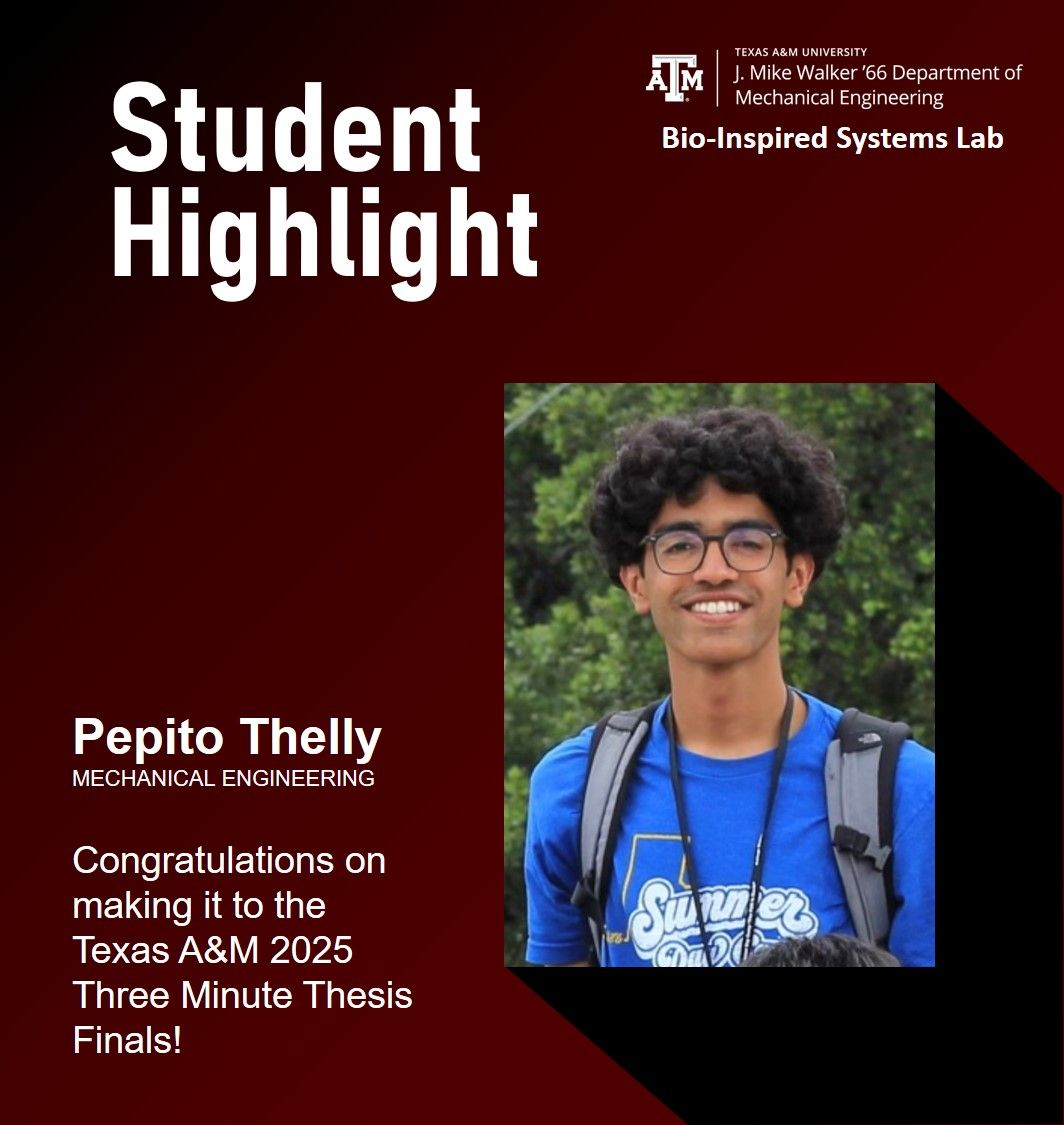
PhD Student Pepito Thelly (3MT) 3 Minute Thesis Finalist!

November 14, 2026

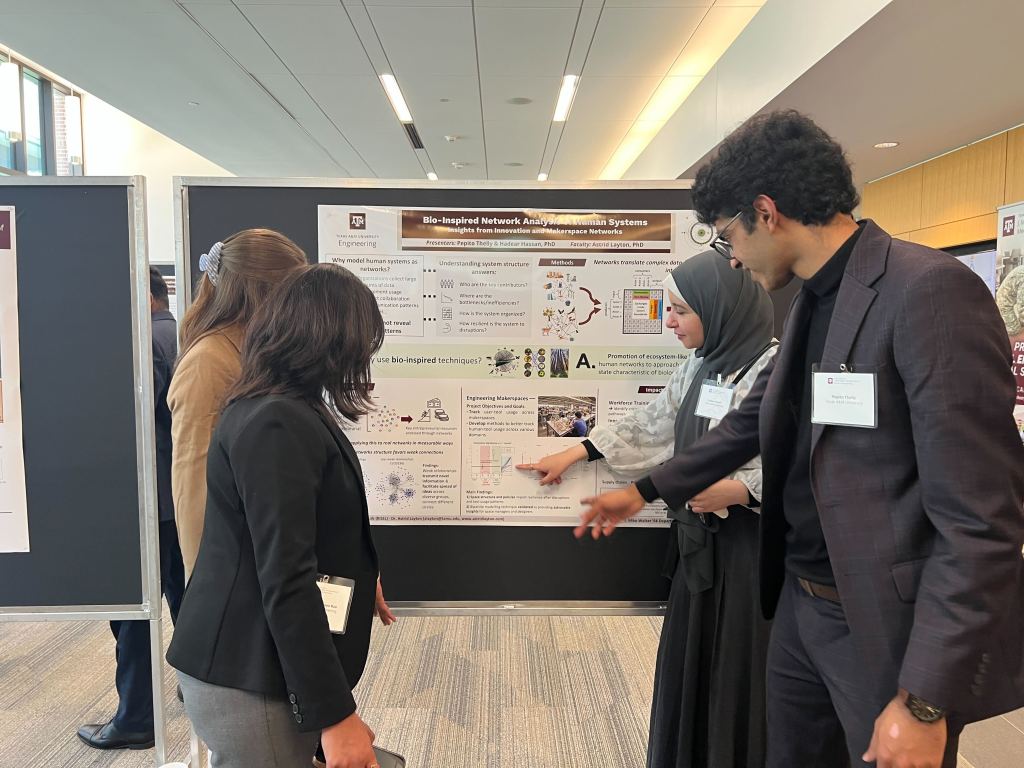
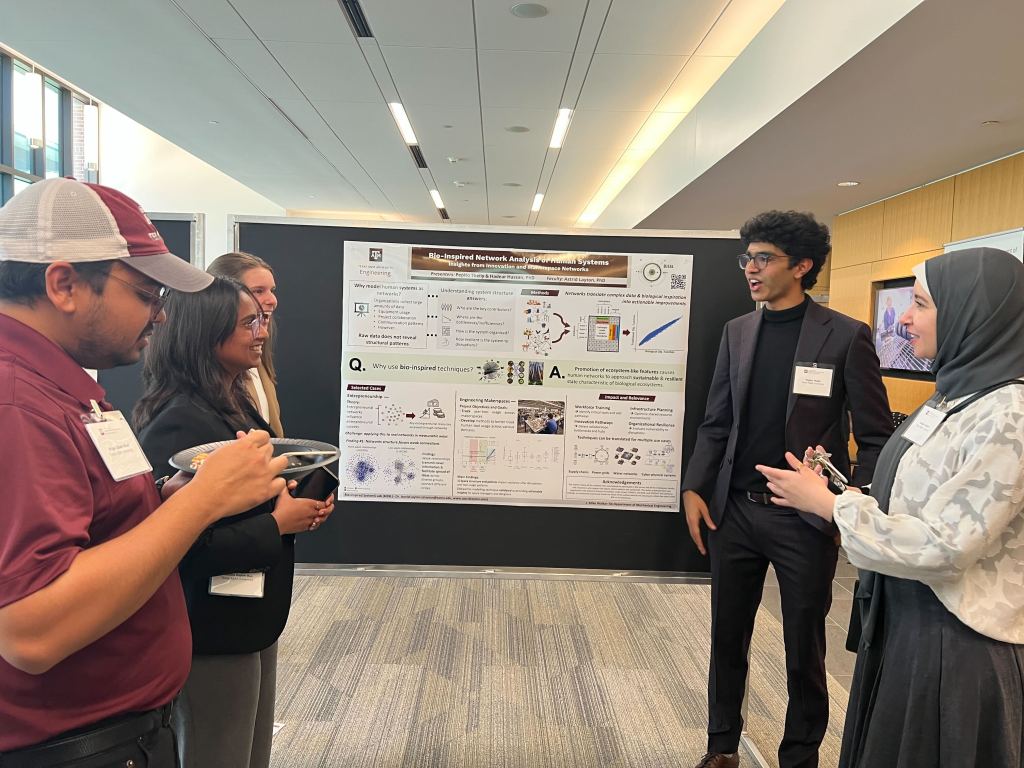
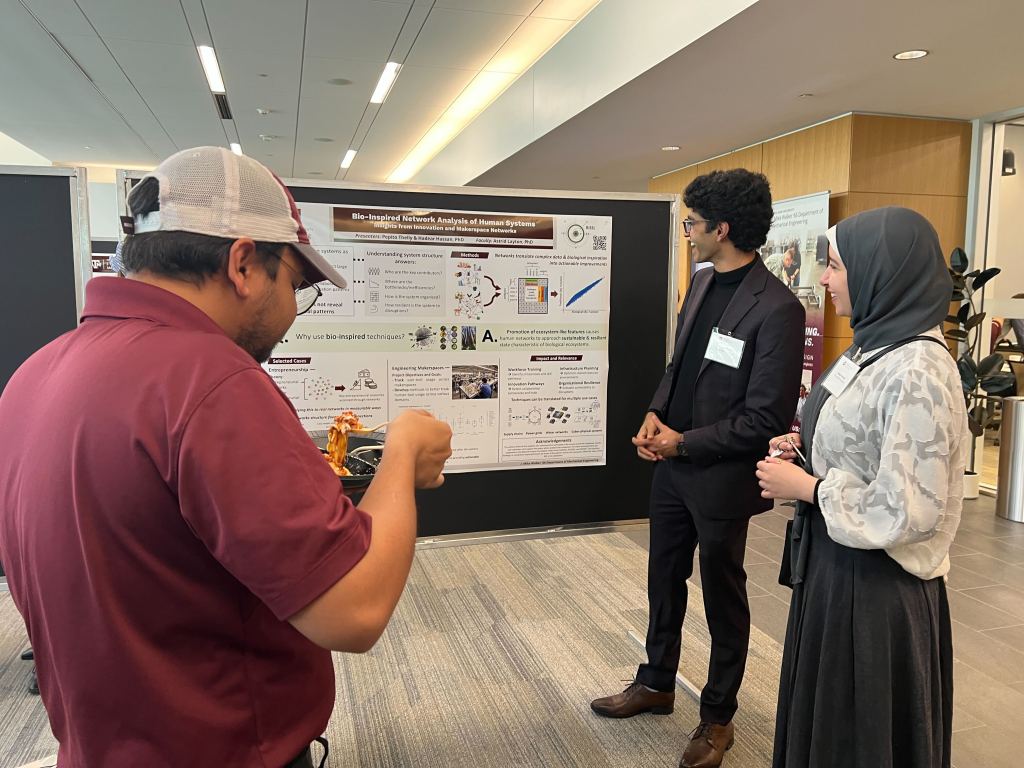
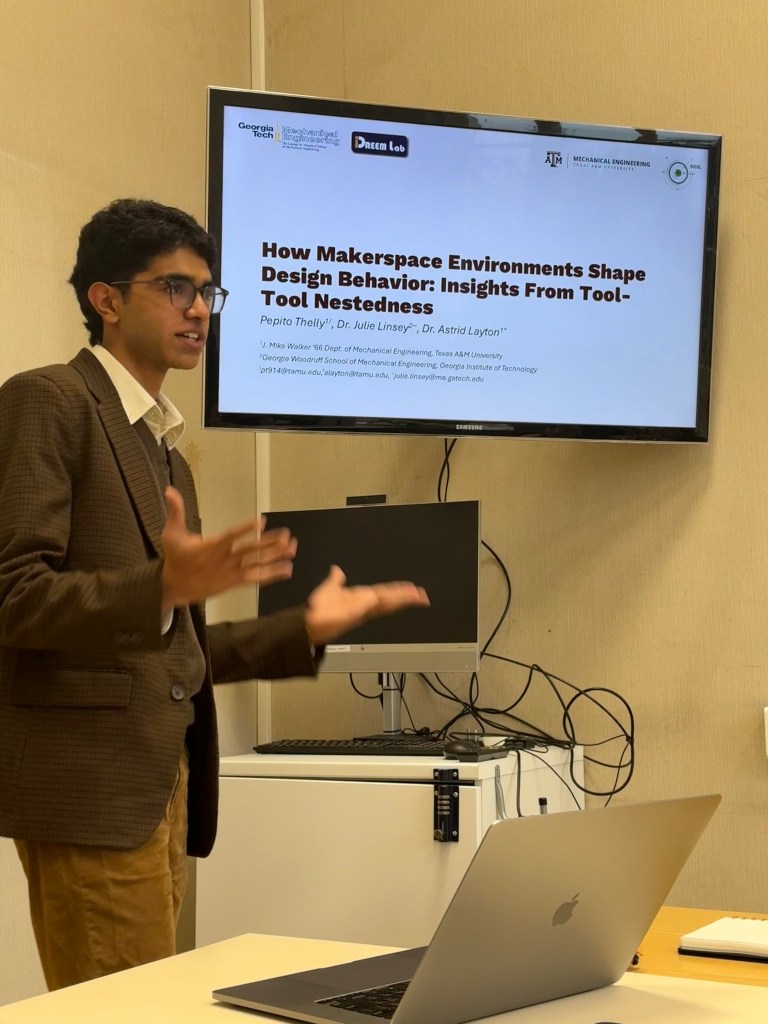
Congratulations to BiSSL Ph.D. student Pepito Thelly, one of 7 Ph.D. finalists in the Texas A&M 2025 3 Minute Thesis (3MT) Final! He was selected out of over 85 participants.

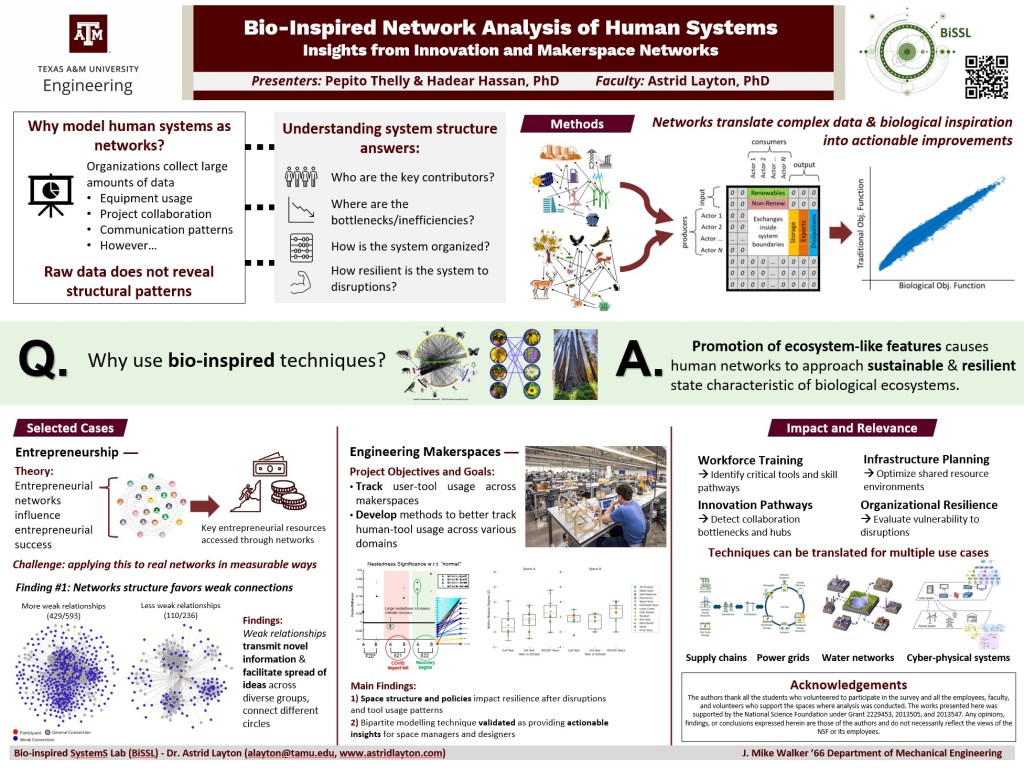
Pepito, a student in Dr. Astrid Layton’s Bio-inspired Systems Lab who’s bio-inspired design research has collaborated with Dr. Julie Linsey and her iDREEM lab at Georgia Tech, will present “Bio-Inspired Makerspace Networks.” Good luck Pepito!

Learn more: https://loom.ly/lKaoE-I
Join the free finals, virtually or in person, and vote for the People’s Choice Award!

IDETC-CIE 2025

August 18, 2025 Anaheim, CA

BiSSL Ph.D. candidate Hadear Hassan led the publication of an IDETC-CIE conference paper titled “Potential for Digital Technologies & Additive Manufacturing to Support Lean Manufacturing + Circular Economy Synergies” in collaboration with Aarhus University Ph.D. student (and former BiSSL MS student) Amira Bushagour and Dr. Abheek Chatterjee, who is a post doc at NIST and is a former BiSSL PhD student. The paper was presented in the SEIKM track on “Advanced Manufacturing and Supply Chain Systems Design and Analysis” co-chaired by Dr. Chatterjee.

ABSTRACT: Lean manufacturing and circular economy are two production paradigms aimed at addressing the challenges faced by traditional production models, such as resource constraints, environmental impacts, and waste generation. Lean manufacturing focuses on improving production efficiency by eliminating non-value-adding activities. Circular economy aims to reduce waste and resource consumption and support production demands by retaining valuable materials in the economy as long as possible. Recent research has indicated that the convergence of these paradigms is a promising strategy to support sustainable production and consumption. However, challenges remain in fully integrating these approaches, as lean manufacturing emphasizes efficiency without directly considering environmental concerns, a key goal of the circular economy. This research investigates if additive manufacturing and digital technologies (such as digital twins and product passports) offer potential approaches to support the synergies between lean manufacturing and circular economy initiatives. To this end, this article surveys how additive manufacturing and digital technologies support the core aspects of circular economy and lean manufacturing. Thereafter, the synergies between the core aspects of the two paradigms are analyzed with a focus on the application of digital technologies and additive manufacturing in supporting these synergies. Specifically, it is found that the integration of digital technologies with additive manufacturing enables real-time monitoring and predictive analytics. This integrated approach addresses the scalability and flexibility challenges of additive manufacturing implemented alone while enhancing waste reduction, resource optimization, and material life cycle transparency in lean manufacturing and circular economy applications. These findings provide stakeholders with valuable insights regarding simultaneously implementing lean manufacturing and circular economy principles – supporting financial benefits, reduced environmental impacts, and sustainable production growth. -Hassan, Chatterjee, Bushagour, Layton. (2025) “Potential for Digital Technologies and Additive Manufacturing to Support Lean Manufacturing and Circular Economy Synergies.” ASME 2025 International Design Engineering Technical Conferences and Computers & Information in Engineering Conference (IDETC-CIE). Anaheim, CA, USA.

Dr. Layton wins DTM Early Career Award

August 18, 2025 Anaheim, CA

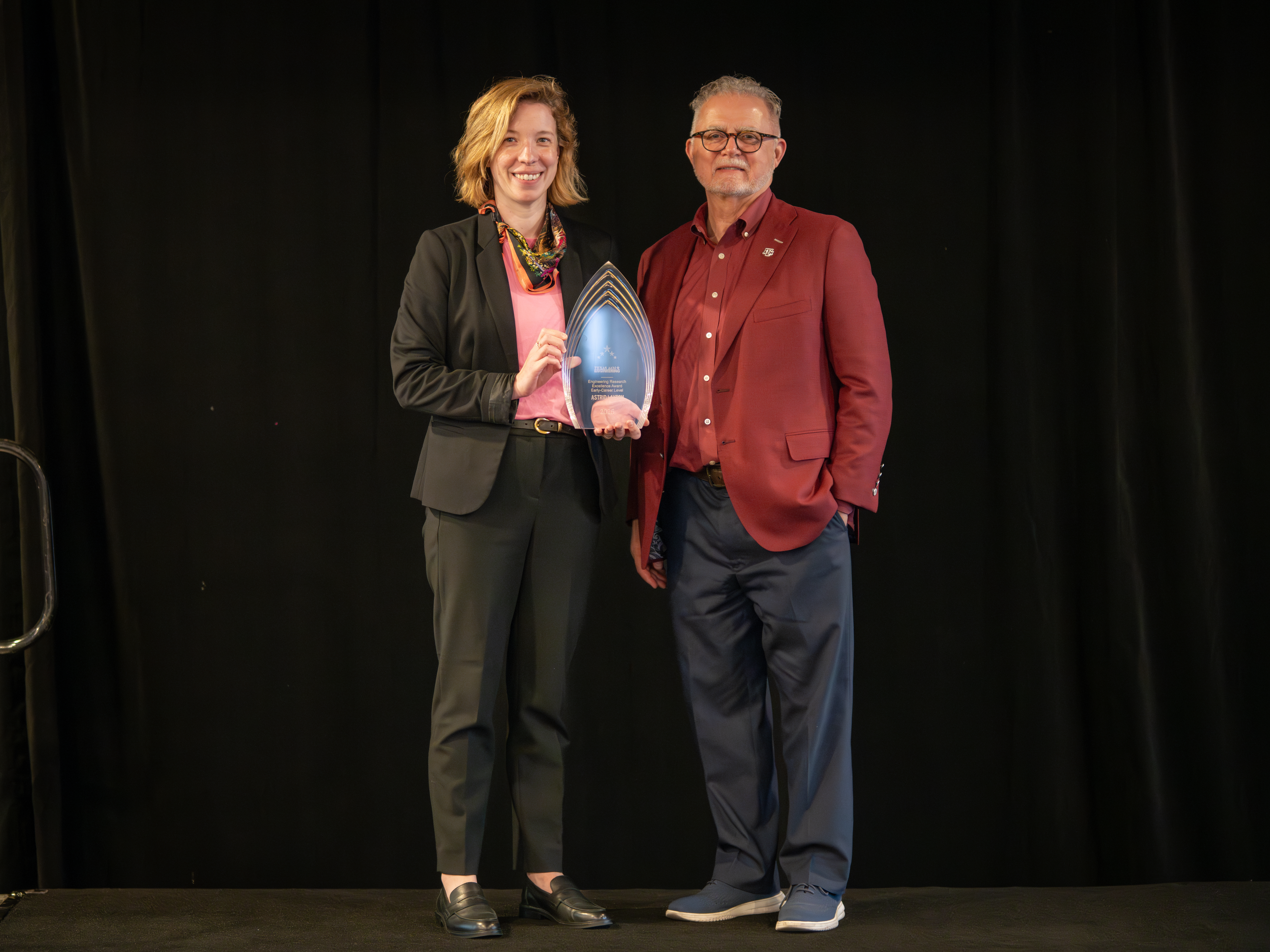
At IDETC-CIE 2025, Dr. Layton was awarded the 2025 Early Career Award by Design Theory and Methodology in the Design Engineering Division by ASME. The award was given “For exemplary early-career contributions to research, education, and service in Design Theory and Methodology, advancing knowledge of bio-inspired network-based approaches to sustainability, resilience, and complex systems in engineering design.”

Women in CIE Panel

August 17, 2025 Anaheim, CA

This year at the ASME IDETC-CIE 2025 conference Dr. Layton served as an invited panelist in the CIE divisions “Women in CIE” panel Sunday night.

The CIE Division hosted a one-hour networking event at the 2025 IDETC-CIE on Sunday, August 17, from 6:30 PM to 8:00 PM, including a reception. This event was designed to recognize the contributions of those from nontraditional backgrounds in engineering, celebrate achievements within the ASME community, and foster professional networking and mentorship opportunities.

The event featured a group of panelists with expertise in emerging technologies—such as Modeling and Simulation, Digital Twins, Machine Learning, and Artificial Intelligence-and how these innovations are helping to broaden access and opportunity across the field.

PhD Student Hadear Hassan Presents at MSEC

June 26, 2025

Ph.D. student Hadear Hassan presented research on a dynamic model that uses bio-inspired design principles to evaluate manufacturing systems for sustainability and resilience, especially under disturbances, while linking system qualities to performance metrics like capital cost and demand met at the 2025 Manufacturing Science and Engineering Conference (MSEC), hosted by Clemson University in Greenville, SC. The paper was a collaboration with Amira Bushagour, Dr. Abheek Chatterjee, and Dr. Astrid Layton.

The paper presented is titled “Quantitatively Supporting System-Level Sustainability and Resilience in Manufacturing.”

BiSSL PhD student Hadear Hassan presenting at the 2025 MSEC conference.

Abstract: “Manufacturing is a key driver of both economic health and environmental burdens, reporting over 12.7 million workers in the U.S. and emitting 30% of greenhouse emissions. Manufacturing systems thus must be both sustainable and resilient to mitigate environmental degradation and maintain job security and operations in case of disturbances. Doing both in manufacturing, however, is non-trivial and quantitatively ambiguous. This work investigates a bio-inspired approach to quantitatively design for both. Twenty manufacturing floor plan architectures are evaluated using a bio-inspired system design approach and traditional manufacturing metrics. Ecological Network Analysis has been shown in prior work to offer system design guidance inspired by nature’s resilient and sustainable food webs. Traditional metrics such as capital cost, throughput, and capacity utilization correlate these ecological characteristics with manufacturing-specific goals for the first time. The architectures, in both their traditional and bio-inspired architectures, are tested under disturbance scenarios to determine if the bio-inspired designs offer superior performance from a manufacturing perspective. The evaluation highlights interdependencies between metrics that capture circular economy supporting efficient pathways and resilience supporting manufacturing convertibility. The results also form the beginnings of an assessment framework for the use of low data metrics in the early-stages of manufacturing systems design.” Hassan, H., A. Bushagour, A. Chatterjee, A. Layton. (2025) “Quantitatively Supporting System-Level Sustainability and Resilience in Manufacturing.” ASME Manufacturing Science and Engineering Conference (MSEC). Greenville, SC, USA.

Successful BiSSL Participation in the 2025 ASEE Conference & Exposition

June 21-25, 2025 in Montreal, Canada

Dr. Astrid Layton hosted a free workshop at the 2025 ASEE Conference & Exposition in collaboration with Dr. Julie Linsey from Georgia Tech. The NSF sponsored workshop was titled “Is My Makerspace Meeting Students’ Needs? How to gain quantitative information about your space using a student-tool network model” and focused on the use of the BiSSL developed GUI for makerspace network analysis.

Dr. Layton also presented a paper “IUSE: Analyzing Nestedness Variability for Bipartite Makerspace Tool-Tool Projection Models” on this makerspace network analysis work, with lead author BiSSL PhD student Pepito Thelly.

Thelly, P., J. Linsey, A. Layton. (2025) “IUSE: Analyzing Nestedness Variability for Bipartite Makerspace Tool-Tool Projection Models.” ASEE 2025 Conference & Exposition. Montreal, Quebec, Canada.

Dr. Layton presented another paper “Work in Progress: Examining the Network Growth Strategies of Early-Stage Entrepreneurs” on research done in collaboration with Dr. M. Cynthia Hipwell at Texas A&M and the NSF I-Corps program, with first authors BiSSL grad student Ria Madan and PhD student Hadear Hassan.

Madan, R., H. Hassan, A. Layton, M. C. Hipwell. (2025) “Examining the network growth strategies of early-stage entrepreneurs.” ASEE 2025 Conference & Exposition. Montreal, Quebec, Canada.

New BiSSL publication in the journal Integrative & Comparative Biology

June 20, 2025

A paper coauthored by Ph.D. student Hadear Hassan and Dr. Layton titled “Improving Cross-Disciplinary Knowledge Transfer for Bio-Inspired Engineering Design” has been published in the Integrative And Comparative Biology (ICB) journal. The work covers a 4 year study of the bio-inspired engineering design inspiration process, looking at how the technical level of biological information impacts the success of the resultant engineering designs. The work finds that a staggered approach may be the most beneficial, starting with basic references like those from National Geographic or zoos and following up the initial design generation round with highly technical and detailed journal articles to provide more functional details.

“Bio-inspired design has become a significant driver of innovation, enabling the development of effective solutions to some of the world’s toughest challenges. Bio-inspired design leverages evolutionary advancements to create products and processes that are often more efficient and sustainable. However, applying biological insights to engineering can be challenging due to the distinct ways the two disciplines define and interpret core concepts. This paper explores the cognitive and technical skills required to effectively translate biological inspiration into engineering solutions. Our hypothesis focuses on bridging the “language and representation gap” between biology and engineering. The goal of this paper is to identify key aspects of biological representation that enable its successful adaptation into engineering design, fostering the development of more impactful and efficient bio-inspired solutions. The analysis of student feedback and ideation outputs revealed that engineers preferred biology texts with a medium level of technical complexity, balancing ease of understanding with image quantity. Basic references were found to support diverse idea generation, while more technical texts proved useful and necessary for understanding in-depth biological insights and applying them to engineering problems. Future research could explore the impact of information presentation order, the role of biological experts in deepening insights, and the use of machine learning to refine how biological information is selected and categorized to enhance the bio-inspired design process.” – Hassan and Layton. (2025) “Improving Cross-Disciplinary Knowledge Transfer for Bio-Inspired Engineering Design.” Integrative & Comparative Biology. DOI: 10.1093/icb/icaf119

Normalized student usefulness ratings per reference, based on reading ease (FRE) across the 3 reference categories (technical-blue circles, general-orange triangles, and basic-green squares). The red horizontal and vertical shading bars highlight the most frequently selected range for FRE if technical references, which falls between 28 and 45, along with their corresponding normalized voting quantity ranging from 0.65 to 1.

BiSSL PhD Student Emily Payne Becomes a Texas A&M Chevron Energy Graduate Fellow

June 5, 2025

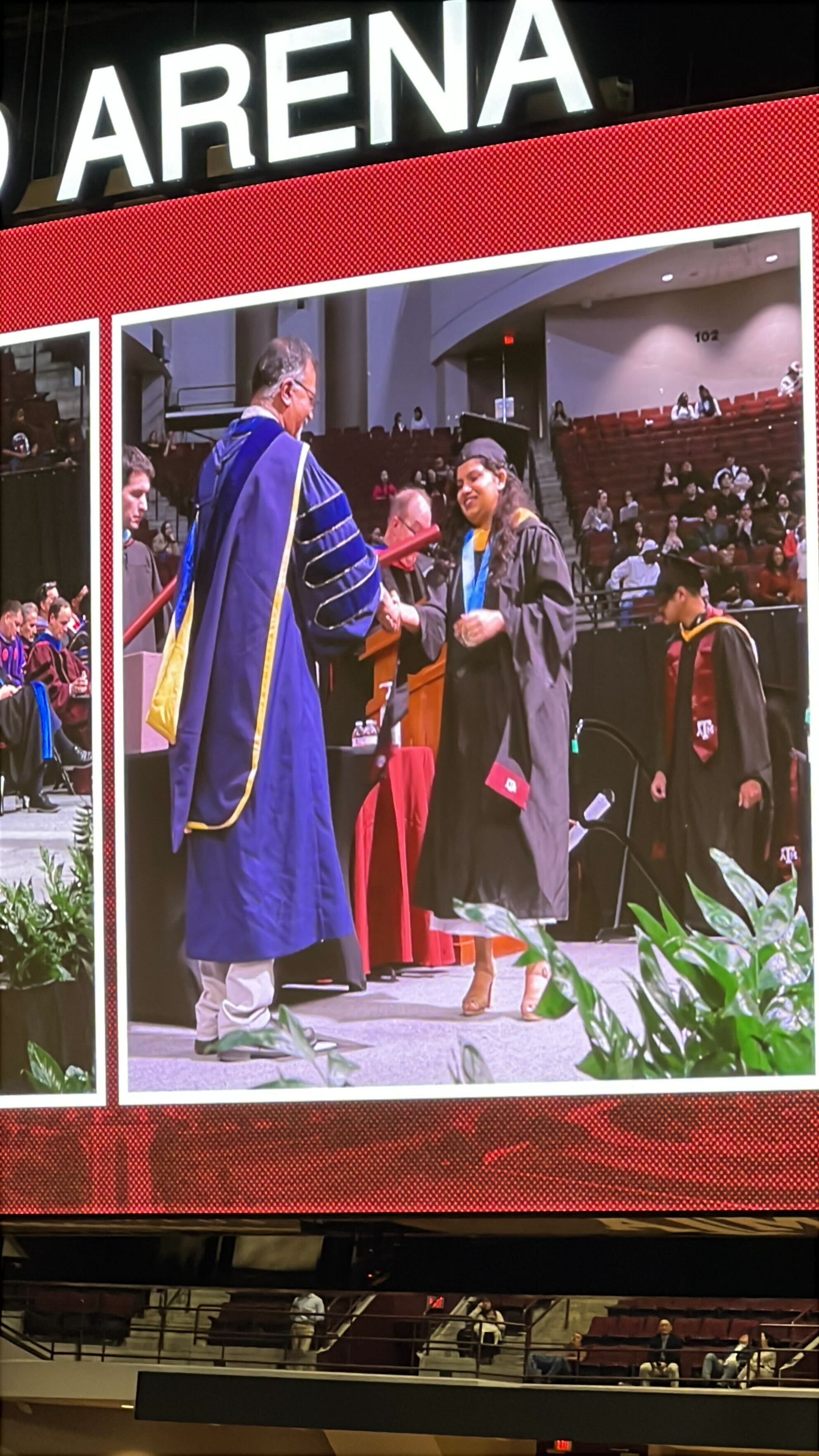
Emily Payne, a Ph.D. student in BiSSL, will be a Texas A&M Chevron Energy Graduate Fellow for Fall 2025 and Spring 2026. The award, a partnership with Chevron and the Texas A&M Energy Institute, funds 10 outstanding graduate student researchers from across the Texas A&M campus annually with fellowship awards of $10,000 each.

Funded by Chevron, the fellows program includes mentoring from faculty experts and opportunities to meet with subject matter experts at Chevron. Currently enrolled Texas A&M University graduate students from any school or college whose current and active research efforts focus on energy, including policy, technology, science, and societal impacts were eligible. The Texas A&M Chevron Energy Graduate Fellows program is part of Chevron’s University Partnership Program, which supports universities around the country by providing the necessary funding to better develop the future of the energy business. 

“This exciting new collaboration between Texas A&M and Chevron represents a significant step forward in our shared commitment to advance energy solutions in support of a lower carbon energy future. Our newest Chevron Fellows are poised to make a real impact by creating scalable solutions that will transform the energy landscape. We eagerly anticipate the positive contributions they will make for the world,” said Jim Gable, the Vice President of Innovation at Chevron’s Technical Center and President of Chevron Technology Ventures.

Invited Seminar at Clemson University

April 11, 2025

Dr. Layton presented BiSSL’s work on sustainable design using bio-inspired techniques at Clemson’s mechanical engineering department graduate seminar on April 11. The research seminar was titled “The Best of Both Worlds: An Ecological Design Guide for Engineering Sustainability & Resilience” and had an audience of mechanical engineering and mathematics.

Abstract: The resilient and sustainable characteristics of Nature’s ecosystems are the result of millions of years of design iterations. These complex systems of systems are made up of interacting species that support their own needs while maintaining system-level functions. Dr. Layton will discuss ecosystems as a relatively untapped source of design inspiration for improving the resilience and sustainability of our human-engineered networks. Adapting quantitative descriptors and analysis techniques from ecology for human designers enables desirable ecosystem characteristics to be used as optimization and design guides for everything from industrial resource networks to power grids. Ecological characteristics such as high levels of materials/energy cycling and a unique balance between redundant and efficient pathways offer novel routes to achieving traditionally ‘at odds’ engineering goals like resilience, sustainability, and cost.

Design Society Invited Talk on “Future of Sustainable Design”

March 20, 2025

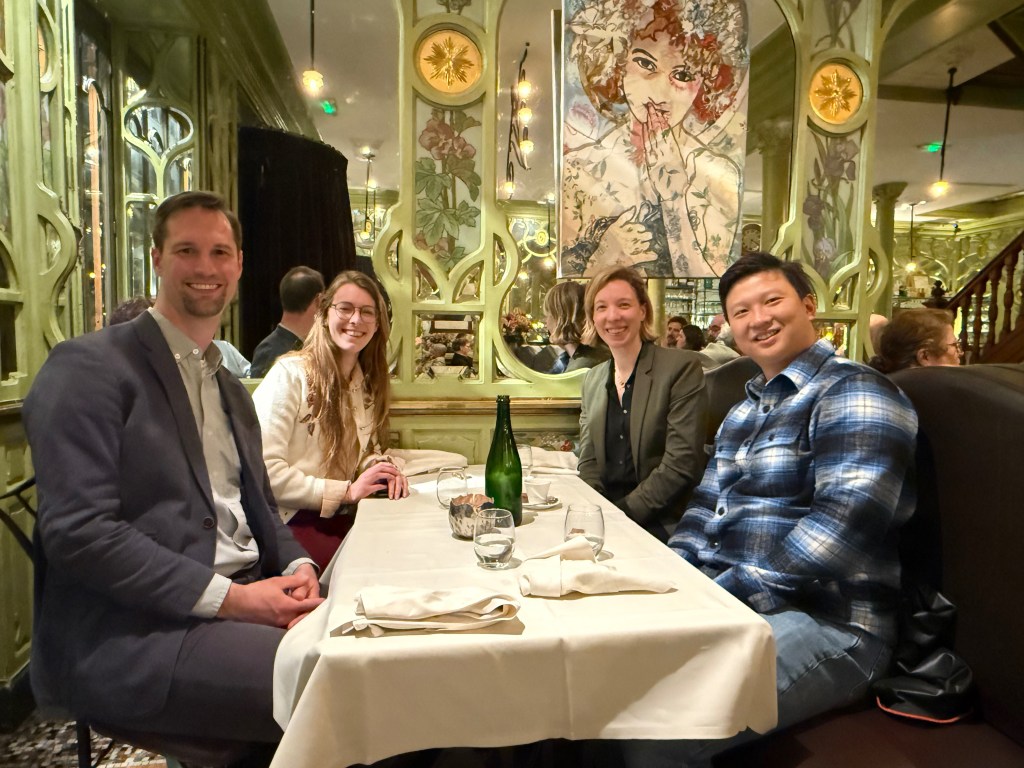
Drs. Astrid Layton, Jessica Menold, Kosa Goucher-Lambert, Mohsen Moghaddam, and Zhenghui Sha were invited by Drs. Carolyn Seepersad and Julie Linsey at Georgia Tech for an insightful series of talks on The Future of Design for the annual “Rigi” meeting of the Design Society. The talks will be compiled in an editorial journal paper in the Journal of Mechanical Design later this year.

Drs. Carolyn Seepersad, Astrid Layton, Kosa Goucher-Lambert, Zhenghui Sha, and Mohsen Moghaddam at the annual Design Society “Rigi” meeting, held at Georgia Tech.