September 24-25, 2026
Texas A&M Energy Research Society’s (ERS) 10th Annual Conference on Energy
The Texas A&M Energy Research Society is hosting its annual energy conference and is calling for abstracts for oral and poster presentations. This year’s theme is “Global Energy Solutions: Translating Breakthrough Technologies into Real-World Impact.” The submission deadline is August 17. Click here to learn more!
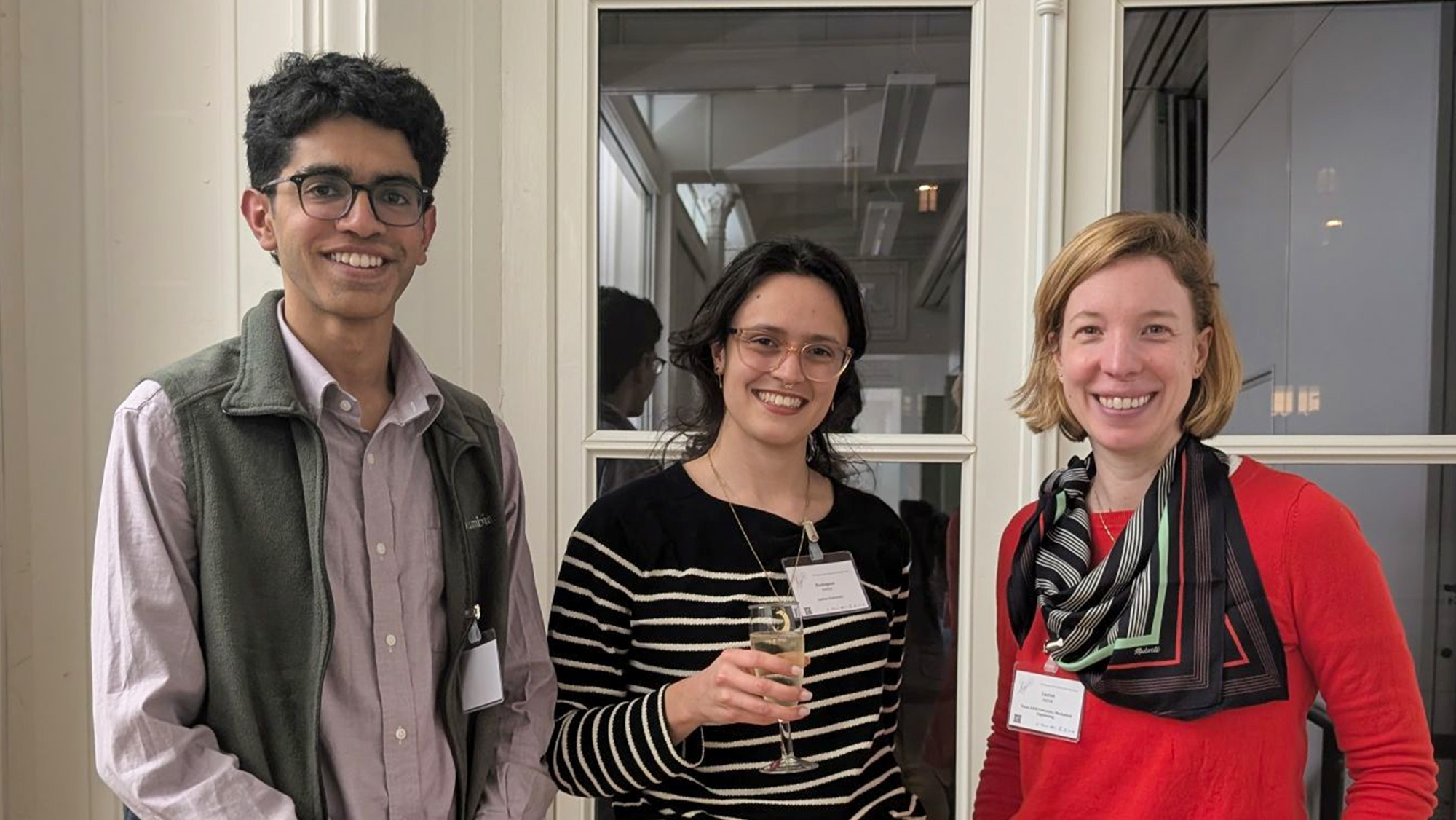
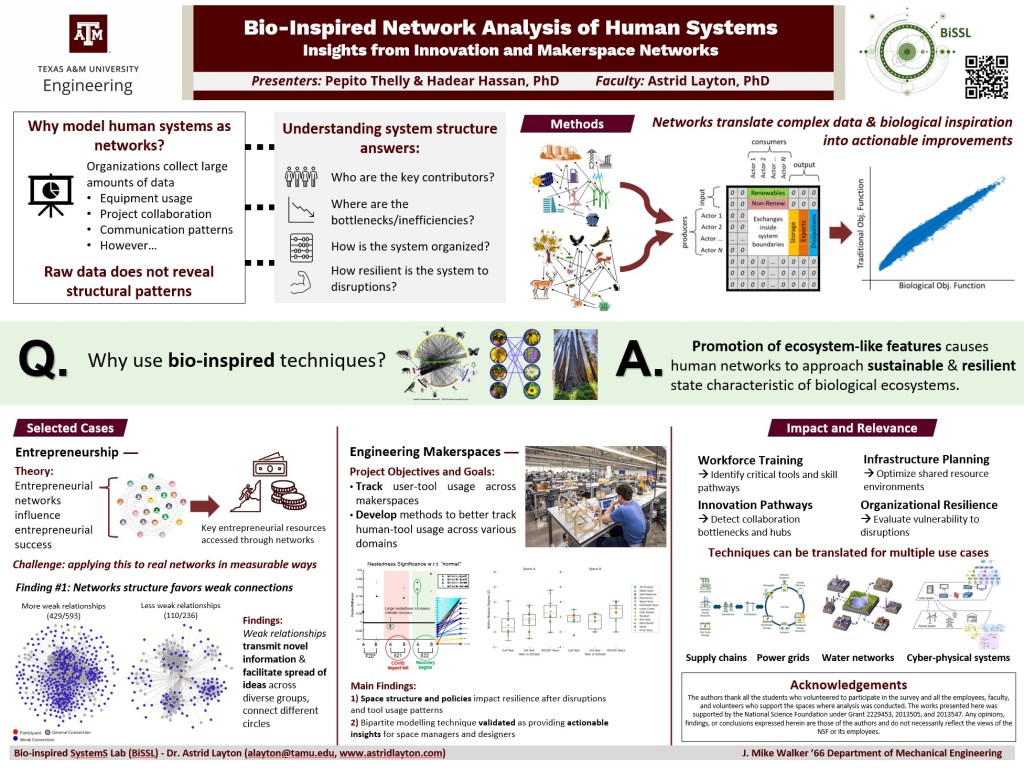
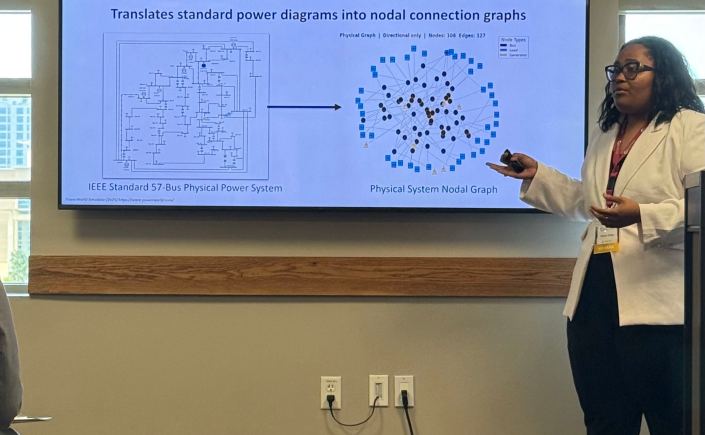
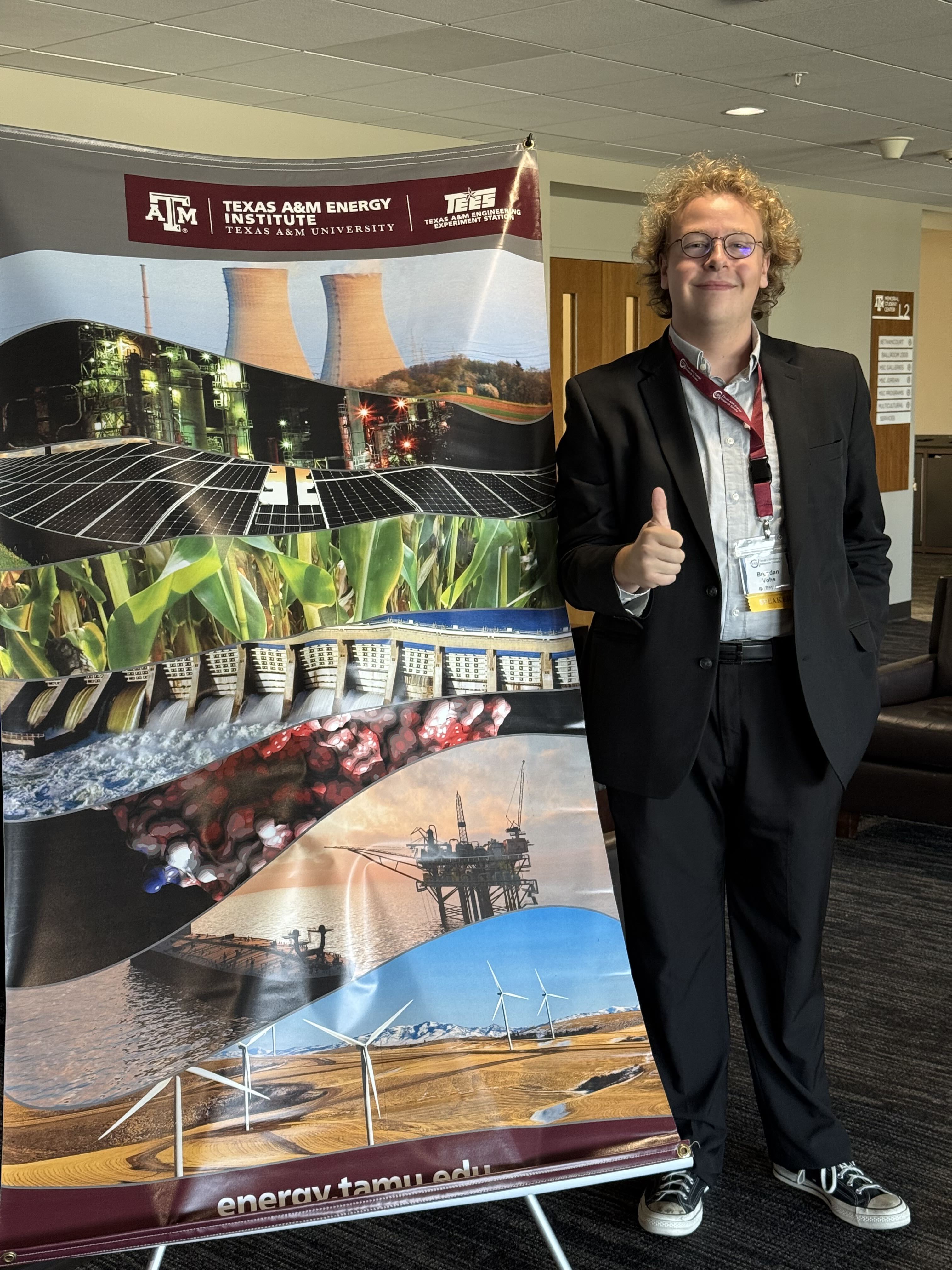
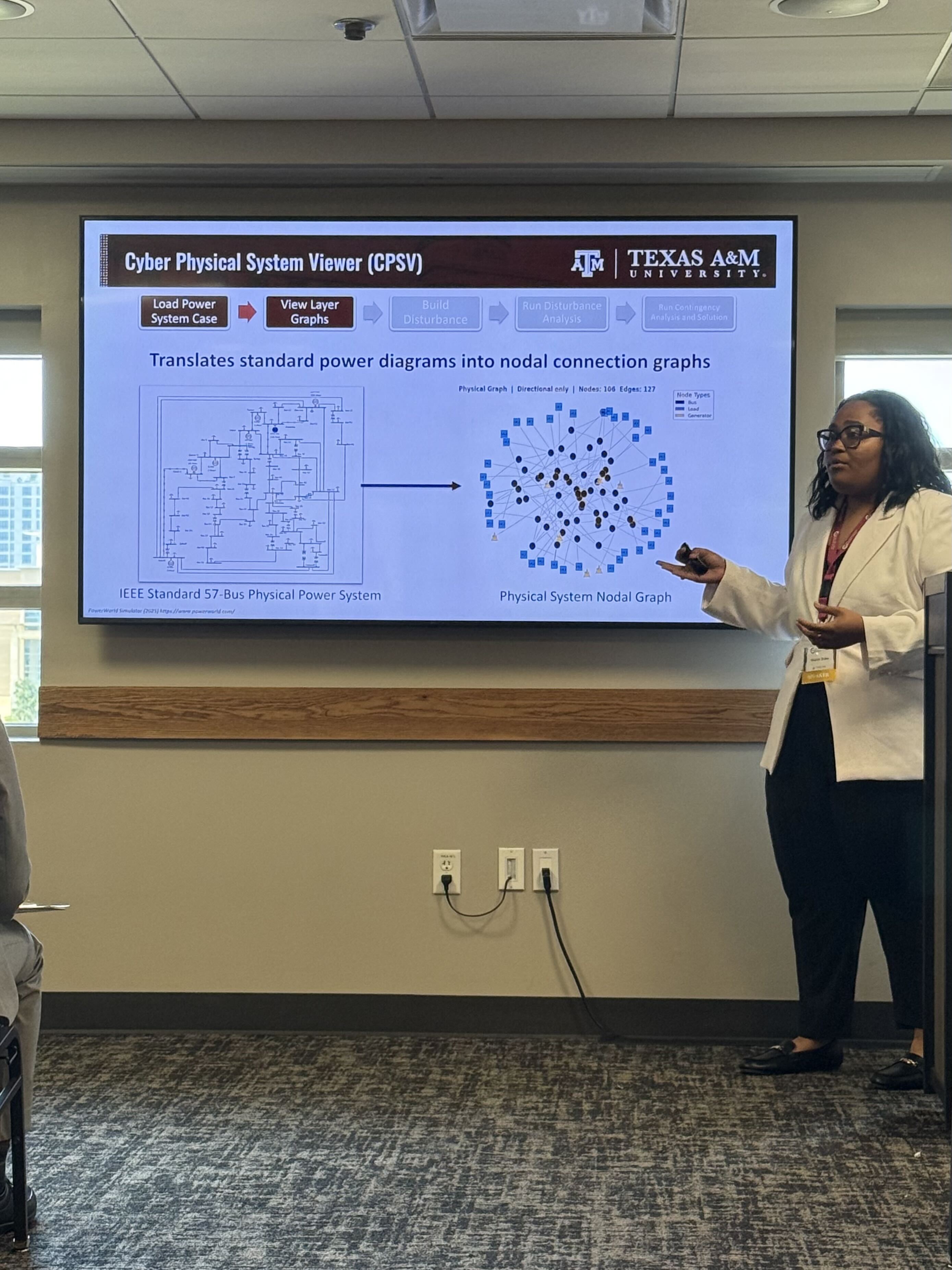
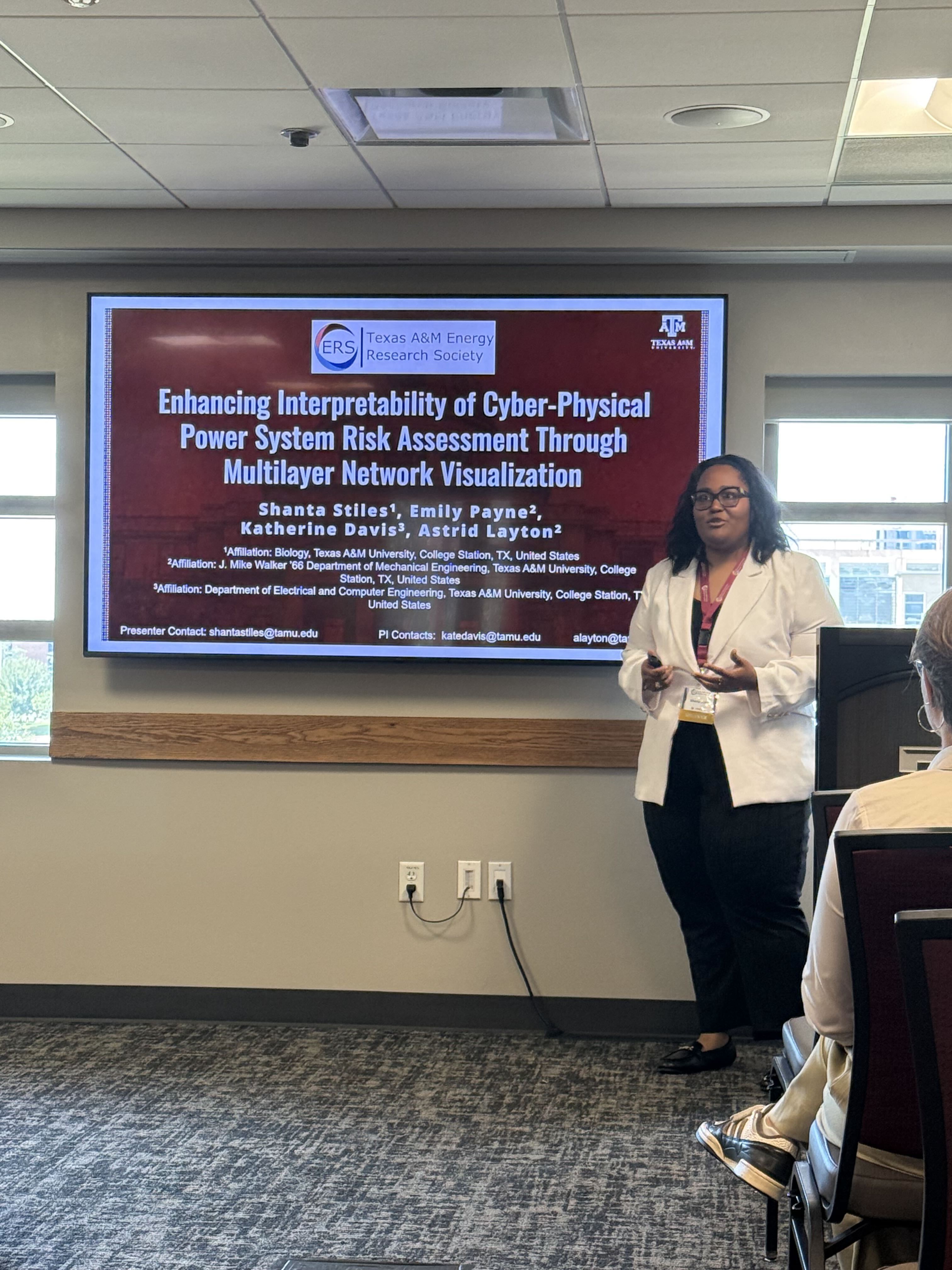
MEEN undergraduate student Brendan Vohs presented collaborative work titled “From Technology to Adoption: Modeling Stakeholder Engagement in Community Solar Projects.” Biology undergraduate student Shanta Stiles presented her work titled “Enhancing Interpretability of Cyber-Physical Power System Risk Assessment Through Multilayer Network Visualization.” This was the first time doing a technical presentation for both of them and they did great!

“From Technology to Adoption: Modeling Stakeholder Engagement in Community Solar Projects“
Brendan Vohs1, Pepito Thelly1, Sita M. Syal2, Astrid Layton1
1Affiliation: J. Mike Walker ’66 Department of Mechanical Engineering, Texas A&M University, College Station, TX, USA
2Affiliation: Department of Mechanical Engineering, University of Michigan, Ann Arbor, MI, USA
Abstract: Since the discovery of photovoltaics there have been countless advances leading to the emergence and development of more efficient and scalable solar energy solutions. However, access to solar energy remains uneven, as the upfront cost and physical requirements can act as barriers to entry. Community solar projects mitigate this by enabling shared ownership or subscription-based access. Despite some highly successful examples, community solar projects often fail. Research has shown this is often due to community opposition related to insufficient stakeholder engagement. A critical gap remains in understanding how, with whom, and when stakeholder interactions should occur across project phases to support success, particularly for small to medium-scale developments. This presentation introduces a novel modeling framework that adapts bipartite mutualistic network analysis from ecology to examine patterns and characteristics arising from developer-type interactions with community members, with the long-term goal of identifying quantitative interaction patterns that correspond to higher rates of project success. Using a hypothetical-realistic 1 MW community solar case study, interactions between community and non-community stakeholders are modeled across 4 development phases under 2 scenarios: a business-as-usual engagement approach and an enhanced community engagement approach. Network metrics—including degree, connectance, Gini coefficient, and Shannon entropy—are applied to quantify interaction volume, distribution, and inclusivity. The results indicate that connectance, interaction diversity, and evenness are able to quantitatively identify increased and intentional engagement, highlighting the value of interactions that happen during early and mid-project phases. Both scenarios converge during construction, suggesting there may be structural constraints on stakeholder participation in later stages. The modeling and analysis framework provides a promising tool for guiding developers, communities, and funding agencies toward community solar projects that are better positioned for long-term success and grid integration.
Keywords: Bio-Inspired Design, Network Modeling, Community Energy, Power Networks, Ecological Analysis
“Enhancing Interpretability of Cyber-Physical Power System Risk Assessment Through Multilayer Network Visualization“
Shanta Stiles1, Emily Payne2, Katherine Davis3, Astrid Layton2
1Affiliation: Biology, Texas A&M University, College Station, TX, United States
2Affiliation: J. Mike Walker ’66 Department of Mechanical Engineering, Texas A&M University, College Station, TX, United States
3Affiliation: Electrical and Computer Engineering, Texas A&M University, College Station, TX, United States
Abstract: Risk propagation in cyber-physical power systems is difficult to interpret from complex interdependency matrices, potentially leading to delayed operator response, ineffective mitigation strategies, and cascading system failures during critical events. Prior work successfully applied bio-inspired system characteristics to improve resilience and understand risk propagation in power systems with the development of the Ecological Network Analysis (ENA) framework. Further improvement of ENA-based analysis has led to the development of an interactive visualization and analysis tool that translates ENA outputs into graph-based visual representations of power-system vulnerability – termed the Cyber-Physical System (CPS) Viewer. CPS Viewer integrates critical PowerWorld case data, network construction, disturbance modeling, risk propagation analysis, and contingency simulation all within a single workflow.
The Viewer automatically constructs multilayer representations of the system, including physical graphs that represent generators, loads, buses, and branch flow relationships using directed weighted edges; cyber graphs that model communication paths among relays, switches, routers, human-machine interfaces, firewalls, utility control centers, and ISO/SCADA nodes; and cyber-physical connection graphs that link relay nodes to associated physical devices and buses, allowing users to inspect cross-domain dependencies directly. Interactive visualization is supported through 3D network plots, bipartite cyber-physical graphs, adjacency matrices, weighted flow matrices, and disturbance-highlighted subgraphs. Users can select disturbance nodes through the interface and the tool converts those selections into risk inputs using normalized impact scores derived from component risk attributes and adjusted betweenness centrality. A disturbance analysis can then compute direct risk matrices, indirect risk matrices, cumulative flow effects, node-level summaries, and interaction summaries.
The tool connects ENA-based vulnerability assessment with operational power-system behavior, selected generator, load, and bus disturbances. These connections are translated into PowerWorld-compatible wattage changes and passed to an automated contingency workflow. The contingency module modifies generator and load values, solves the altered power flow, processes an auxiliary contingency file, and executes PowerWorld contingency analysis. The presentation will demonstrate the tool applied to the IEEE 57-bus case, demonstrating how ENA-derived risk information can be explored interactively, helping users identify high-risk nodes, inspect direct and indirect propagation pathways, and evaluate cyber-physical dependencies.
Keywords: risk, bio-inspired design, cyber-physical power systems