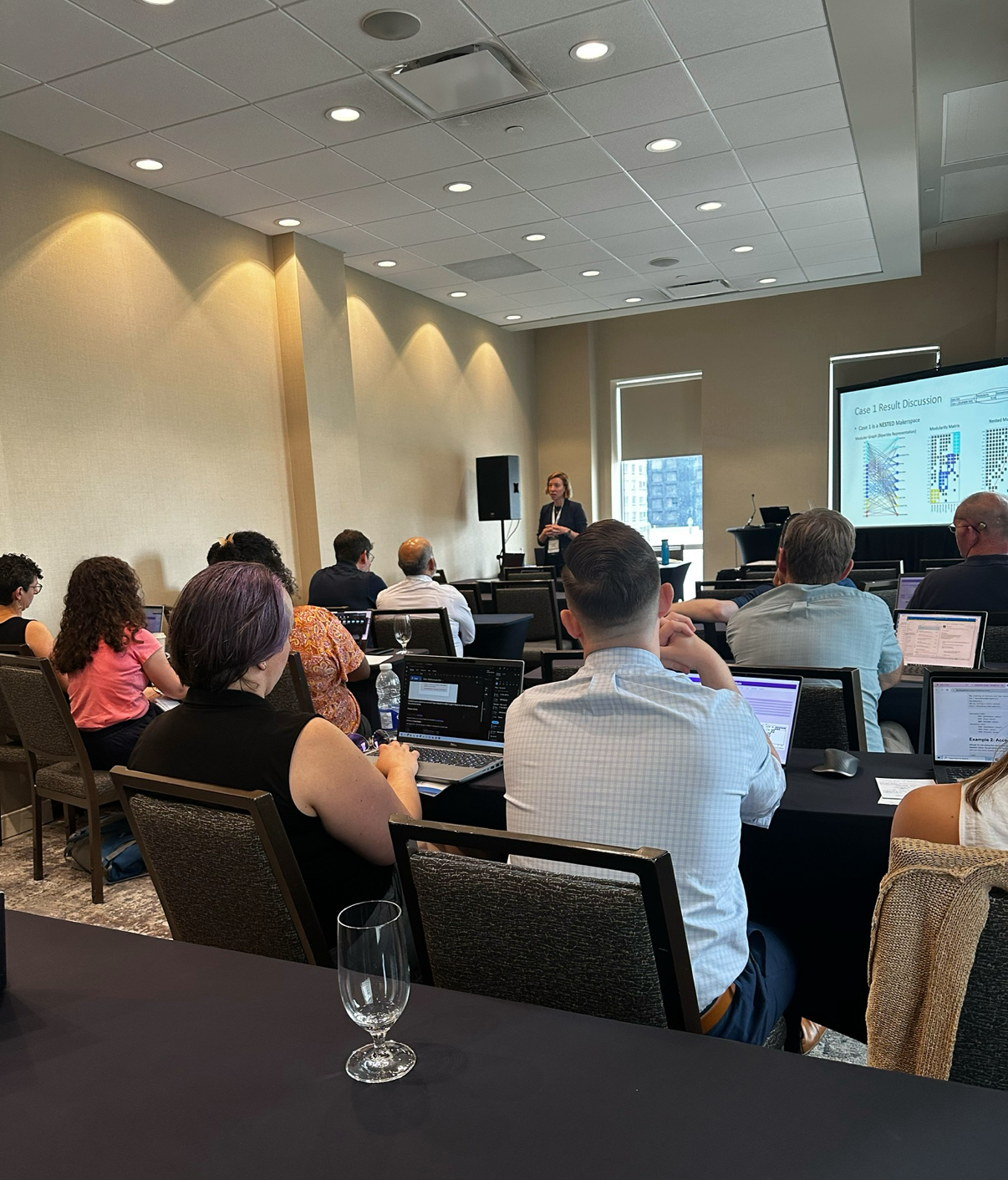
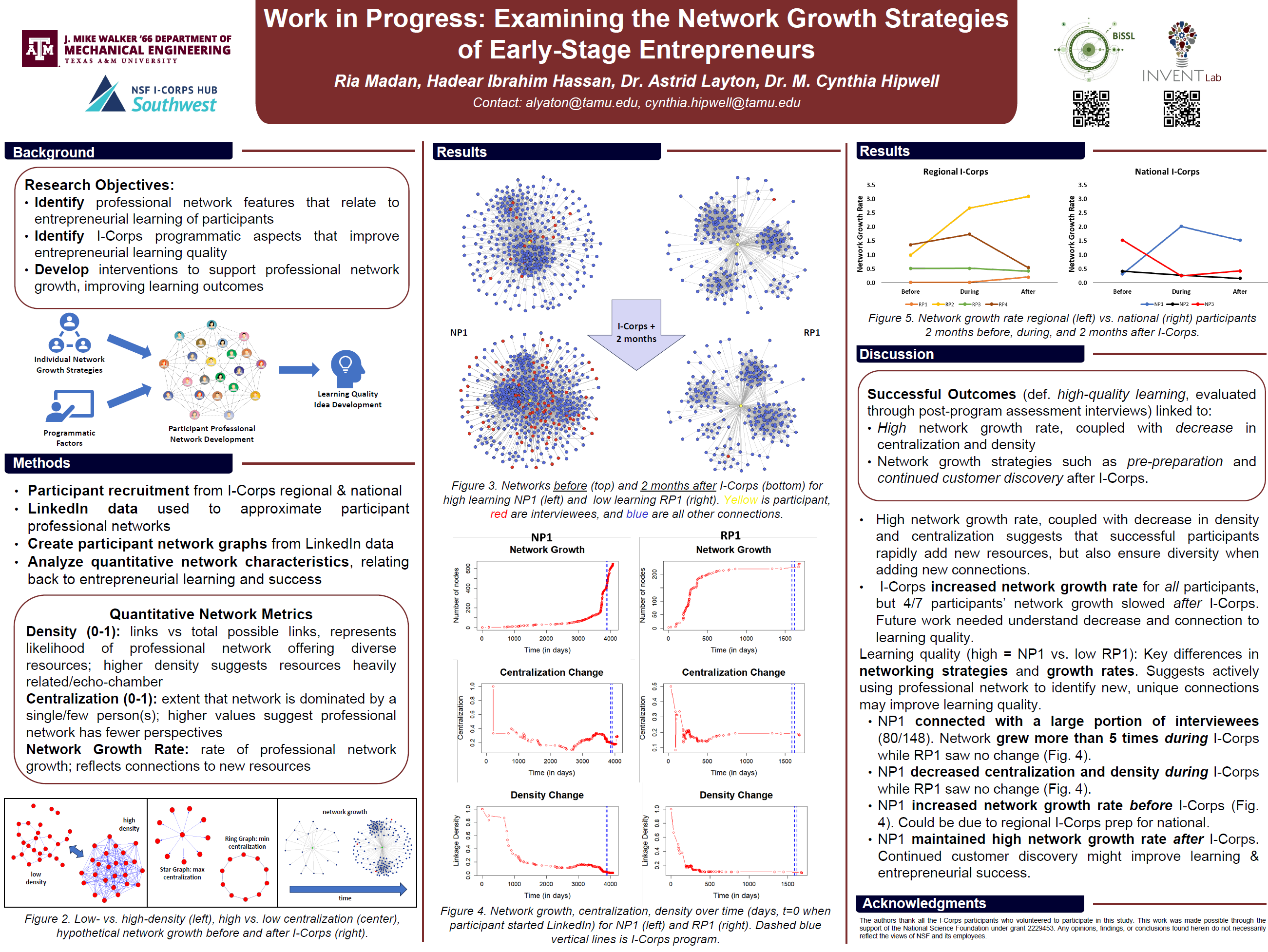
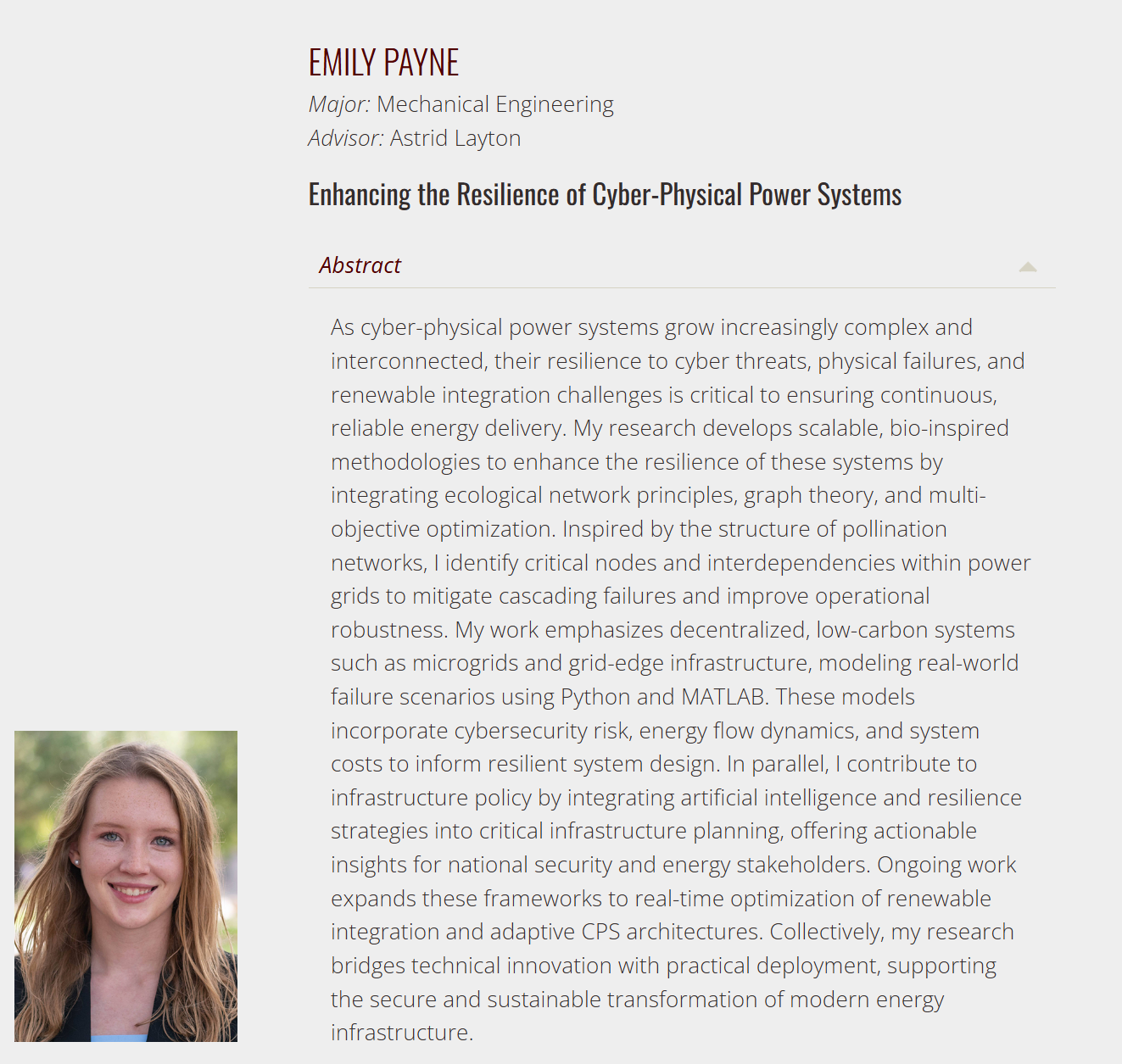
This year’s ASME IDETC-CIE conference saw one BiSSL Ph.D. student, Emily Payne, presenting her first-authored paper and Dr. Layton serving as an invited panelist for 2 panels.
Emily’s paper, “Integrating Machine Learning into the Design of Green Building Systems,” was presented in the SEIKM: Systems Engineering and Complex Systems.
Abstract: Sustainable infrastructure design is a complicated process often requiring detailed estimates specifications and constraints of the project scope to be compiled. Beyond the time-consuming gathering of project data sometimes the availability of completed projects is limited. Therefore, a method to produce similar designs with varied constraints requires a systems engineering perspective. Systems engineering provides a method to evaluate multidisciplinary design development while simultaneously following stakeholder requirements. Ecologically inspired systems have shown the ability to maintain balanced resources and structural relationships even under duress. Driven by the imperative to build sustainable infrastructure, this research explores the utilization of machine learning techniques to generate robust and reliable forecasts of green building specifications, even when design resources are scarce. To demonstrate the effectiveness of this approach, machine learning techniques were performed on a dataset of 93 green educational buildings, and on an oversampled dataset containing synthetically generated data points at the aim of certification level prediction. Both datasets contained metrics quantitatively characterizing cost, energy efficiency, and ecologically sustainable metrics specific to each building. Results indicate that the oversampled dataset allowed for better machine learning prediction among the classification algorithms considered. Oversampled data provided quality information offering cost minimization during initial design stages. This data suggests that oversampling is a reliable technique to amplify the design area of infrastructure projects when applied on data containing strong systemic classification patterns.
A panel session “Approaches to Environmental Sustainability, Perspectives from Europe and North America” hosted by the Design Society and organized by Dr. Julie Linsey invited me along with Dr. Abigail Clarke-Sather from the University of Minnesota Duluth and Dr. Devarajan Ramanujan from Aarhus University. The talks and discussion highlighted recent work at the interface of engineering design and circular economy.
Session Description: Minimizing impacts on the environment through clean energy, sustainability, and similar topics continues to grow and be critical topics in engineering. It is a topic that attracts significant interest in both North America and Europe and benefits from the diverse regional perspectives. In this special session, leading researchers from Europe and North America will present their perspectives on current needs, research approaches, cutting-edge research, and differing viewpoints. This session will feature 7-minute short, thought-provoking presentations followed by panelist discussions and questions. The focus will be on bringing diverse perspectives and cutting-edge research from both communities together, thereby building greater connections between the European Design Society community and the primarily North American ASME IDETC community.
A panel special session “Opportunities at the Boundaries between Systems Engineering and Design Theory” hosted by the Design Theory and Methodology technical committee and organized by Drs. Bryan Watson and Alex Murphy invited me along with Diarny Fernandes from the Johns Hopkins University Applied Physics Laboratory and Dr. Matthew Mueller from PTC. The discussion highlighted useful intersections and emerging problems between design theory and systems engineering.