Dr. Layton Invited Seminar at University of Pittsburgh

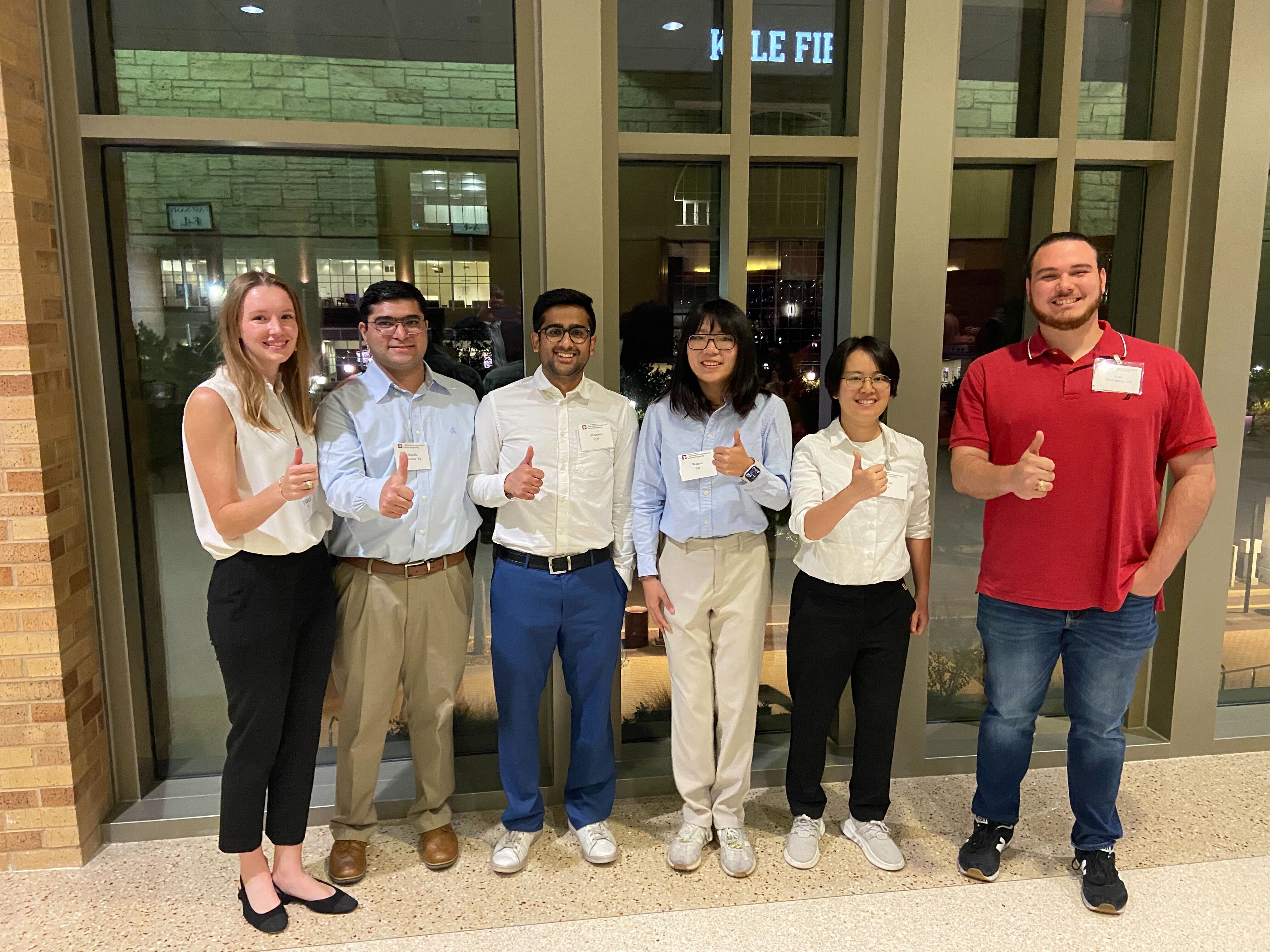
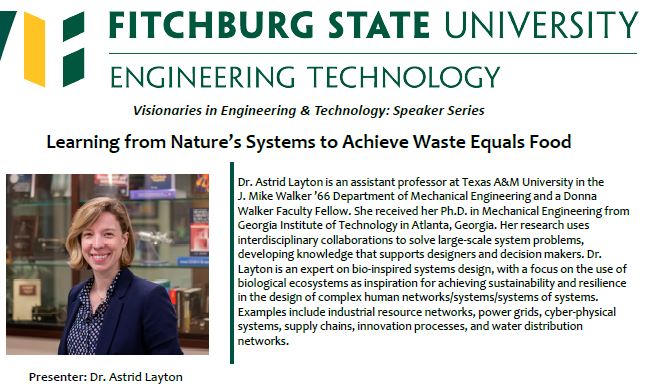
Following the ASEE 2023 workshop on our makerspace modeling/analysis GUI use, Dr. Layton was invited to come give a research seminar at University of Pittsburgh to share the NSF funded makerspace work her and Dr. Julie Linsey at Georgia Tech have been doing. Her talk was titled: “From Makerspaces to Industries: How Bio-Inspired Network Models Can Alter Functioning Via Form”

The youngest attendee Renee was 10 years old and already a makerspace expert!

Joint (JMD & JMSE) Special Issue On Advances In Design And Manufacturing For Sustainability

Dr. Layton is a guest editor for an upcoming special issue on sustainability in design and manufacturing being published jointly between ASME’s journals of Mechanical Design and Manufacturing Science and Engineering. Drafts are due July 31, 2023.

This special issue is a joint effort between the ASME Manufacturing Engineering Division (MED) and the Design Engineering Division (DED) as part of a collaboration to advance design and manufacturing research in sustainability. As the need grows for methodologies and tools capable of supporting sustainable systems, this collection welcomes new scientific approaches, data-driven techniques, informatics solutions, and case studies at the intersection of sustainability, design, and manufacturing. The call focuses on the main challenges the design and manufacturing communities face regarding sustainability and seeks to identify emerging research trends as well as current industry practices for integrating sustainability principles into the design and implementation of engineered systems and processes. Recent advances and future directions along the design-manufacturing continuum are welcome, including submissions on topics such as design decisions, manufacturing process development, manufacturing systems optimization, supply chain integration, sustainable energy systems, product user interaction, and product end-of-life analysis.

Topic Areas

  • Circular Economy and Industry 5.0
  • Artificial intelligence for sustainable design and manufacturing
  • Sustainability analytics
  • Sustainable additive manufacturing and additive remanufacturing
  • Design for recycling, remanufacturing, and reuse
  • CAD integration of sustainable design methods and techniques
  • Sustainable energy systems
  • Industrial ecology in design, manufacturing, and automation
  • Environmental justice in design and eco-design approaches
  • Human-centric design and manufacturing
  • Remanufacturing and advanced recycling processes for critical materials
  • System efficiency and Decarbonization

Sandia National Lab Visit

Ph.D. student Emily Payne and Dr. Astrid Layton joined collaborators Dr. Kate Davis and her Ph.D. students Leen and Akram for a visit to Sandia National Lab in Albuquerque, NM. The trip was part of an ongoing collaborative LDRD grant with Sandia looking at cyber-physical power systems for resilience. The trip even evolved some exploring Petroglyph National Monument!

Dr. Layton Invited Seminar for the INCOSE Natural Systems Working Group (NSWG)

BiSSL director Dr. Astrid Layton was invited to give a research seminar to the INCOSE Natural Systems Working Group.

Abstract: Inspiration from nature has produced some fascinating, novel, and life-changing solutions for the human world. Most of these bio-inspired designs however have been product based. Taking a systems perspective when we look to nature taps inspirations that can improve the critical networks we depend on. This talk focuses on biological ecosystems, in particular, complex networks of interacting species that are able to support individual needs while maintaining system-level functions. These networks offer inspiration for achieving both sustainability AND resilience in the design of our human-engineered networks. Quantitative ecosystem descriptors and analysis techniques adapted from ecology enable desirable ecosystem characteristics to be used as design guides for things like industrial resource networks, water networks, supply chains, and power grids.
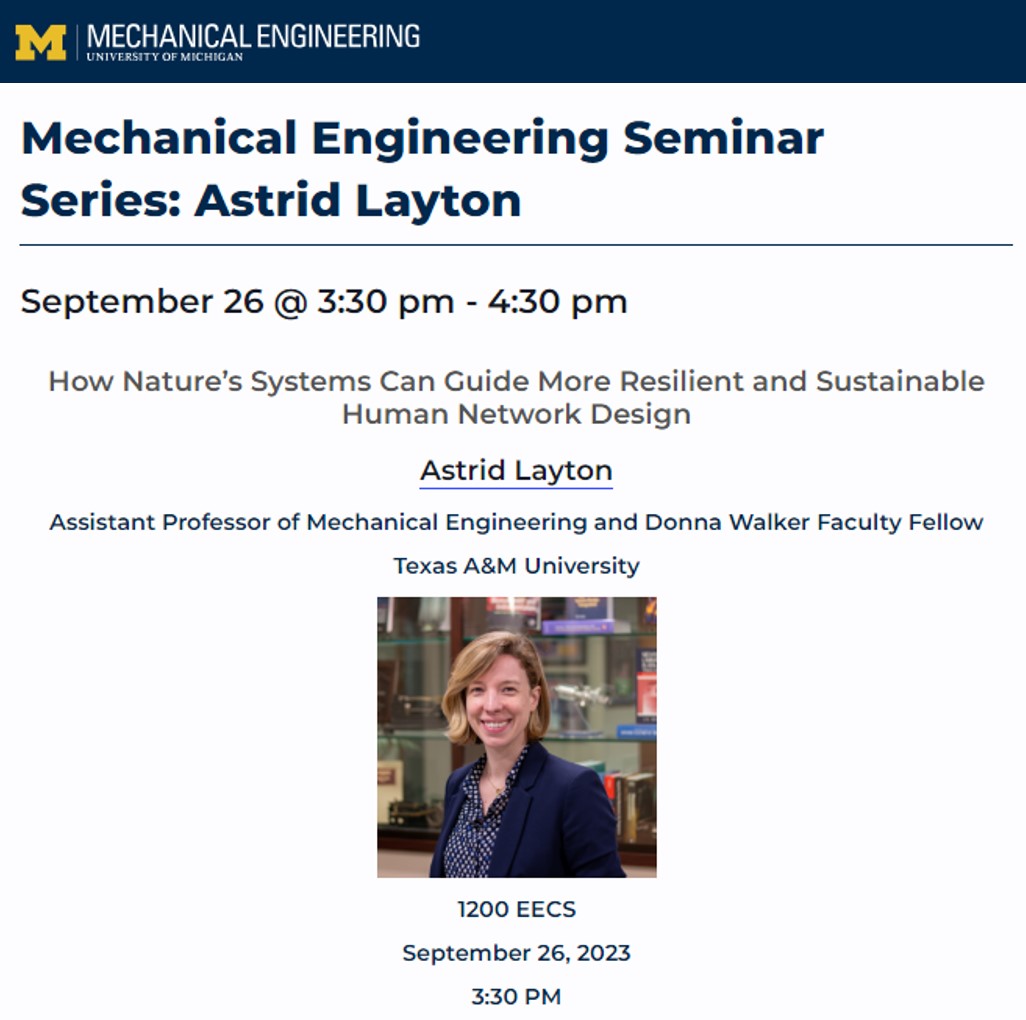
โ€œBiological Ecosystems as Quantitative System Design Inspiration for Resilient and Sustainable Human Networksโ€ Dr. Astrid Layton

This image has an empty alt attribute; its file name is image.png

BiSSL Ph.D. Student Emily Payne Chosen as a TEX-E Fellow

Texas Entrepreneurship Exchange for Energy (TEX-E) is a first-of-a-kind collaboration among The University of Texas at AustinTexas A&M UniversityUniversity of HoustonRice University, and Prairie View A&M Universityโ€”powered by Greentown Labs and MITโ€™s Martin Trust Center for Entrepreneurshipโ€”to create a powerful student-driven entrepreneurship ecosystem in Texas. More information can be found here: https://greentownlabs.com/tex-e/

A&M Feature on BiSSL Ph.D. Student Emily Payne

“Fashioning an engineering education via discipline and design” by Grace Dalton.

“Growing up, Emily Payne enjoyed drawing and being creative. In high school, she took practicum-level fashion courses involving practical applications of fashion theory and excelled in her projects.
ย 
Trace the pattern. Measure. Check numbers. Cut and stitch. Fit the garment. Adjust and tweak. Review results. Those were the steps she carefully followed when creating a garment in high school. It seemed inevitable that Payne would become a designer until she found herself contemplating what seemed like a different world entirely โ€” engineering. …”

BiSSL Ph.D. Student Hadear Hassan Awarded 2023 Association of Former Students Distinguished Graduate Student Award

Dr. Astrid Layton and award-winning BiSSL Ph.D. student Hadear Hassan.

Hadear has been awarded the 2023 Association of Former Students Distinguished Graduate Student Award for teaching!

Each year they select a group of graduate students to receive the Association of Former Students Distinguished Graduate Student Awards in one of two categories: Excellence in Research-Doctoral and Excellence in Teaching-Masterโ€™s and Doctoral. Student nominations arrive from faculty advisors or departments, and nomination represents a true honor and accomplishment, due to strenuous eligibility requirements. A panel of reviewers including faculty and administrators chooses award recipients.

โ€œThe Distinguished Graduate Student Awards recognize the top tier of Texas A&Mโ€™s graduate students for exemplifying our core values in classrooms and laboratories. These awards have been presented annually since 1965 thanks to generous gifts to The Association of Former Studentsโ€™ Annual Fund,โ€ said Porter S. Garner III โ€™79, President and CEO of The Association of Former Students. โ€œWe are pleased to be able to honor these exceptional Aggies for their important contributions to Texas A&Mโ€™s world-class teaching and cutting-edge research.โ€

4 BiSSL Students have Papers Accepted to IDETC-CIE 2023

We’re happy to share that 3 BiSSL papers, written by 4 BiSSL researcher students, have been accepted for publication and presentation in Boston, MA in August at IDETC-CIE 2023.


BiSSL alum Samuel Blair, in collaboration with our Georgia Tech partners Dr. Julie Linsey and Claire Crose, has a paper accepted to the Design Theory and Methodology division titled “Measuring the Health of Makerspaces During Large Disruptions Such as the COVID-19 Pandemic.”

As the popularity of makerspaces and maker culture has skyrocketed over the past two decades, numerous studies have been conducted to investigate the benefits of makerspaces for university students and how to best establish an inclusive, welcoming environment in these spaces on college campuses. However, unprecedented disruptions, such as the COVID-19 pandemic, have the potential to greatly affect the way that students interact with makerspaces and the benefits that result. In this study, a survey asking about prior makerspace involvement, tool usage, and student demographics was administered to students who use academic makerspaces at two large public universities. Survey data was collected for three semesters (Fall 2020, Spring 2021, and Spring 2022) and spanned both during and after the height of the COVID-19 pandemic. To quantify the differences between the semesters, nestedness and connectance metrics inspired by ecological plant-pollinator networks were utilized. These ecological metrics allow for the structure of the interactions of a network to be measured, with nestedness highlighting how students interact with tools and connectance with the quantity of student-to-tool interaction. The network analysis was used to better gauge the health of the makerspace and the type and frequency of interactions between tools. The raw survey data combined with the ecological metrics provided unique insight into the struggles the makerspaces encountered throughout the pandemic. It was found that nestedness, a measure of system stability, decreases with a decrease in tool usage. Additionally, the higher the connectance the more students interacted with the space. Utilizing metrics such as these and better understanding student tool interactions can aid makerspaces in monitoring their success and maintaining a healthy and welcoming space, as well as tracking the current health of the space. In combination with the survey results, a deep understanding of what challenges the space is facing can be captured.

Crose, C., S. Blair, A. Layton, and J. Linsey. (2023) โ€œMeasuring the Health of Makerspaces During Large Disruptions such as the COVID-19 Pandemic.โ€ ASME 2023 International Design Engineering Technical Conferences and Computers & Information in Engineering Conference (IDETC-CIE). Boston, MA, USA.

BiSSL Ph.D. students Hadear Hassan and Emily Payne collaborated on the paper titled “Quantifying the Sustainability and Robustness of Manufacturing Systems Using Energy and Ecological Network Analyses,” to be presented by Hadear in August in the Design For Manufacturing and Life Cycle division (DFMLC).

Global issues, such as supply chain disruptions, have increased awareness of the importance of manufacturing systems being able to quickly bounce back from disturbances. This necessary response is in addition to the importance of mitigating climate change, maintaining market competitiveness, and eliminating unnecessary waste. Two analysis types are compared here: 1) a thermodynamic exergy analysis to quantify a manufacturing system’s energy and material efficiency and 2) an ecological network analysis as a quantitative representation of the system’s sustainability and robustness. Several manufacturing structures, including different processes ranging from the traditional to advanced, like injection molding and binder jetting, are examined in terms of the system response to changes. The findings indicate that the thermodynamic approach efficiently evaluates the efficacy of energy and resource conversion to create a final product. The ecological network approach was also found to provide useful insights on both the environmental efficiency of the systems as well as the resilience. These results are useful when combined for suggesting system layouts and operations that holistically improve a manufacturing systemโ€™s design. The findings indicate that existing manufacturing infrastructure needs to be redesigned to better withstand and recover from unforeseen disruptions. Introducing features such as recyclability and combining multiple types of manufacturing processes can enhance the overall resilience of the system. The work suggests that the bio-inspired systems analysis approach when coupled with connectivity and energy-related factors can lead to enhanced manufacturing system designs.

Hassan, H., E. Payne, and A. Layton. (2023) โ€œQuantifying the Sustainability and Robustness of Manufacturing Systems Using Energy and Ecological Network Analyses.โ€ ASME 2023 International Design Engineering Technical Conferences and Computers & Information in Engineering Conference (IDETC-CIE). Boston, MA, USA.

BiSSL Ph.D. student Emily Payne and undergraduate alum Hannah Wagner collaborated on the paper titled “Resilience and Sustainability in Certified Green Buildings: Applying Ecosystem Concepts to Aid in More Dynamic Green Communities,” to be presented by Emily in August in the Design For Manufacturing and Life Cycle division (DFMLC).

Sustainable and resilient buildings ensure safety and lifespan while also benefiting the environment. Leadership in Energy and Environmental Design (LEED) is one respectable certification that many buildings can receive to ensure that they are meeting future climate and energy goals. However, LEED buildings have credits that do not necessarily agree with creating a sustainable environment. When comparing the orientation of LEED points and their relationship to the building and community to ecological structures, we found that a rearrangement of categories can provide visualization for organized recycling and higher cyclicity through ecological network applications. This relationship was applied to a new scorecard which has results indicating that if designers choose to meet criteria where one credit in each grouping is implemented in construction, then a sustainable building can still be efficient as well as recognized as a green building.  

Payne, E., H. Wagner and A. Layton. (2023) โ€œResilience and Sustainability in Certified Green Buildings: Applying Ecosystem Concepts to Aid in More Dynamic Green Communities.โ€ ASME 2023 International Design Engineering Technical Conferences and Computers & Information in Engineering Conference (IDETC-CIE). Boston, MA, USA.