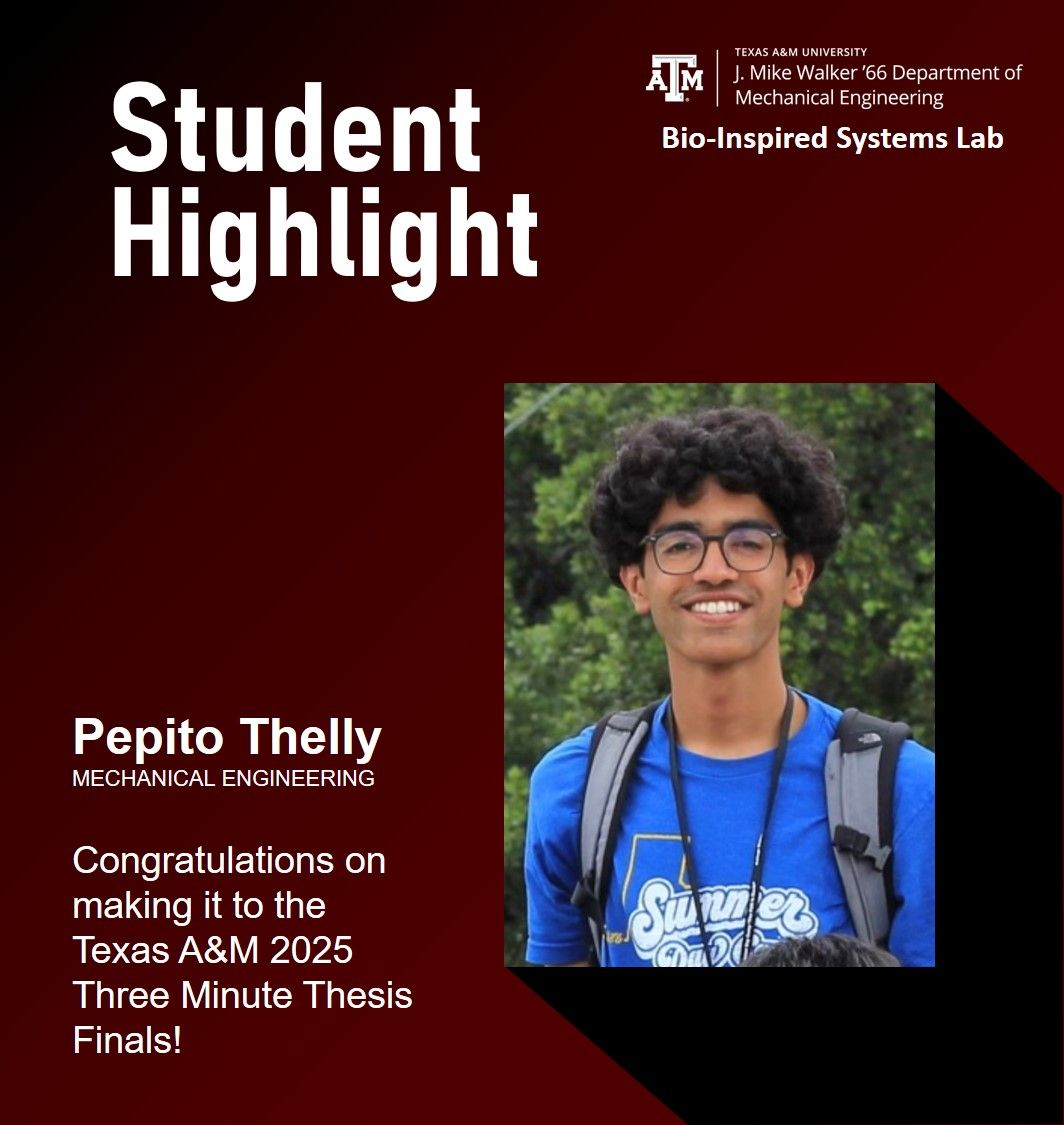
Congratulations to BiSSL Ph.D. student Pepito Thelly, one of 7 Ph.D. finalists in the Texas A&M 2025 3 Minute Thesis (3MT) Final! He was selected out of over 85 participants.
Pepito, a student in Dr. Astrid Layton’s Bio-inspired Systems Lab who’s bio-inspired design research has collaborated with Dr. Julie Linsey and her iDREEM lab at Georgia Tech, will present “Bio-Inspired Makerspace Networks.” Good luck Pepito!
Learn more: https://loom.ly/lKaoE-I Join the free finals, virtually or in person, and vote for the People’s Choice Award!
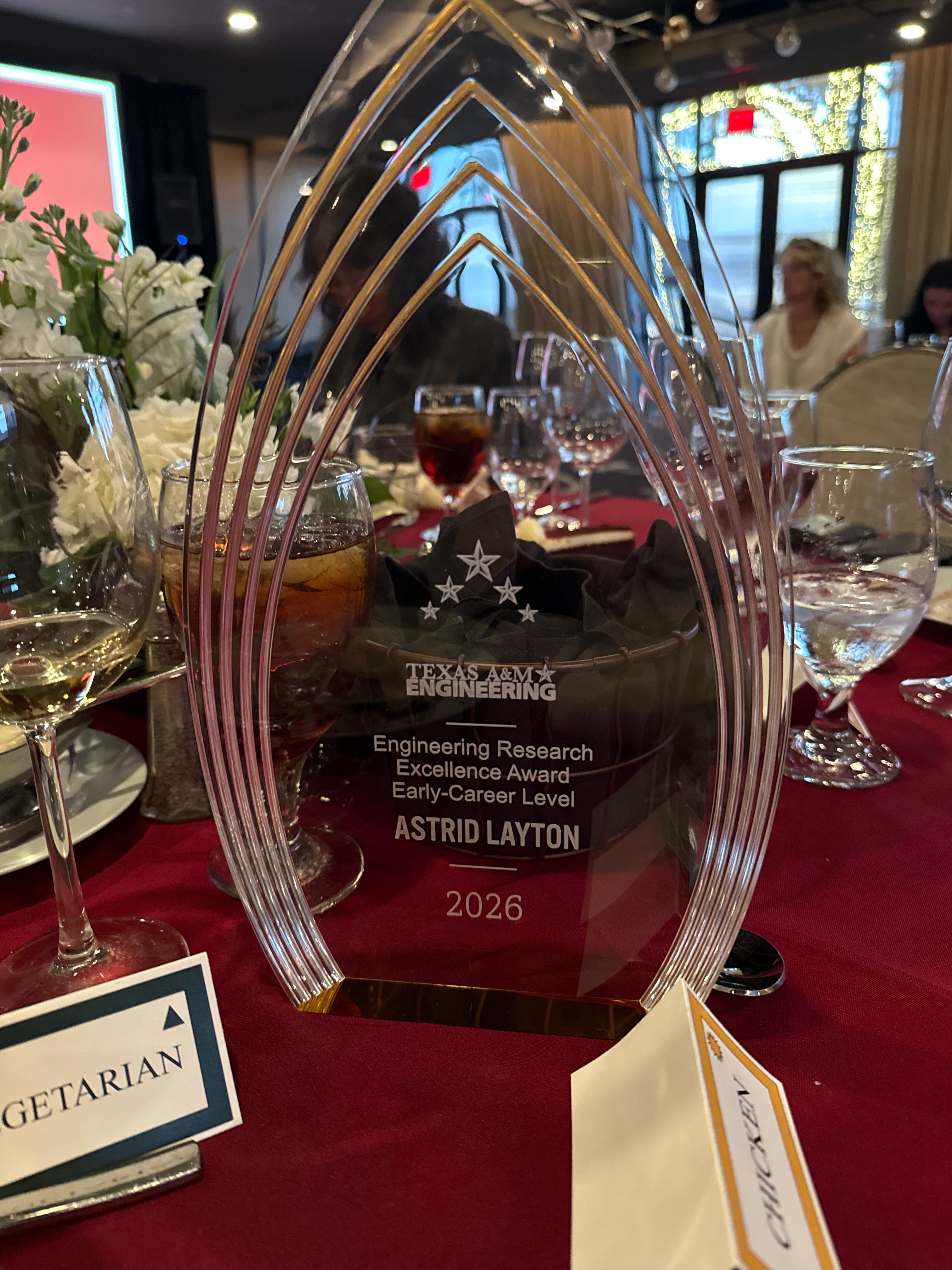
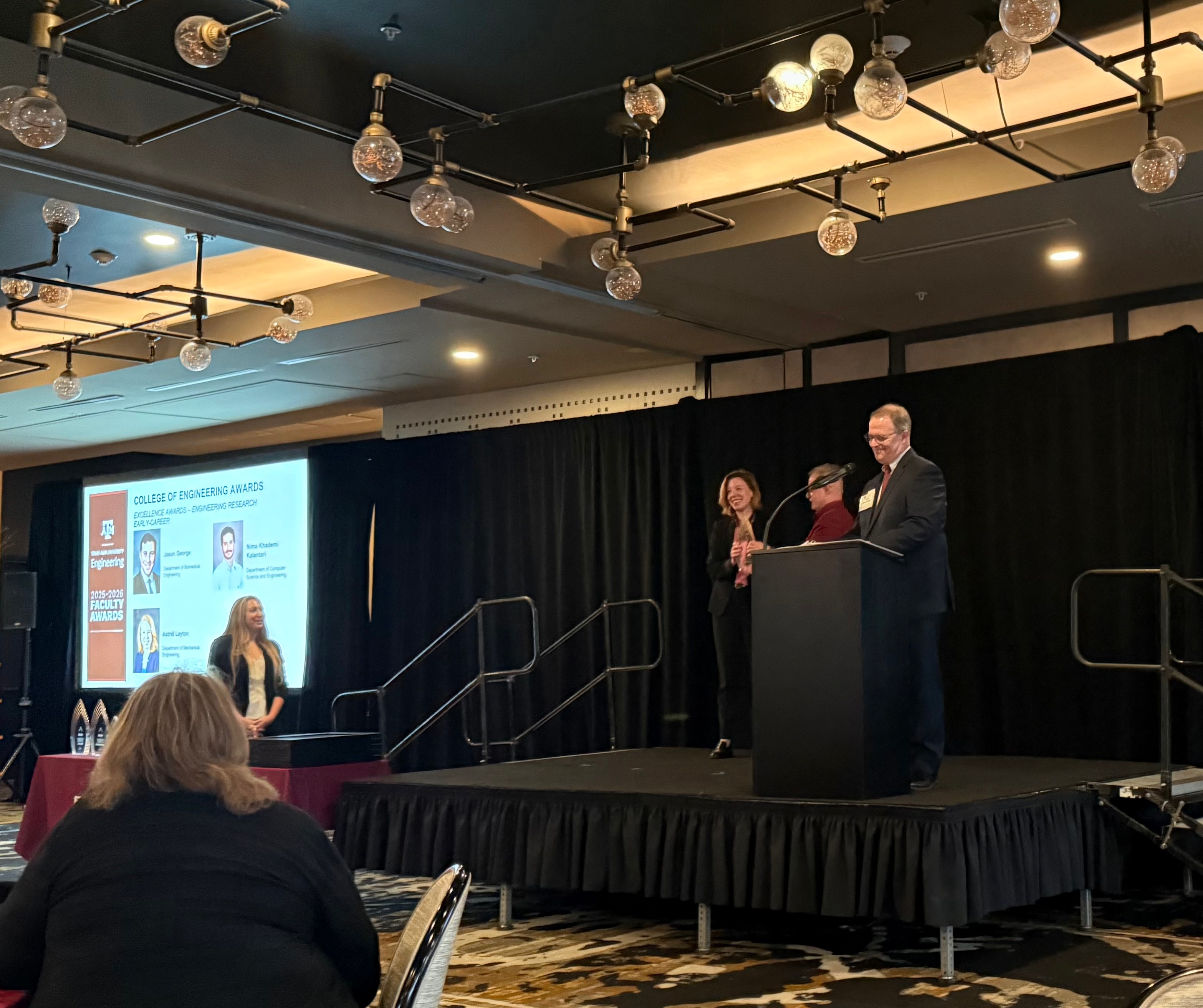
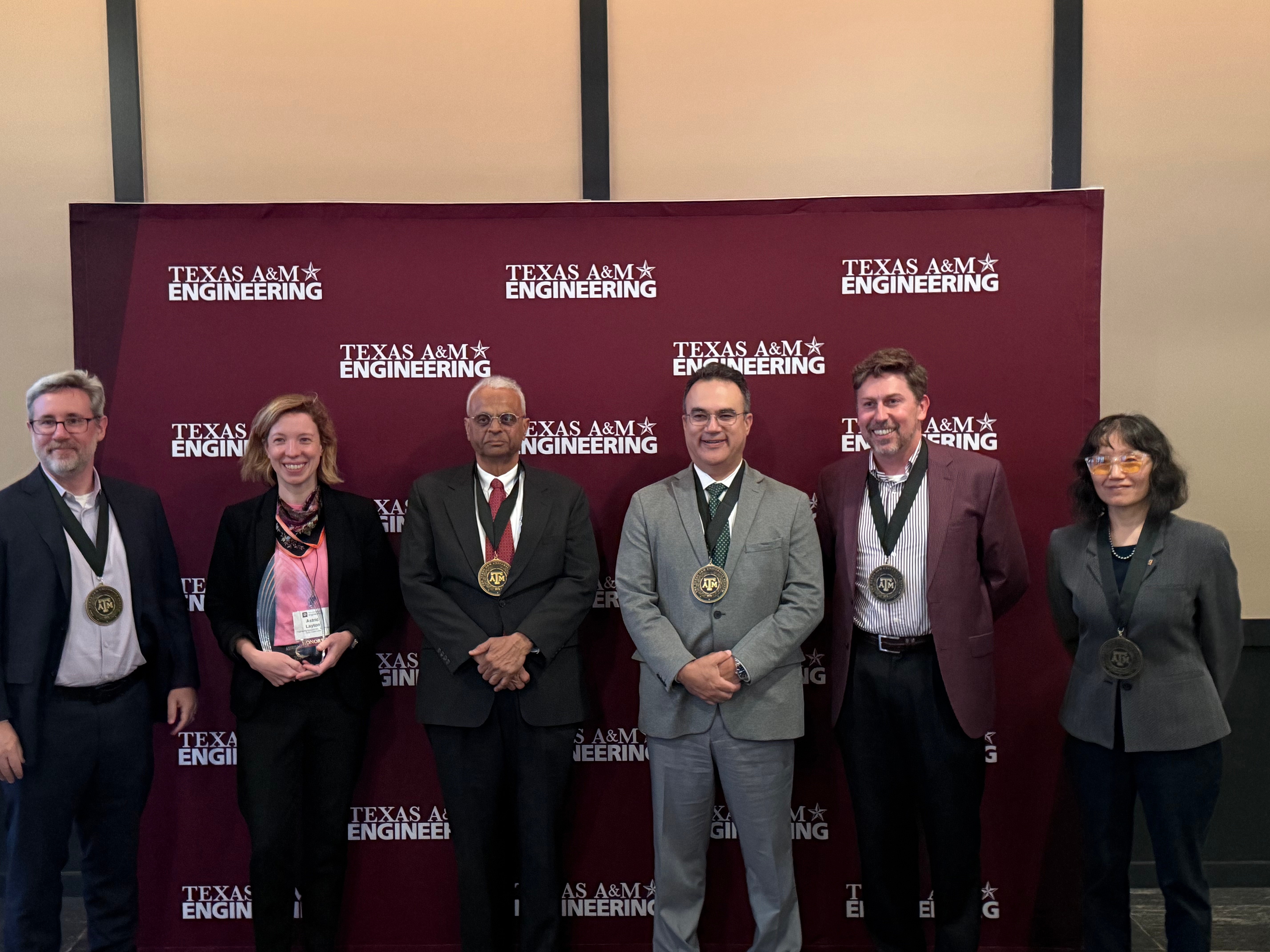
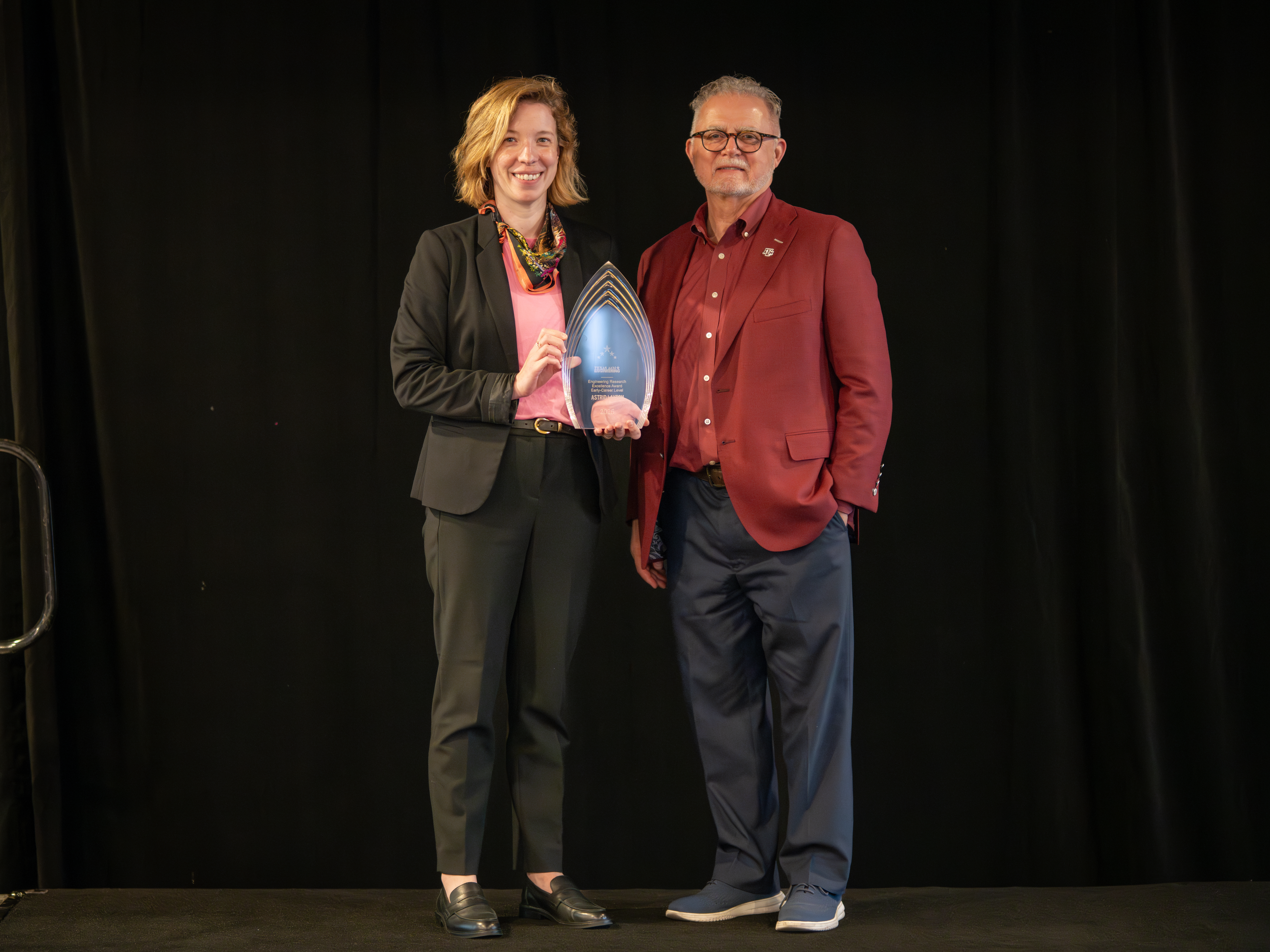
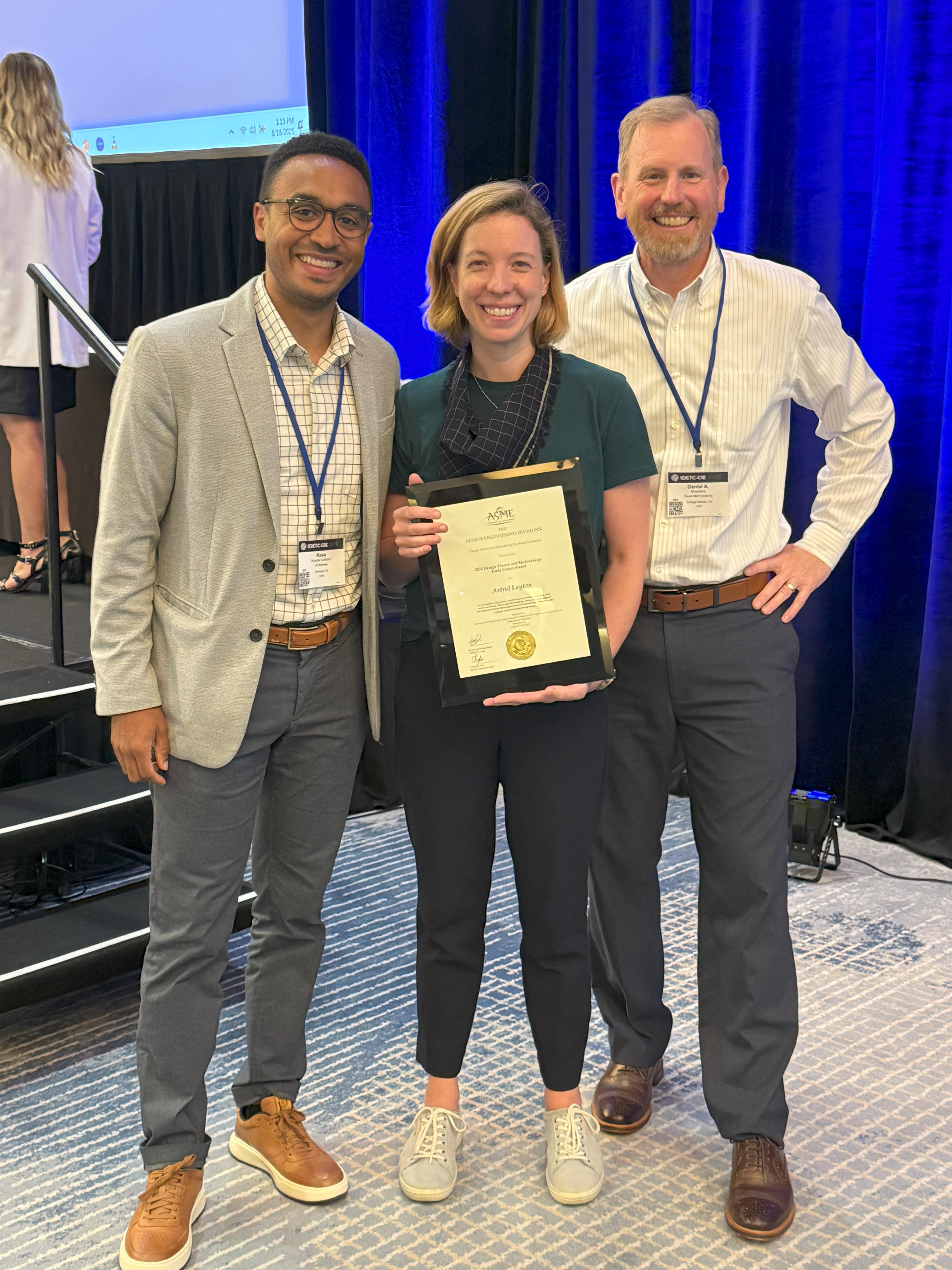
At IDETC-CIE 2025, Dr. Layton was awarded the 2025 Early Career Award by Design Theory and Methodology in the Design Engineering Division by ASME. The award was given “For exemplary early-career contributions to research, education, and service in Design Theory and Methodology, advancing knowledge of bio-inspired network-based approaches to sustainability, resilience, and complex systems in engineering design.”
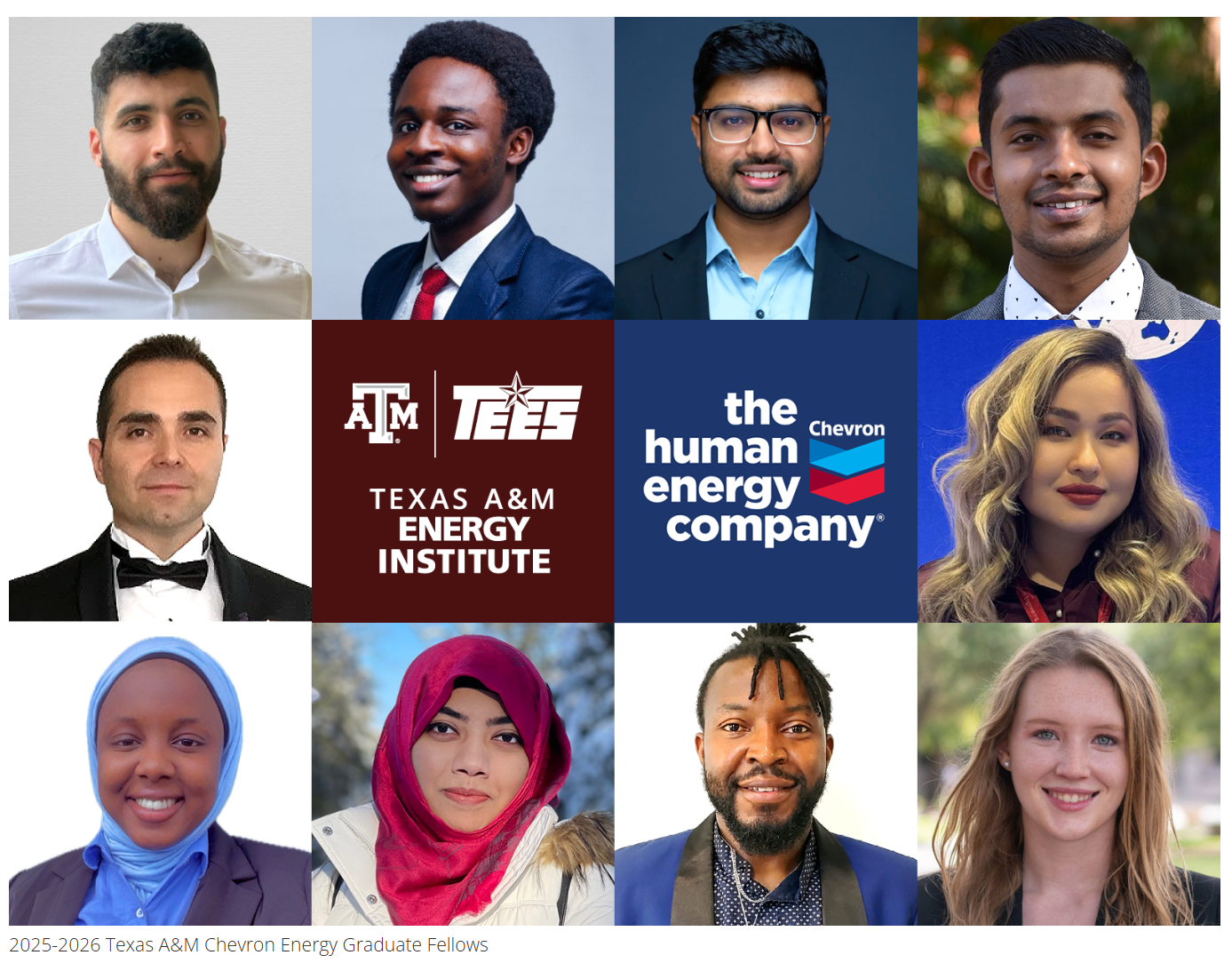
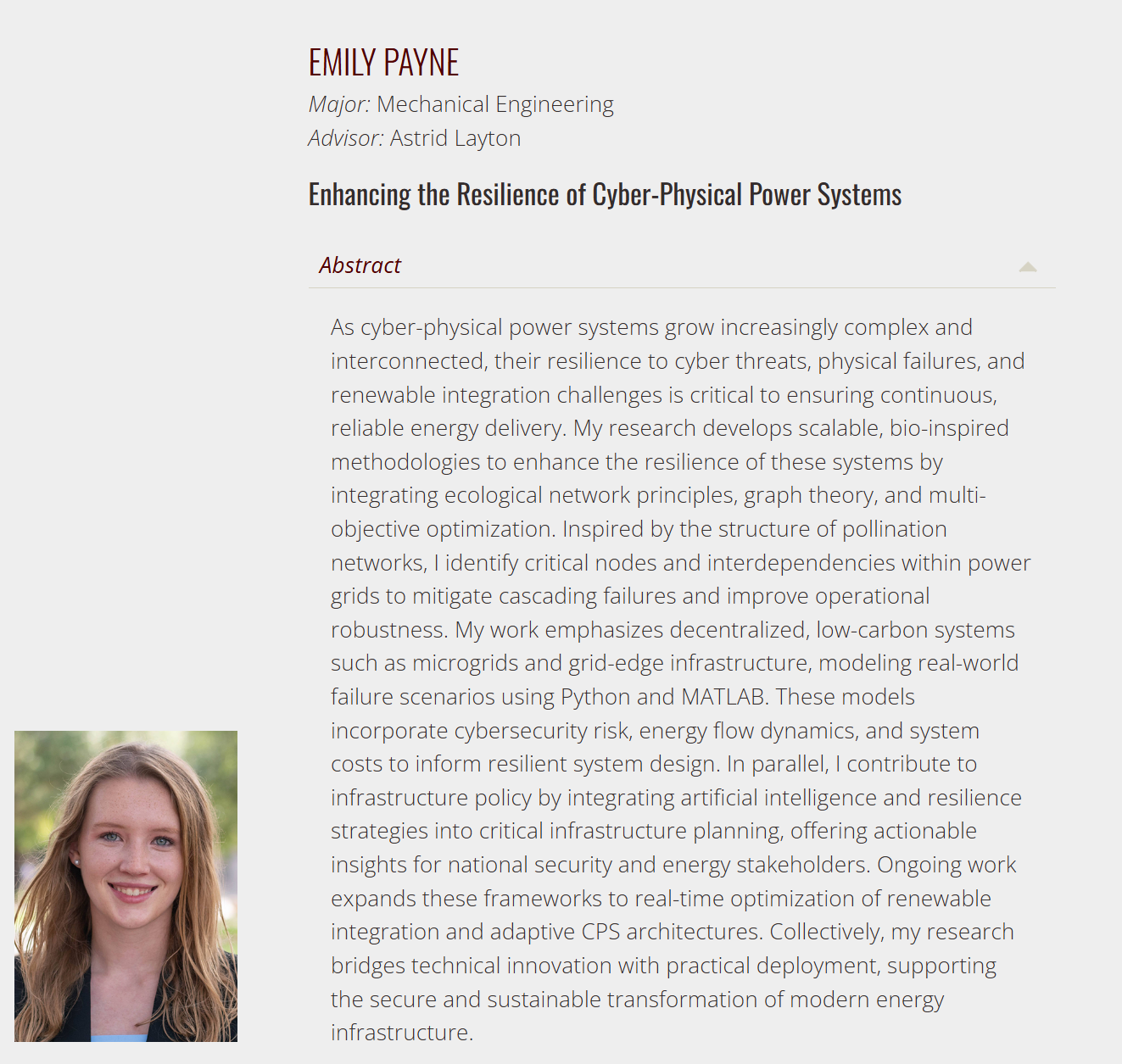
Emily Payne, a Ph.D. student in BiSSL, will be a Texas A&M Chevron Energy Graduate Fellow for Fall 2025 and Spring 2026. The award, a partnership with Chevron and the Texas A&M Energy Institute, funds 10 outstanding graduate student researchers from across the Texas A&M campus annually with fellowship awards of $10,000 each.
Funded by Chevron, the fellows program includes mentoring from faculty experts and opportunities to meet with subject matter experts at Chevron. Currently enrolled Texas A&M University graduate students from any school or college whose current and active research efforts focus on energy, including policy, technology, science, and societal impacts were eligible. The Texas A&M Chevron Energy Graduate Fellows program is part of Chevron’s University Partnership Program, which supports universities around the country by providing the necessary funding to better develop the future of the energy business.
“This exciting new collaboration between Texas A&M and Chevron represents a significant step forward in our shared commitment to advance energy solutions in support of a lower carbon energy future. Our newest Chevron Fellows are poised to make a real impact by creating scalable solutions that will transform the energy landscape. We eagerly anticipate the positive contributions they will make for the world,” said Jim Gable, the Vice President of Innovation at Chevron’s Technical Center and President of Chevron Technology Ventures.
BiSSL Ph.D. student Emily Payne awarded the Susan M. Arseven ’75 Make-a-Difference Memorial Award! The award was given by the Women in Science and Engineering (WISE) at their annual conference at Texas A&M University. The award encourages and provides financial assistance to A&M graduate students pursuing advanced degrees in science and engineering fields. Two awards of $1000 each are accompanied by a commemorative plaque and certificate.
Dr. Susan Arseven’s career in computer science began after earning a B.S. in Physics from the University of Michigan and an M.S. in Library Sciences from Columbia University. She initially worked at IBM, leading a project at the University of Pennsylvania to create the first major automated library system. Dr. Arseven furthered her education with a Ph.D. in Computer Science from Texas A&M University, followed by a role at American Cyanamid, where she progressed from systems analyst to Chief Information Officer. In 1981, she completed an Executive MBA at Columbia University. Later, she served as the Senior Vice President and Chief Information Officer of Union Camp Corporation until 1999. Throughout her career, Dr. Arseven was involved in advisory and community roles, including at Pace University’s School of Computer Science.
Women in Science and Engineering (WISE) is an organization of undergraduate students, graduate students, faculty, postdoctoral fellows, and staff at Texas A&M University that serves and represents women in all areas of science and engineering at Texas A&M University. Their mission is to promote the involvement of women in the fields of science, engineering, and technology. They aim to stimulate and encourage young women to pursue such careers as well as act as a support system for those that are currently pursuing professional degrees.
The National Research Foundation of Singapore has been conducting the interdisciplinary Global Young Scientist Summit in Singapore (Global Young Scientists Summit (nrf.gov.sg)) since 2013. The goal of the summit is an open exchange between young scientists (in 2025 about 350 young scientists from across the globe) and some of the most prominent scientists in the world (in 2025 around 20 Nobel Laureates and Field’s prize winners are expected). Texas A&M was invited to send our brightest young scientists to participate. Hadear was selected as one of 5 top nominations from A&M by the National Research Foundation of Singapore to participate in the summit.
The event enables promising young scientists to exchange ideas and knowledge with the speakers and their peers over four days under this theme. At the Summit, participants will take part in lectures, plenary sessions and panel discussions. They will have the opportunity to interact with and be mentored by speakers in informal small group sessions.
BiSSL Ph.D. student Hadear Hassan has been awarded the 2024 James J. Cain ’51 Award by the department, an award that recognizes the demonstrated academic and innovative excellence of the recipients and is awarded to only 2 graduate students each year. She received the award at the 2024 Mechanical Engineering Student Award Recognition on October 10th.
Dr. Astrid Layton and Ph.D. student Hadear Hassan at the Fall 2024 MEEN Award Ceremony.
James J. Cain ’51 was a long-time supporter and graduate of the Department of Mechanical Engineering at Texas A&M University. Cain was the youngest of five children and was born and raised in Sherman, Texas. After completing high school, Cain attended Texas A&M and received a degree in mechanical engineering. During his long and distinguished career of more than 35 years at Mobil Oil, Cain was renowned for his desire to mentor students and faculty at Texas A&M. He took great pride in being a part of Mobil’s college recruiting team, often filling positions with Aggie graduates.
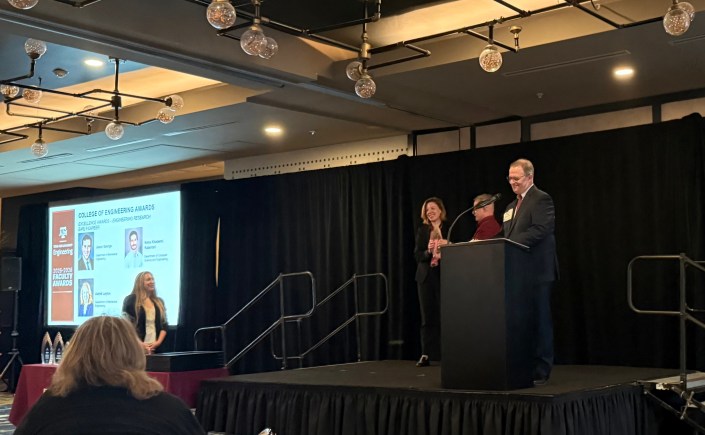
Dr. Layton was selected as 1 of the 5 recipients of 2024’s Open Educational Resources Awards based on her outstanding achievements and dedication in support of free textbooks and resources in her courses, with over 70 faculty nominated this year. The 2024 Open Educational Resources Awards Ceremony was held in the Texas A&M Hotel and Conference Center on March 27, 2024. Dr. Layton was introduced for the award by BiSSL Ph.D. student Hadear Hassan who nominated her for the award.
The Open Educational Resources Awards are sponsored by A&M’s Student Government Association (SGA), the Texas A&M University Libraries, and the Administration of Texas A&M University. The goal of these awards is to recognize faculty members who go above and beyond in adopting and demonstrating exemplary usage of Open Educational Resources (OERs) in their classrooms or taking active roles in the creation or dissemination of these open access resources. These awards seek to recognize faculty who promote or contribute to a culture of utilizing free academic resources and knowledge sharing in order to lessen the financial burden on students, and mitigate the overall cost of receiving an education. These awards are administered by the Academic Affairs Committee in the Executive Branch of SGA, as it is a top priority for them to reward the successful use of OERs in the most meaningful way possible.
The 5-year long award is for the grant titled “CAREER: Resilient Engineering Systems Design Via Early-Stage Bio-Inspiration.” NSF CAREER Awards, part of the NSF Faculty Early Career Development Program, are the most prestigious awards in support of early-career faculty who have the potential to serve as academic role models in research and education and to lead advances in the mission of their department or organization. Read more here.
Resilience is critical for engineering systems, but comprehensive methods and widely accepted guidelines tailored specifically for incorporating resilience in the early stages of system design are lacking. This Faculty Early Career Development Program (CAREER) award supports research which aims to address these gaps by working at the intersection of bio-inspired design, systems engineering, and engineering design to establish quantitative tools for addressing system resilience when minimal information is available. Biological ecosystem characteristics will be investigated for their ability to guide system designers in the early design stages towards better response and recovery, including situations involving targeted and/or random disturbances. Ultimately, the project will develop knowledge and methods to ensure that human systems can withstand disturbances – especially important for the critical infrastructure systems that supply our water, power, or medicines – by safeguarding against potential failures and costly downtime. Collaborative feedback from ecologists, industry, and academic experts will ensure that the interdisciplinary work maintains each domain’s critical features. Additional deliverables from this project include a “Walk Like an Engineer” program, which engages participants of all ages and abilities in engineering inspiration scavenger hunts through local parks, led by both a bio-inspired engineering design expert and a Nature Center host. The themed nature walks, which will focus on topics such as “Nature’s Systems” and “Nature’s Resilience”, will encourage participants to see themselves as design engineers learning from nature. The program will advance the United States future workforce by nurturing interdisciplinary communication skills and early interest and excitement in STEM-based design, while also teaching the public about nature and engineering in a connected manner.
This project supports the long-term goal of enhancing the early integration of resilience into the system design process, allowing designers to make proactive choices to create more sustainable and resilient systems that can withstand disruptions and recover effectively. The research objectives of this project are to provide quantitative tools for assessment of biological inspiration in engineering system design, extend the use of effective bio-inspiration into system recovery, and formulate practical design tools for achieving system resilience from biological ecosystem principles found to be effective. Ecological Network Analysis will provide a quantitative method for extracting desirable traits from resilient biological ecosystems (e.g., food webs) and applying them to human engineered systems. Of interest is how these traits can improve a system’s robustness and recovery, which will be tested using a variety of case study types and criticality levels, including supply chains, water distribution networks, power grids, and industrial resource networks. The most beneficial biological systems traits will be further investigated to generate fundamental engineering principles, such as the impact of topology versus weights on nature’s systems characteristics. A study of targeted versus random disturbances will provide additional insight into where these biological systems characteristics have the most value for engineering designers seeking system-level resilience. The project’s research objectives are integrated and enhanced by the project’s educational objectives: to create and foster engineering excitement before students typically self-exclude from STEM; teach the public about how nature and engineering can be connected; and create STEM access for and inclusion of students with intellectual and developmental disabilities. Evaluation of the educational outreach activities will also provide important documentation for the use of nature to increase interest in engineering at all ages, as well as in underrepresented and underserved groups.
BiSSL group director Dr. Astrid Layton was selected to attend the 2023 EU-US Frontiers of Engineering (EU-US FOE) Symposium hosted by the National Academy of Engineering (NAE) and Nokia Bell Labs. The National Academy of Engineering holds an annual US Frontiers of Engineering symposium that brings together 60 highly accomplished early-career engineers from EU and US universities, companies, and government to discuss leading-edge research and technical work across a range of engineering fields. Convening engineers from disparate fields and challenging them to think about developments and problems at the frontiers of areas different from their own can lead to a variety of desirable results. These include collaborative work, the transfer of new techniques and approaches across fields, and the establishment of contacts among the next generation of leaders in engineering. The objectives for the bilateral meetings also have the added element of facilitating international cooperation and understanding. The symposium – which covers the topics of The Quantum Era Challenge, Future Challenges in Additive Manufacturing, Clean Hydrogen, and The Computational Era of Life Sciences – will take place from October 15-18 at the National Academies’ Beckman Center in Murray Hill, New Jersey.
Two BiSSL Ph.D. students – Hadear Hassan and Emily Payne – have been awarded 2023 J. Mike Walker ’66 Impact Awards. The award is given to two male and two female graduate students who have demonstrated academic/scholarly achievements, as well as have leadership and/or entrepreneurial focus/experience and innovative excellence. The winners each receive a $5,000 fellowship. BiSSL Ph.D. student Luis Rodriguez was awarded a Sally and Ray Bowen ’58 Fellowship for 2022/23. Congratulations Hadear, Emily, and Luis! They’ll all be recognized at the 2023 Mechanical Engineering Scholarship & Fellowship Banquet in October in the Memorial Student Center.
Luis Rodriguez (back left) and Hadear Hassan (front 2nd from left) had their awards presented at the 2023 Mechanical Engineering Scholarship & Fellowship Banquet. They are both co-advised by Dr. Cynthia Hipwell (front-center).