PhD Student Hadear Hassan Visits Portland, Oregon to Attend ASEE 2024

BiSSL Ph.D. student Hadear Hassan presented a collaborative paper in the Design in Engineering Education Division (DEED) for Student-Centered Approaches in Design Education titled “Engineering the Next Generation of Innovators: Analysis of Studentsโ€™ Innovation Habits.” The paper was coauthored by BiSSL alumn Luis Rodriguez and collaborator Dr. Cynthia Hipwell.

In today’s rapidly evolving landscape, innovation is the cornerstone of high value creation. This fast pace necessitates a fundamental reevaluation of educational paradigms. The imperative to emphasize lifelong learning, inquisitiveness, innovation, and an unwavering commitment to continuous self-improvement is abundantly clear. At the heart of this educational recalibration lies two questions: To what extent can personal innovativeness be honed and amplified through curricular innovations? and What are the requisite strategies for nurturing students’ practical skills, thereby enabling a perpetual journey of discovery? This work is focused on the design of a course called “Innovation Mind and Skill Sets for Design and Research,” tailored specifically for students in the STEM disciplines. The class equips students with a comprehensive innovation-focused skill set, empowering them to synthesize their specialized knowledge within broader societal contexts and, in turn, navigate the complex terrain of breakthrough innovation. This paper delves into the courseโ€™s framework, which draws inspiration from the vast reservoir of innovation literature and two decades of the instructorโ€™s industry experience applying and improving innovation business processes with her teams in a fast-paced, high-tech industry. The core hypothesis of this paper is that innovation is fundamentally a learning process, that personal innovativeness can be cultivated and elevated through the teaching of established principles derived from the realm of learning science. These principles encompass the elevation of metacognition, the deliberate integration of intentionality into the learning process, and the embedding of reflective practices into the students’ educational journeys. In addition, the curriculum integrates pedagogical principles related to systems thinking and Transformative Learning Theory for adults. The coursework is designed to impart practical techniques that serve as scaffolds for students’ innovation processes and enhances their metacognition. The journey through this educational framework leads to an ascent through the tiers of Bloom’s Taxonomy, guiding students to cultivate enduring habits that are essential for the sustenance of the innovation process. These practical skills are honed through active participation in a team project, revolving around the innovation process, with guidance and feedback from innovation practitioners. The learning experience is further enriched through a deliberate emphasis on reflection, integrated into classroom presentations. These aspects of student progress and improvement are assessed against traditional design curricula using the Innovator Mindsetยฎ Assessment. The results are analyzed to underscore the impact of curricular innovation in fostering and amplifying personal innovativeness.

Hadear Ibrahim Hassan, Luis Angel Rodriguez, Astrid Layton, David Christopher Seets, M. Cynthia Hipwell (2024) “Engineering the Next Generation of Innovators: Analysis of Studentsโ€™ Innovation Habits.” 2024 ASEE Annual Conference & Exposition. Portland, Oregon.

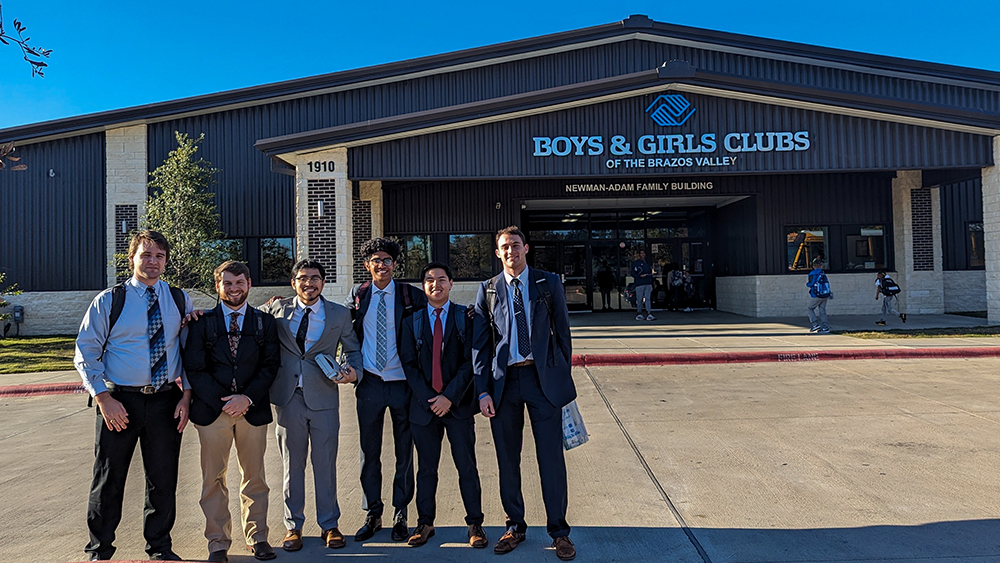
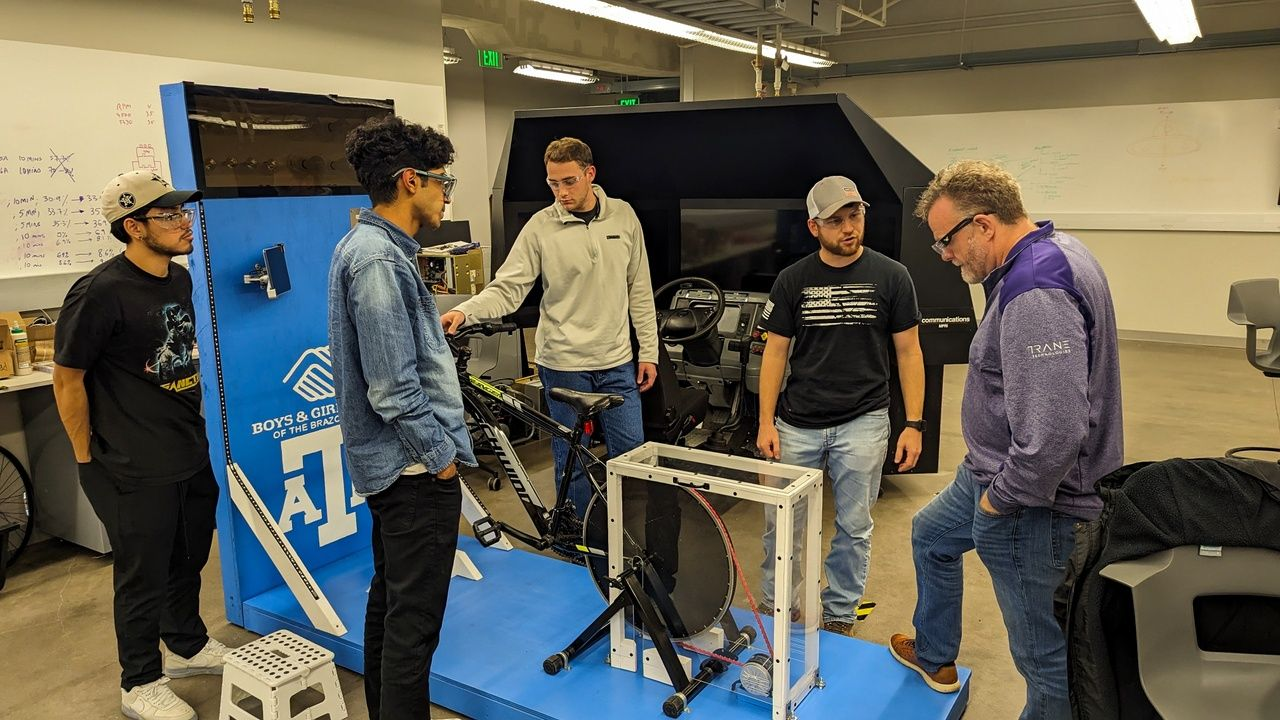
BiSSL collaborator Dr. Julie Linsey was also in attendance and presented a poster in the NSF Grantees Poster Session on a paper coauthored by BiSSL MS student Pepito Thelly. โ€œBoard 358: Quantitative Network Analysis for Benchmarking and Improving Makerspaces.โ€

Makerspaces on university campuses have seen tremendous growth and investments in recent years. Growing empirical data demonstrates the significant learning benefits to engineering students. Makerspaces are a new tool in the engineering educatorsโ€™ toolbox, and as such much more needs to be done to ensure these spaces effectively grow and meet their full potential. This grant has been developing a novel network analysis technique for makerspaces, to enable the underlying makerspace network structure to be understood in terms of its connection to the successful and impactful functioning of makerspaces. The work has uncovered some basic structural building blocks of makerspace networks, known as modules, and the tools and students that make up those modules. This network-level understanding of the space enables actions such as effectively removing previously undiscovered hurdles for students who are underutilizing spaces, guiding the design of an effective makerspace from the ground up at locations with fewer resources, and creating effective events or course components that introduce students to the space in such a way that increases their chances of returning. A deep understanding of the network structure that creates a successful makerspace also provides guidance to educators on things like the impact of adding particular learning opportunities through workshop or curriculum integration, and insight into the network-level impacts of the addition of new tools or staff. The work done over the past 3 years has tried to address the following key objectives: (1) Understand the role that network analysis can play in both understanding the connection between the structure and successful functioning of a makerspace. (2) Create design guidelines for both new makerspaces and the growth of existing makerspaces, derived from modularity analyses of two successful makerspace case studies. (3) Identify potential roadblocks that prevent students, especially underrepresented minority students, from feeling comfortable in and using makerspaces. Benefits of network analysis techniques include the ability to break down a seemingly complex and chaotic makerspace into actors interacting with tools. This data was obtained through short end-of-semester student surveys. Early work found that these end-of-semester surveys provide sufficient data for the proposed analyses and are comparable to survey information provided by students as they enter and exit the space.

Claire Kaat, Pepito Thelly, Julie Linsey, Astrid Layton (2024) “Quantitative Network Analysis for Benchmarking and Improving Makerspaces.โ€ 2024 ASEE Annual Conference & Exposition. Portland, Oregon.

Successful ASME 2024 MSEC Manufacturing Science & Engineering Conference

BiSSL Ph.D. student Hadear Hassan presented work at the annual ASME 2024 MSEC Manufacturing Science & Engineering Conference in Knoxville, TN. She presented two papers, both co-authored with BiSSL alum Amira Bushagour (who is now a Ph.D. student at Aarhus University in Denmark). One of the papers has already been selected for publication in the special issue of ASME’s Journal of Manufacturing Science and Engineering (JMSE).

Abstract: The circular economy (CE) is a resource system in which byproducts and traditional end-of-life resource flows are fed back into the system to reduce virgin resource use and waste production. Emerging technologies offer an exciting opportunity to support circular economy efforts, especially in the early design phase when opportunities for incorporating these technologies are relatively easy. Traditionally, however, the early design phase has access to very little data about resource flows which makes the introduction of new technologies difficult to do, especially with respect to market-related design decisions. In the later design stages, this data is easier to obtain but is met with increased inflexibility and costs that make these types of changes less common. This paper proposes the use of cyclicity, also known as spectral radius, and NS* minimal-data input metrics that can direct designers to options with the greatest theoretical impact on routing commonly wasted resources back into value circulation. Cyclicity is a metric commonly used in ecology to assess the existence and complexity of cycles, or material/energy pathways that can start and end at the same node, occurring in a system. The metric uses a topological adjacency matrix of resource flows between potential circular economy actors, modeled as a directional graph, and is calculated as the largest absolute eigenvalue of an adjacency matrix and can be a value of zero (no cycles), one (basic cycles), and any value larger than one (increasing presence and complexity of cycles). This study also evaluates actors making up the network as to whether they are part of a strong cycle, a weak component of a cycle, or are disconnected from a cycle, quantified with NS. In a strong cycle, all actors feed into the cycle and the cycle feeds back into the actors. Actors that are weakly connected to a cycle do not contribute to a cyclic pathway. Disconnected actors are not connected to any actor participating in cycling. This paper conducts two case studies on these design tools. The first, a survey of 51 eco-industrial parks (EIPs) and 38 ecological food webs to compare the presence and complexity of cycles in industrial resource systems to ecological resource systems. The latter, food webs, are very effective at retaining value inside the system boundaries. The former, EIPs, were built in support of circular economy principles to use waste streams from one industry as resource streams for others. The analysis shows that 46 out of 51 EIPs had cyclicity values of one or greater and an average of 54% of actors in an EIP are strong. The food webs all have a cyclicity greater than one and an average of 79% of actors in a food web are strong. These results can help decision makers consider CE-supporting pathways earlier in the design process, increasing the likelihood that emerging technologies are incorporated to maximize their CE impact. The second case study explores an emerging technology, Brine Miners, and how cyclicity and NS can be used to guide design decisions to impact the ability of this technology to aid in the creation of a circular economy. The exploration found that focusing on the creation of energy has the potential to add new actors to resource cycling and that diversifying the uses of byproducts creates more complex cycling within a hypothetical economy.

(Paper Number: MSEC2024-125107) “Cyclicity as an Early Circular Economy Design Tool for Emerging Technologies” by Amira Bushagour, Hadear Hassan, and Astrid Layton

Abstract: Reconfigurability in manufacturing signifies a system’s capacity to promptly adapt to evolving needs. This adaptability is critical for markets to maintain operations during unexpected disruptions, including weather anomalies, cyber-attacks, and physical obstructions. Concurrently, the concept of a circular economy is gaining popularity in manufacturing to mitigate waste and optimize resource utilization. Circular economy principles aim to reduce environmental impacts while maximizing economic benefits by emphasizing the reuse of goods and resource byproducts. The nexus between reconfigurability and the circular economy stems from their shared pursuit of sustainability and resilience. Interestingly, biological ecosystems also exhibit these traits, showcasing exceptional adaptability to disturbances alongside the ability to effectively utilize available resources during normal operations. This study explores various manufacturing system configurations to assess both their adaptability and connection to circular economy principles. 44 configurations are categorized based on layout (e.g., job shop, flow line, cellular) and analyzed using convertibility, cyclicity, and Degree of System Order metrics. A significant positive correlation (R2 =0.655) is found between high convertibility and ecologically similar levels of structural cycling, suggesting that effective resource utilization supports adaptability in manufacturing systems. Furthermore, this paper proposes the existence of a possible ” window of vitality” for cyclicity, as it demonstrates a significant correlation (R2 =0.855) between the Degree of System Order and cyclicity. Identifying systems that strike a balance between redundancy, efficiency, convertibility, and cyclicity can aid manufacturing system designers and decision-makers in making choices that address increasing requirements for both sustainability and resilience.

(DOI: 10.1115/1.4065744) “Resilient Circularity in Manufacturing: Synergies between Circular Economy and Reconfigurable Manufacturing” by Hadear Hassan, Amira Bushagour, and Astrid Layton, Journal of Manufacturing Science and Engineering

Annual Conference on Systems Engineering Research (CSER) 2024

BiSSL Ph.D. student Alexander Duffy will be presenting his research at the annual Conference on Systems Engineering Research (CSER) on March 25-27, 2024 in Tucson, AZ. His paper, titled “Satellite Network Architecture Performance: Setting the Stage for Bio-Inspired Network Design,” covers:

Abstract: Satellite networks, here defined as groups of artificial satellites where the satellites are interconnected by communications links, are increasing in size, number, and criticality. As humanityโ€™s reliance on these networks grows, so too does the need for these networks to be resistant against and quickly recover from disturbances โ€“ that is, they need to be resilient. Prior work has found that human networks such as supply chains, water distribution networks, and power grids can improve their resilience by mimicking biological food webs in their design. This paper begins an investigation into whether satellite networks can also benefit from this bio-inspired system approach. The performance of five hypothetical-realistic satellite network case studies is quantified here using global instantaneous coverage, architectural accuracy, and in-network latency. These performance attributes are then compared to the architectural characteristics of biological food webs using Ecological Network Analysis (ENA) metrics, relating species and their predator-prey interactions in a food web to interactions between satellites in a satellite network. The findings suggest that the bio-inspired route holds promise for improving both the performance and resilience of these critical space networks.

Dr. Astrid Layton selected to attend the 2023 EU-US Frontiers of Engineering (EU-US FOE) Symposium hosted by the National Academy of Engineering and Nokia Bell Labs

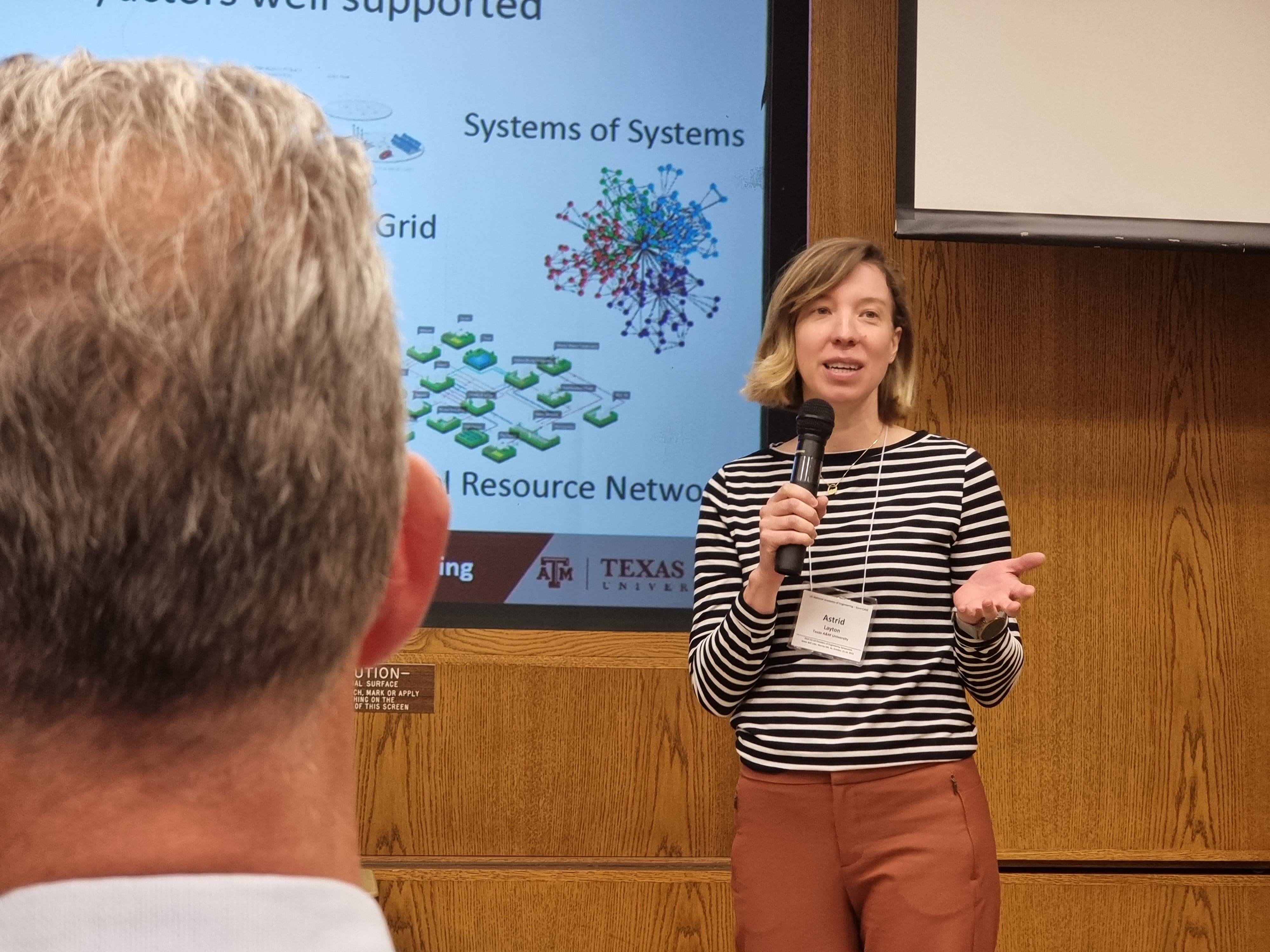
BiSSL group director Dr. Astrid Layton was selected to attend the 2023 EU-US Frontiers of Engineering (EU-US FOE) Symposium hosted by the National Academy of Engineering (NAE) and Nokia Bell Labs. The National Academy of Engineering holds an annual US Frontiers of Engineering symposium that brings together 60 highly accomplished early-career engineers from EU and US universities, companies, and government to discuss leading-edge research and technical work across a range of engineering fields. Convening engineers from disparate fields and challenging them to think about developments and problems at the frontiers of areas different from their own can lead to a variety of desirable results. These include collaborative work, the transfer of new techniques and approaches across fields, and the establishment of contacts among the next generation of leaders in engineering. The objectives for the bilateral meetings also have the added element of facilitating international cooperation and understanding. The symposium – which covers the topics of The Quantum Era Challenge, Future Challenges in Additive Manufacturing, Clean Hydrogen, and The Computational Era of Life Sciences – will take place from October 15-18 at the National Academiesโ€™ Beckman Center in Murray Hill, New Jersey.

Successful IDETC-CIE 2023 in Boston

Another excellentย ASME (American Society of Mechanical Engineers)ย IDETC-CIE conference is in the books!

BiSSL Ph.D. studentsย Hadear Hassanย andย Emily Payneย from theย J. Mike Walker ’66 Department of Mechanical Engineering at Texas A&M Universityย each presented their first-authored papers, sharing their research that will help us achieve a moreย sustainableย andย resilientย world.

Hadear’s (in collaboration with Emily) was on “Quantifying the Sustainability and Robustness of Manufacturing Systems Using Energy and Ecological Network Analysis” and Emily’s (in collaboration with former undergraduate researcher Hannah Wagner) was on “Resilienceย & Sustainability in Certified Green Buildings:ย Applying Ecosystem Concepts to Aid in More Dynamicย Green Communities.”

Dr. Layton also presented the work of MS student Samuel Blair (who graduated in May 2023) on “Measuring the Health of Makerspaces During Large Disruptions such as the COVID-19 Pandemic.”

We also got to hang out with Dr. Abheek Chatterjee, who graduated from our lab last December!

(L-R) Abheek Chatterjee, Astrid Layton, Emily Payne, Hadear Hassan

4 BiSSL Students have Papers Accepted to IDETC-CIE 2023

We’re happy to share that 3 BiSSL papers, written by 4 BiSSL researcher students, have been accepted for publication and presentation in Boston, MA in August at IDETC-CIE 2023.


BiSSL alum Samuel Blair, in collaboration with our Georgia Tech partners Dr. Julie Linsey and Claire Crose, has a paper accepted to the Design Theory and Methodology division titled “Measuring the Health of Makerspaces During Large Disruptions Such as the COVID-19 Pandemic.”

As the popularity of makerspaces and maker culture has skyrocketed over the past two decades, numerous studies have been conducted to investigate the benefits of makerspaces for university students and how to best establish an inclusive, welcoming environment in these spaces on college campuses. However, unprecedented disruptions, such as the COVID-19 pandemic, have the potential to greatly affect the way that students interact with makerspaces and the benefits that result. In this study, a survey asking about prior makerspace involvement, tool usage, and student demographics was administered to students who use academic makerspaces at two large public universities. Survey data was collected for three semesters (Fall 2020, Spring 2021, and Spring 2022) and spanned both during and after the height of the COVID-19 pandemic. To quantify the differences between the semesters, nestedness and connectance metrics inspired by ecological plant-pollinator networks were utilized. These ecological metrics allow for the structure of the interactions of a network to be measured, with nestedness highlighting how students interact with tools and connectance with the quantity of student-to-tool interaction. The network analysis was used to better gauge the health of the makerspace and the type and frequency of interactions between tools. The raw survey data combined with the ecological metrics provided unique insight into the struggles the makerspaces encountered throughout the pandemic. It was found that nestedness, a measure of system stability, decreases with a decrease in tool usage. Additionally, the higher the connectance the more students interacted with the space. Utilizing metrics such as these and better understanding student tool interactions can aid makerspaces in monitoring their success and maintaining a healthy and welcoming space, as well as tracking the current health of the space. In combination with the survey results, a deep understanding of what challenges the space is facing can be captured.

Crose, C., S. Blair, A. Layton, and J. Linsey. (2023) โ€œMeasuring the Health of Makerspaces During Large Disruptions such as the COVID-19 Pandemic.โ€ ASME 2023 International Design Engineering Technical Conferences and Computers & Information in Engineering Conference (IDETC-CIE). Boston, MA, USA.
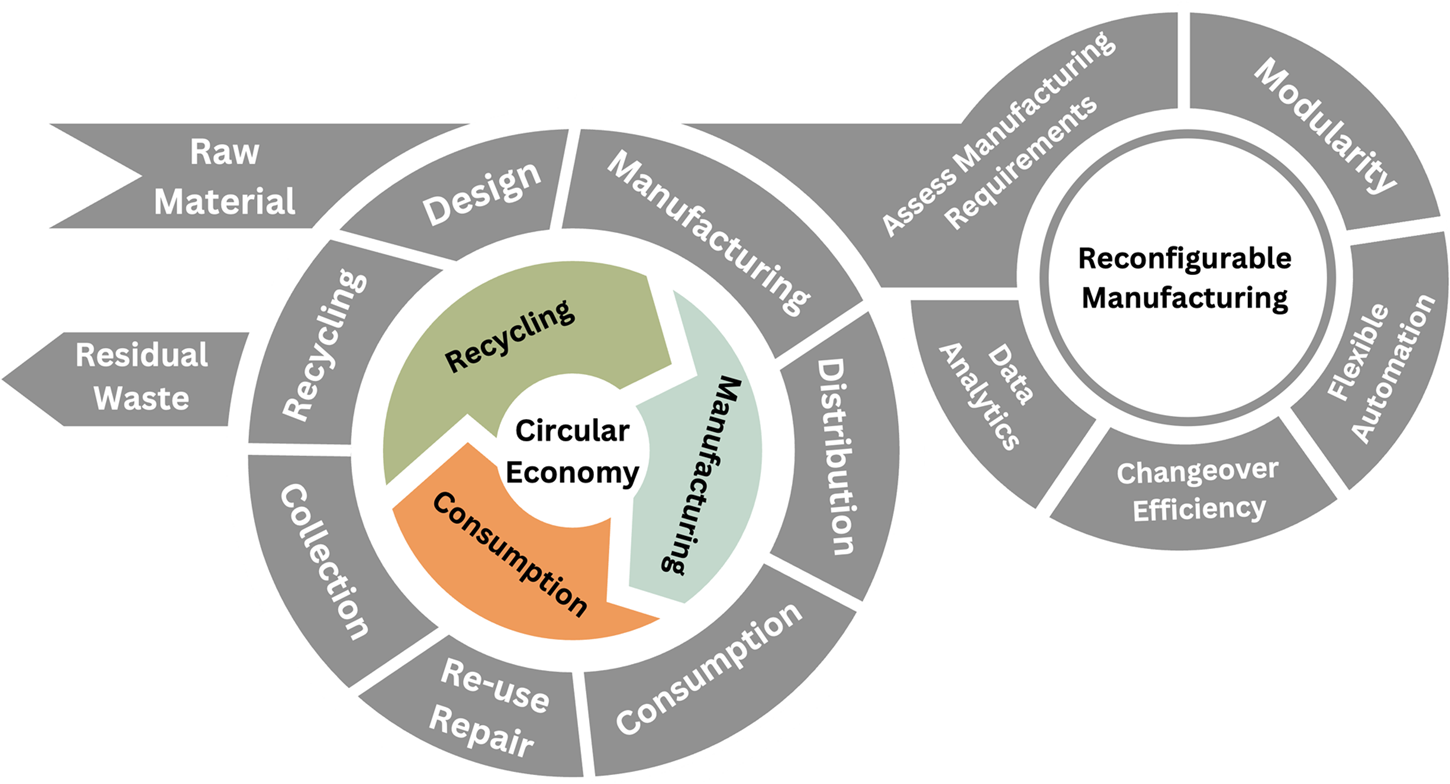
BiSSL Ph.D. students Hadear Hassan and Emily Payne collaborated on the paper titled “Quantifying the Sustainability and Robustness of Manufacturing Systems Using Energy and Ecological Network Analyses,” to be presented by Hadear in August in the Design For Manufacturing and Life Cycle division (DFMLC).

Global issues, such as supply chain disruptions, have increased awareness of the importance of manufacturing systems being able to quickly bounce back from disturbances. This necessary response is in addition to the importance of mitigating climate change, maintaining market competitiveness, and eliminating unnecessary waste. Two analysis types are compared here: 1) a thermodynamic exergy analysis to quantify a manufacturing system’s energy and material efficiency and 2) an ecological network analysis as a quantitative representation of the system’s sustainability and robustness. Several manufacturing structures, including different processes ranging from the traditional to advanced, like injection molding and binder jetting, are examined in terms of the system response to changes. The findings indicate that the thermodynamic approach efficiently evaluates the efficacy of energy and resource conversion to create a final product. The ecological network approach was also found to provide useful insights on both the environmental efficiency of the systems as well as the resilience. These results are useful when combined for suggesting system layouts and operations that holistically improve a manufacturing systemโ€™s design. The findings indicate that existing manufacturing infrastructure needs to be redesigned to better withstand and recover from unforeseen disruptions. Introducing features such as recyclability and combining multiple types of manufacturing processes can enhance the overall resilience of the system. The work suggests that the bio-inspired systems analysis approach when coupled with connectivity and energy-related factors can lead to enhanced manufacturing system designs.

Hassan, H., E. Payne, and A. Layton. (2023) โ€œQuantifying the Sustainability and Robustness of Manufacturing Systems Using Energy and Ecological Network Analyses.โ€ ASME 2023 International Design Engineering Technical Conferences and Computers & Information in Engineering Conference (IDETC-CIE). Boston, MA, USA.

BiSSL Ph.D. student Emily Payne and undergraduate alum Hannah Wagner collaborated on the paper titled “Resilience and Sustainability in Certified Green Buildings: Applying Ecosystem Concepts to Aid in More Dynamic Green Communities,” to be presented by Emily in August in the Design For Manufacturing and Life Cycle division (DFMLC).

Sustainable and resilient buildings ensure safety and lifespan while also benefiting the environment. Leadership in Energy and Environmental Design (LEED) is one respectable certification that many buildings can receive to ensure that they are meeting future climate and energy goals. However, LEED buildings have credits that do not necessarily agree with creating a sustainable environment. When comparing the orientation of LEED points and their relationship to the building and community to ecological structures, we found that a rearrangement of categories can provide visualization for organized recycling and higher cyclicity through ecological network applications. This relationship was applied to a new scorecard which has results indicating that if designers choose to meet criteria where one credit in each grouping is implemented in construction, then a sustainable building can still be efficient as well as recognized as a green building.  

Payne, E., H. Wagner and A. Layton. (2023) โ€œResilience and Sustainability in Certified Green Buildings: Applying Ecosystem Concepts to Aid in More Dynamic Green Communities.โ€ ASME 2023 International Design Engineering Technical Conferences and Computers & Information in Engineering Conference (IDETC-CIE). Boston, MA, USA.
Two BiSSL Papers Presented at the Annual Conference on Systems Engineering Research (CSER2023)

Abheek Chatterjee and Luis Rodriguez are presenting their first-authored papers at the annual CSER conference hosted by Stevens Institute of Technology in Hoboken, New Jersey. The conference is centered around โ€œSystems Engineering Toward a Smart and Sustainable World.โ€


Urban water distribution networks have provided potable water to communities and households worldwide over the last century. Within the last two decades, there has been a rise in complications with water distribution systems meeting demands. Urban water distributions fail to meet demands due to increases in natural and man-made disturbances, population growth, and aging water distribution network structures. These issues have caused urban water distribution system designers and decision-makers to shift their interests from focusing solely on efficiency to designs capable of meeting customer potable water demands under normal operations and during disturbances. Ecology, specifically biological ecosystems, provides system resilience inspiration, taken from their structure and functioning that has survived disturbances over millions of years. The work here investigates mimicking the decentralization of food webs to improve network resilience by incorporating decentralized water storage tanks, using the established Two Loop Network (TLN) as a case study. TLN is an introductory water network provided by the University of Exeter for system engineers and designers to test optimization and exploratory techniques. The case study was selected due to its simplistic design which allowed the authors to understand the effects of decentralizing the network toward improving its ability to handle disruptions. The findings suggest decentralization can improve the water network resilience a minimum of three times as much as the original networkโ€™s design. Furthermore, introducing decentralization was also found to increase the systemโ€™s ability to meet the demand for all nodes during disruptions, something the original case was unable to accomplish while simultaneously reducing the amount of freshwater consumed during disruptions.

(2023) Rodriguez, L.; A. Chatterjee; A. Layton. โ€œEcological Decentralization for Improving the Resilient Design of Urban Water Distribution Networks.โ€ 21st Annual Conference on Systems Engineering Research (CSER). Hoboken, New Jersey, USA.

A microgrid is a localized energy grid that can disengage from the traditional grid and operate independently. Microgrids can be conceptualized as System of Systems: networked integration of constituent systems that together achieve novel capabilities. Improving resilience (the ability to survive and recover from disruptions) and reducing the cost of energy are critical considerations in microgrid design. However, microgrid resilience evaluation techniques require explicit disruption models โ€“ information that is not readily available in the early design stages. Therefore, these models cannot inform early-stage design decisions when changes can be made affordably. Recent research has indicated that Ecological Network Analysis is a promising tool for the design of resilient and affordable System of Systems. However, this approach has not yet been tested as a tool for microgrid design. This work provides an adapted Ecological Network Analysis framework that accounts for two unique architectural features of microgrids: (a) energy storage, and (b) integration of different types of energy generation technology. The Ecological Network Analysis based assessment of microgrid architectures is compared against their resilience and cost of energy evaluations using a state-of-the-art tool. The results of the comparison provide support for the use of Ecological Network Analysis as a reliable early-stage decision-support tool for resilient microgrid design.

(2023) Chatterjee, A.; A. Bushagour; A. Layton. โ€œResilient Microgrid Design Using Ecological Network Analysis.โ€ 21st Annual Conference on Systems Engineering Research (CSER). Hoboken, New Jersey, USA.

Two BiSSL Student Papers Presented at the 2022 IDETC-CIE Conference in St. Louis, Missouri

Ph.D. candidate Abheek Chatterjee presented two student-led papers at this yearโ€™s IDETC-CIE conference. BiSSL MS student alum Tyler and Abheek collaborated on the paper โ€œExploring the Effects of Partnership and Inventory for Supply Chain Resilience Using an Ecological Network Analysis,โ€ presented to Design for Manufacturing and the Life Cycle (DFMLC). Abheek also collaborated with undergraduate alum Cade Helbig and Dr. Rich Malak on the paper โ€œA Survey of Graph-Theoretic Approaches for Resilient System of Systems Design,โ€ presented to System Engineering and Information Knowledge Management (SEIKM).

Two BiSSL Students Have IDETC 2022 Papers Accepted

BiSSL MS student Tyler Wilson and Ph.D. student Abheek Chatterjee have had two papers accepted to ASMEโ€™s 2022 International Design Engineering Technical Conferences & Computers and Information in Engineering Conference (IDETC/CIE2022). The papers will be presented in St. Louis, Missouri in August.

Tyler and Abheek collaborated on the paper โ€œExploring the Effects of Partnership and Inventory for Supply Chain Resilience Using an Ecological Network Analysis,โ€ submitted to Design for Manufacturing and the Life Cycle (DFMLC).

Abheek collaborated with undergraduate Cade Helbig and Dr. Rich Malak on the paper โ€œA Survey of Graph-Theoretic Approaches for Resilient System of Systems Design,โ€ submitted to System Engineering and Information Knowledge Management (SEIKM).