New Systems Engineering Journal Publication

A new open access publication is out in the Wiley and INCOSE journal Systems Engineering from BiSSL in collaboration with Dr. Julie Linsey at Georgia Institute of Technology! The article, co-authored by Samuel Blair, Garrett Hairston, Claire Kaat, and Henry Banks and titled “Bio-inspired human network diagnostics: Ecological modularity and nestedness as quantitative indicators of human engineered network function,” investigates the use of modularity and nestedness, 2 analyses that are traditionally used in ecology to study interaction patterns in mutualistic networks (ex. plant-pollinator networks), for human-engineered interaction networks. The paper uses two university engineering makerspaces, modeled as student-tool interaction networks, as case studies to highlight the ability of the approaches to quantitatively monitor the interaction patterns over time and even capture network disturbances (in the case study COVID-19 occurred over the course of data collection).

Abstract:

Analyzing interactions between actors from a systems perspective yields valuable information about the overall system’s form and function. When this is coupled with ecological modeling and analysis techniques, biological inspiration can also be applied to these systems. The diagnostic value of three metrics frequently used to study mutualistic biological ecosystems (nestedness, modularity, and connectance) is shown here using academic engineering makerspaces. Engineering students get hands-on usage experience with tools for personal, class, and competition-based projects in these spaces. COVID-19 provides a unique study of university makerspaces, enabling the analysis of makerspace health through the known disturbance and resultant regulatory changes (implementation and return to normal operations). Nestedness, modularity, and connectance are shown to provide information on space functioning in a way that enables them to serve as heuristic diagnostics tools for system conditions. The makerspaces at two large R1 universities are analyzed across multiple semesters by modeling them as bipartite student-tool interaction networks. The results visualize the predictive ability of these metrics, finding that the makerspaces tended to be structurally nested in any one semester, however when compared to a โ€œnormalโ€ semester the restrictions are reflected via a higher modularity. The makerspace network case studies provide insight into the use and value of quantitative ecosystem structure and function indicators for monitoring similar human-engineered interaction networks that are normally only tracked qualitatively.

Blair S, Hairston G, Banks H, Kaat C, Linsey J, Layton A. Bio-inspired human network diagnostics: Ecological modularity and nestedness as quantitative indicators of human engineered network function. Systems Engineering. 2024; 1-13. https://doi.org/10.1002/sys.21756

Dr. Astrid Layton selected for an NSF CAREER Award

The 5-year long award is for the grant titled “CAREER: Resilient Engineering Systems Design Via Early-Stage Bio-Inspiration.” NSF CAREER Awards, part of the NSF Faculty Early Career Development Program, are the most prestigious awards in support of early-career faculty who have the potential to serve as academic role models in research and education and to lead advances in the mission of their department or organization. Read more here.

Resilience is critical for engineering systems, but comprehensive methods and widely accepted guidelines tailored specifically for incorporating resilience in the early stages of system design are lacking. This Faculty Early Career Development Program (CAREER) award supports research which aims to address these gaps by working at the intersection of bio-inspired design, systems engineering, and engineering design to establish quantitative tools for addressing system resilience when minimal information is available. Biological ecosystem characteristics will be investigated for their ability to guide system designers in the early design stages towards better response and recovery, including situations involving targeted and/or random disturbances. Ultimately, the project will develop knowledge and methods to ensure that human systems can withstand disturbances – especially important for the critical infrastructure systems that supply our water, power, or medicines – by safeguarding against potential failures and costly downtime. Collaborative feedback from ecologists, industry, and academic experts will ensure that the interdisciplinary work maintains each domainโ€™s critical features. Additional deliverables from this project include a โ€œWalk Like an Engineerโ€ program, which engages participants of all ages and abilities in engineering inspiration scavenger hunts through local parks, led by both a bio-inspired engineering design expert and a Nature Center host. The themed nature walks, which will focus on topics such as โ€œNatureโ€™s Systemsโ€ and โ€œNatureโ€™s Resilienceโ€, will encourage participants to see themselves as design engineers learning from nature. The program will advance the United States future workforce by nurturing interdisciplinary communication skills and early interest and excitement in STEM-based design, while also teaching the public about nature and engineering in a connected manner.

This project supports the long-term goal of enhancing the early integration of resilience into the system design process, allowing designers to make proactive choices to create more sustainable and resilient systems that can withstand disruptions and recover effectively. The research objectives of this project are to provide quantitative tools for assessment of biological inspiration in engineering system design, extend the use of effective bio-inspiration into system recovery, and formulate practical design tools for achieving system resilience from biological ecosystem principles found to be effective. Ecological Network Analysis will provide a quantitative method for extracting desirable traits from resilient biological ecosystems (e.g., food webs) and applying them to human engineered systems. Of interest is how these traits can improve a systemโ€™s robustness and recovery, which will be tested using a variety of case study types and criticality levels, including supply chains, water distribution networks, power grids, and industrial resource networks. The most beneficial biological systems traits will be further investigated to generate fundamental engineering principles, such as the impact of topology versus weights on natureโ€™s systems characteristics. A study of targeted versus random disturbances will provide additional insight into where these biological systems characteristics have the most value for engineering designers seeking system-level resilience. The projectโ€™s research objectives are integrated and enhanced by the projectโ€™s educational objectives: to create and foster engineering excitement before students typically self-exclude from STEM; teach the public about how nature and engineering can be connected; and create STEM access for and inclusion of students with intellectual and developmental disabilities. Evaluation of the educational outreach activities will also provide important documentation for the use of nature to increase interest in engineering at all ages, as well as in underrepresented and underserved groups.

More information can be found here: https://www.nsf.gov/awardsearch/showAward?AWD_ID=2340170&HistoricalAwards=false

Two New BiSSL Papers Published

Two journal papers related to the use of bio-inspired system design approaches for cyber-physical systems from the BiSSL group have recently been accepted for publication! The 1st stems directly from a current ongoing grant with Sandia National Labs with BiSSL Ph.D. student Emily Payne as co-author and the 2nd is a culmination of multiple collaborations across mechanical and electrical engineering at Texas A&M and is led by former BiSSL Ph.D. student Abheek Chatterjee, now a post-doc at NIST.

Abstract: Cyber-physical systems have behavior that crosses domain boundaries during events such as planned operational changes and malicious disturbances. Traditionally, the cyber and physical systems are monitored separately and use very different toolsets and analysis paradigms. The security and privacy of these cyber-physical systems requires improved understanding of the combined cyber-physical system behavior and methods for holistic analysis. Therefore, we propose leveraging clustering techniques on cyber-physical data from smart grid systems to analyze differences and similarities in behavior during cyber-, physical-, and cyberphysical disturbances. Since clustering methods are commonly used in data science to examine statistical similarities in order to sort large datasets, these algorithms can assist in identifying useful relationships in cyber-physical systems. Through this analysis, deeper insights can be shared with decision-makers on what cyber and physical components are strongly or weakly linked, what cyber-physical pathways are most traversed, and the criticality of certain cyber-physical nodes or edges. This paper presents several types of clustering methods for cyber-physical graphs of smart grid systems and their application in assessing different types of disturbances for informing cyber-physical situational awareness. The collection of these clustering techniques provide a foundational basis for cyber-physical graph interdependency analysis.

Jacobs, N., S. Hossain-McKenzie, S. Sun, E. Payne, A. Summers, L. Al Homoud, A. Layton, K. Davis, and C. Goes. (2024) โ€œLeveraging Clustering Techniques for Cyber-Physical System Analysis to Enhance Disturbance Characterization.โ€ The Institution of Engineering and Technology (IET) Cyber-Physical Systems: Theory & Applications.

Abstract: The design of resilient infrastructure is a critical engineering challenge for the smooth functioning of society. These networks are best described as Cyber-Physical Systems of Systems (CPSoS): integration of independent constituent systems, connected by physical and cyber interactions, to achieve novel capabilities. Bio-inspired design, using a framework called the Ecological Network Analysis (ENA), has been shown to be a promising solution for improving the resilience of engineering networks. However, the existing ENA framework can only account for one type of flow in a network. Thus, it is not yet applicable for the evaluation of CPSoS. The present work addresses this limitation by proposing a novel multigraph model of CPSoS, along with guidelines and modified metrics that enable ENA evaluation of the overall (cyber and physical) network organization of the CPSoS. The application of the extended framework is demonstrated using an energy infrastructure case study. This research lays the critical groundwork for investigating the design of resilient CPSoS using biological ecosystems inspiration.

Chatterjee, A., H. Huang, R. Malak, K. Davis, and A. Layton. (2024) โ€œExtending Ecological Network Analysis to Design Resilient Cyber-Physical System of Systems.โ€ IEEE Open Journal of Systems Engineering.

Sandia National Lab Visit

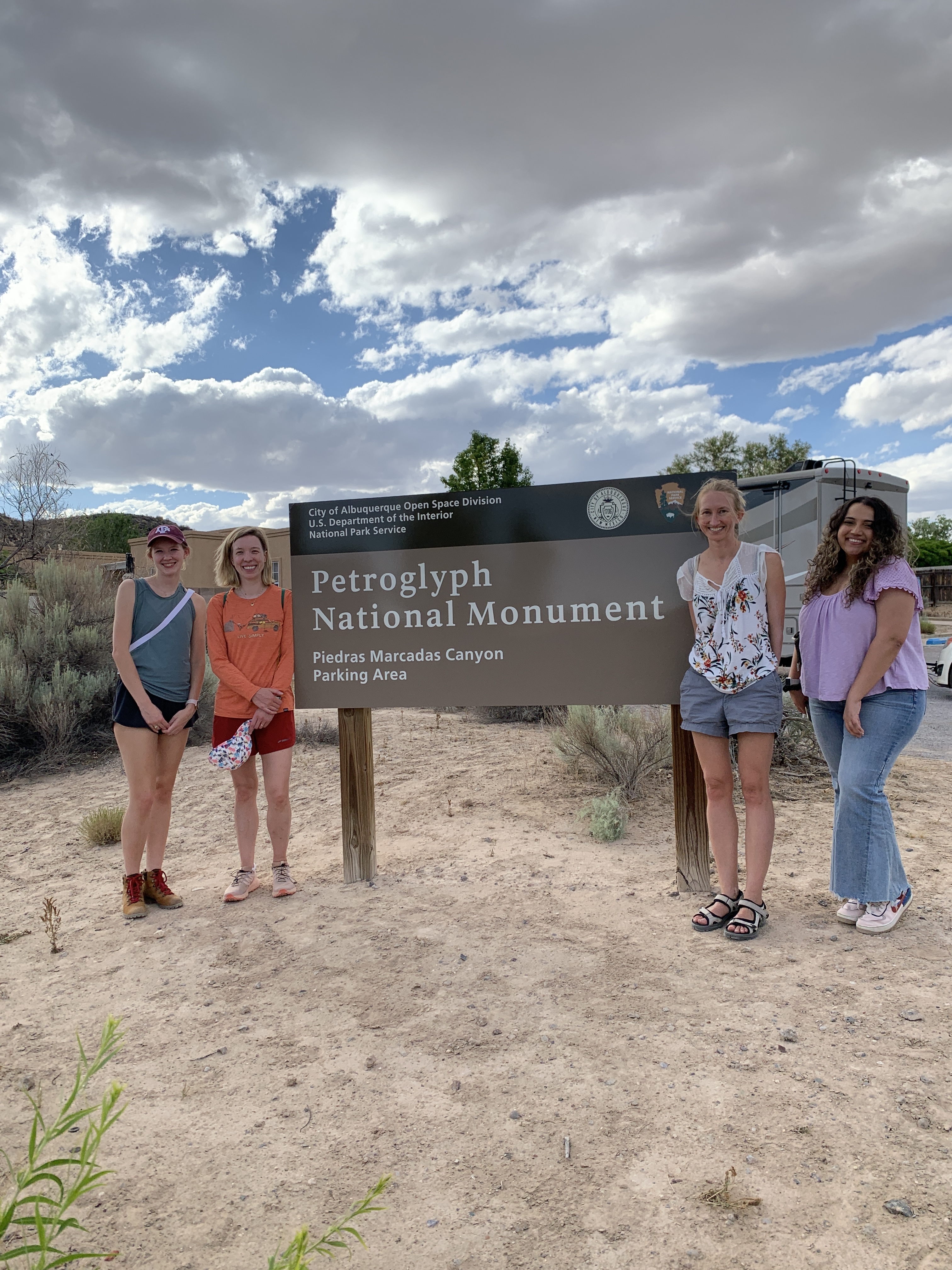
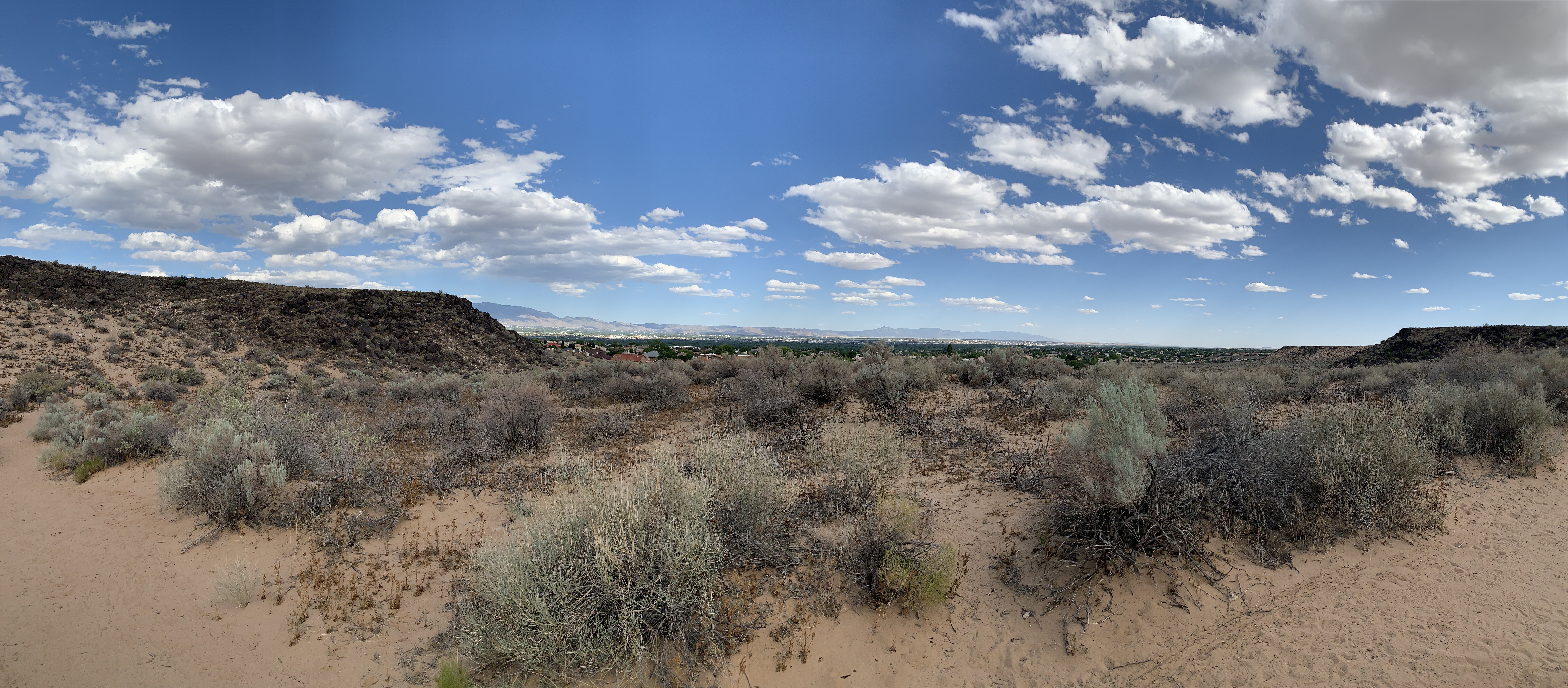
Ph.D. student Emily Payne and Dr. Astrid Layton joined collaborators Dr. Kate Davis and her Ph.D. students Leen and Akram for a visit to Sandia National Lab in Albuquerque, NM. The trip was part of an ongoing collaborative LDRD grant with Sandia looking at cyber-physical power systems for resilience. The trip even evolved some exploring Petroglyph National Monument!

The BiSSL group joins 1 of 16 teams that have been selected for NSFโ€™s Convergence Accelerator Grant

NSFโ€™s Convergence Accelerator is developing use-inspired solutions to address challenges aligned to the manufacturing, reuse and recycling of critical materials and products. The BiSSL group joins one of sixteen teams that have been selected for the programโ€™s Track I: Sustainable Materials for Global Challenges.

The project is titled:ย Toward Water Circularity: Mining Green Hydrogen and Value-Added Materials from Hypersaline Brines, and is led by Oregon State University. The team is made up of: Dr.ย Zhenxingย Fengย (PI), Dr.ย Alexย Changย (Co-PI), Dr.ย Astridย Laytonย (Co-PI), and Dr.ย Kelseyย Stoerzingerย (Co-PI). Feng, Chang, and Stoerzinger are all at Oregon State University in the Department of Chemical, Biological, and Environmental Engineering.

ABSTRACT. This track I NSFโ€™s Convergence Accelerator aims to converge advances in fundamental materials science with innovative design and manufacturing methods to couple their end-use and full life-cycle considerations for environmentally- and economically sustainable materials and products. Guided by this principle and motivated by the global goal of Net-Zero Emissions by 2050, this project focuses on demonstration of a sustainable production and manufacturing process for large-scale hydrogen deployment and critical materials mining from earthโ€™s abundant hypersaline brines (e.g., seawater). Hydrogen is a green fuel that can help accelerate decarbonization processes, and materials such as Lithium and Rare Earth elements that are critical to U.S. supply chain independence. This project emphasizes transformation from a linear to a circular economy; it enables a convergent, innovative team of universities, industry partners, government agencies, and students/trainees to ensure that the knowledge developed transitions effectively into many aspects of practice. The proposed circular use of water for fuel by renewable energy and extraction of critical materials for renewable energy production has broad societal impacts for a sustainable future. This project integrates multidisciplinary thinking into the undergraduate and K-12 curriculum, producing future engineers and scientists with skills and interests to work on multidisciplinary problems. This research supports and benefits the local community, such as the Oregon Coastโ€™s Blue Sector Partnership Network consisting of partners from workforce development, school districts (CTE), industry, government, research, maritime, municipalities, and blue technology.

This proposal aims to demonstrate the sustainable mining of green hydrogen in parallel with value-added critical elements from hypersaline brines (e.g., seawater) for clean energy applications. Motivated by the global goal of Net-Zero Emissions by 2050, circular economy principles guide our development of sustainable processes for materials/fuels production, utilization, and recycling. Seawater represents the most abundant resource on the earth, with immense surface accessibility and large amounts of solubilized elements imperative for clean energy technologies. Seawater can also be split using renewable energy (e.g., solar) to obtain hydrogen fuel, with benign oxygen gas as a byproduct. Hydrogen presents a zero-emission fuel (producing water in a fuel cell), part of a circular sustainable process. Developing an integrated solution for extracting hydrogen and critical elements from seawater requires a multidisciplinary team from universities, industry partners, government agencies, and students/trainees. With our patented technologies and research results in critical areas, we aim to integrate multidisciplinary knowledge, tools, and modes of thinking under the guidance of circular economy principles to accelerate and converge our research to two integrated prototypes: a mineral-water separation reactor and downstream electrolyzer (producing hydrogen from the reduced-saline effluent). In addition to this prototyping, we will also identify in Phase 1 additional areas of expertise through team activities to prepare our Phase 2 project. In parallel, we will engage local stakeholders (focused on the Oregon Coast with our local expertise) and create training programs to educate next-generation workforces with innovative circular concepts in both Phases.https://nsf.gov/awardsearch/showAward?AWD_ID=2236036&HistoricalAwards=false

Mechanical Engineering Senior Design Team for โ€œMatrix Trays: Waste to Opportunitiesโ€

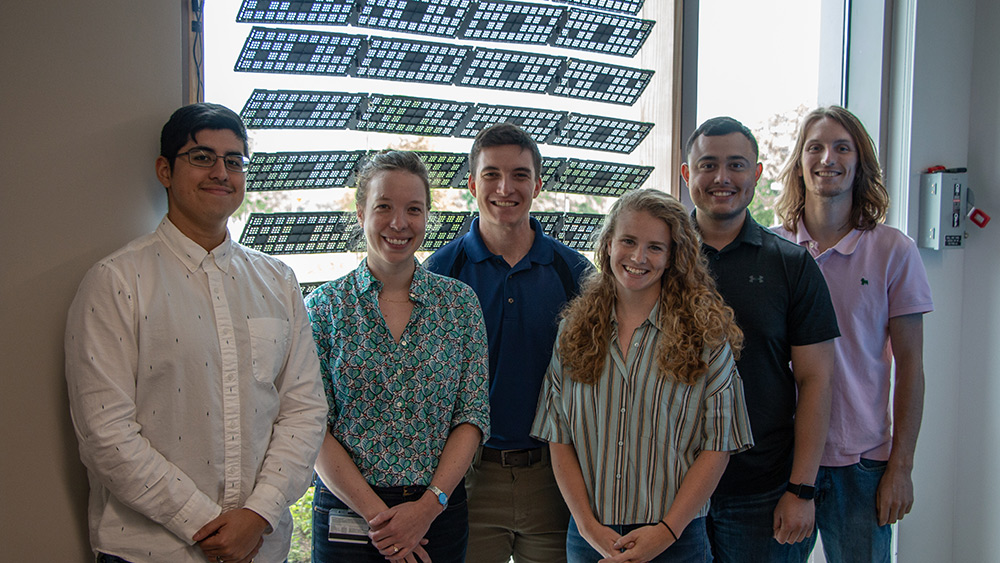
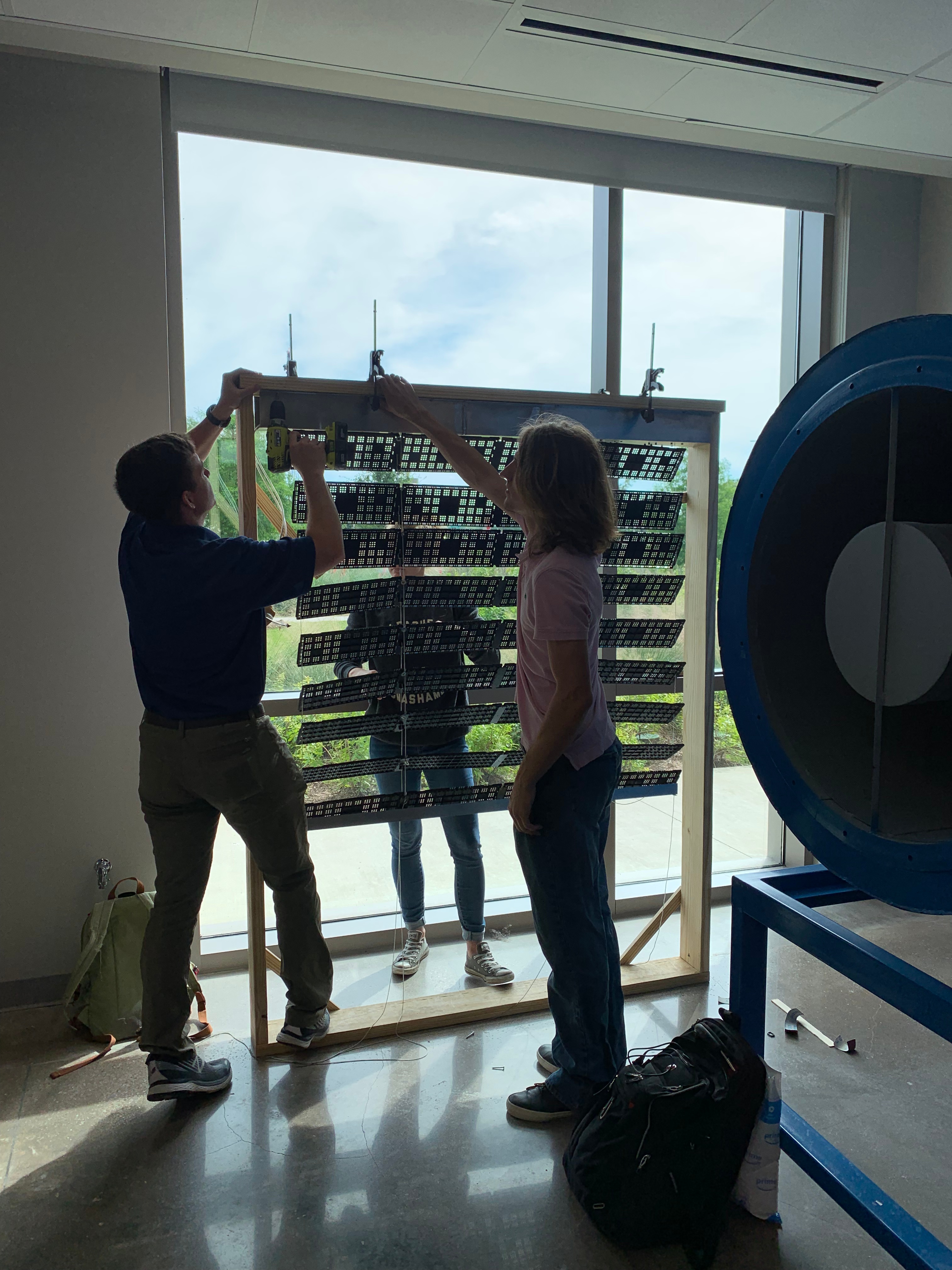
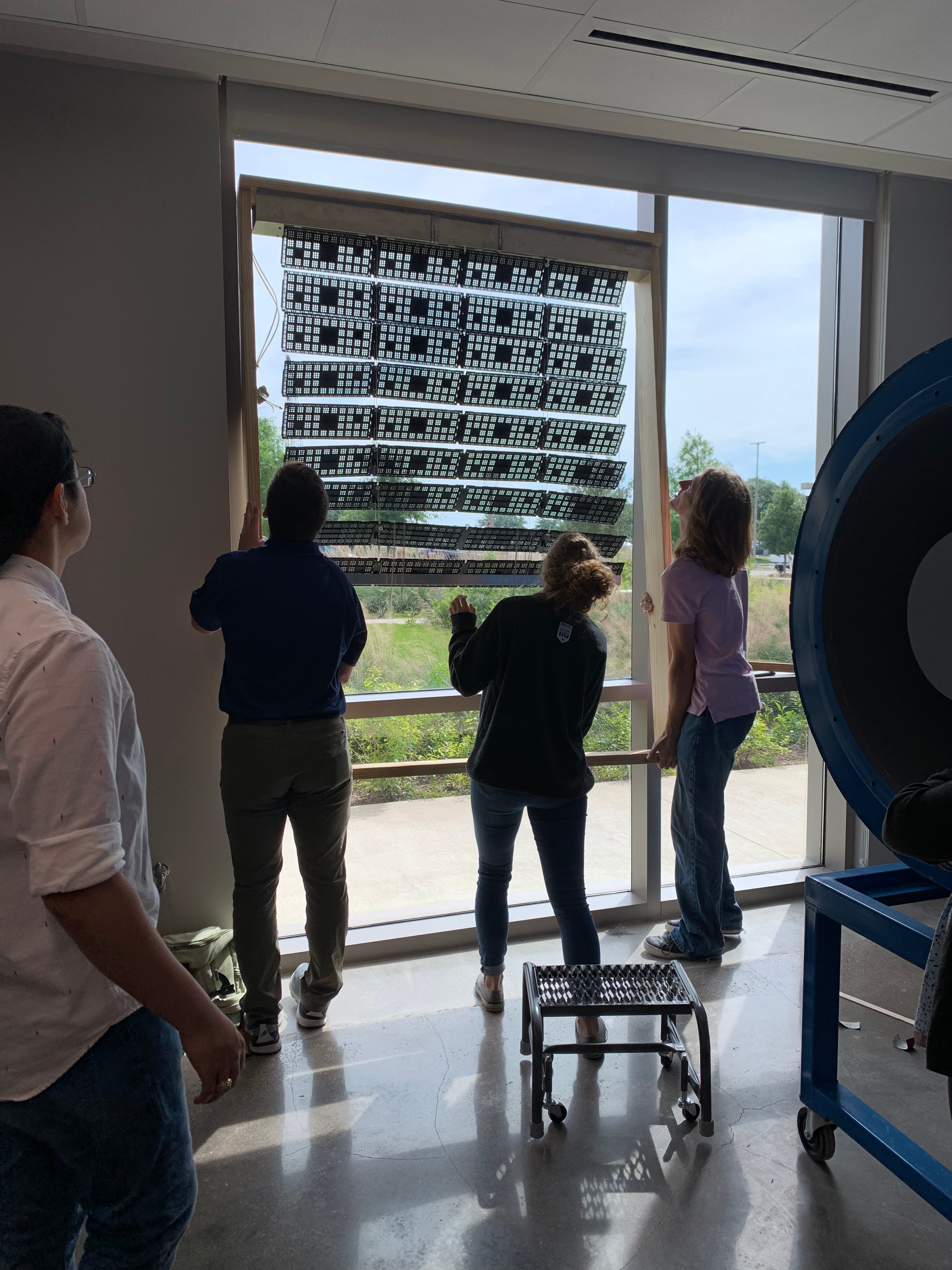
Matrix Trays: Waste to Opportunities, a seed grant project supported by Texas A&Mโ€™s Presidentโ€™s Excellence Fund, funded a Mechanical Engineering senior design/capstone team with myself and Dr. Ahmed Ali from the Architecture department as their advisors. Read more about the project here: โ€œStudent-designed smart shades reflect a more sustainable futureโ€

โ€œThe project focused on taking a very common industry byproduct, a single-use matrix tray used for placing small electronic chips, and conceiving and prototyping a new product that would use the trays that removed them from the waste stream,โ€ Layton said. โ€œThis goal aligns with those of a circular economy where the label โ€˜wasteโ€™ is removed by recognizing existing value. The students were given free rein in their concept generation, a freedom that resulted in an exciting final product with significant potential for future work.โ€

Assistant professorsย Drs. Astrid Laytonย (MEEN) andย Kate Davisย (ECE) are awarded the Texas A&M Energy Instituteโ€™s 4th Annual Energy Seed Grant

โ€œBio-Inspired Design of Complex Energy Systems to Achieve Robust, Efficient, and Sustainable Networksโ€

Proposals were assessed based on the following criteria: (a) innovative and transformative potential of proposed research work in energy; (b) quality of interdisciplinary research group; (c) potential for developing a successful proposal for government funding; and (d) potential for securing external government funding.

Read more about the 4th annual Texas A&M Energy Instituteโ€™s Energy Seed Grant awardees hereโ€ฆ