BiSSL director Dr. Astrid Layton will be presenting BiSSL work as part of the Fitchburg State Visionaries in Engineering & Technology speaker series. Her talk is titled “Learning from Nature’s Systems to Achieve Waste Equals Food.”
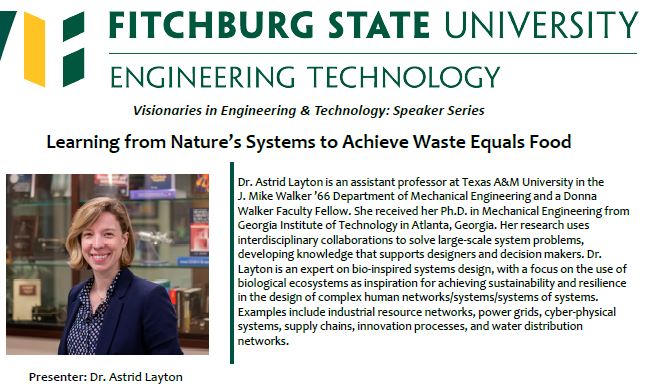
BiSSL director Dr. Astrid Layton will be presenting BiSSL work as part of the Fitchburg State Visionaries in Engineering & Technology speaker series. Her talk is titled “Learning from Nature’s Systems to Achieve Waste Equals Food.”

Thursday, 9am-3:30pm CDT Texas A&M Institute of Data Science (TAMIDS) is hosting a “Network Science Workshop” organized by Dr. Nate Veldt , assistant professor in the Department of Computer Science and Engineering at Texas A&M University. The workshop is in person at Blocker 220. To register for the event, please click here.
Dr. Astrid Layton of the BiSSL group will be presenting as an invited speaker at the workshop, covering work from the BiSSL group in her talk titled “Bio-Inspired Network Design: Using Nature’s Ecosystems to Design Resilient and Sustainable Human Networks.”
Abstract: Inspiration from nature has produced some fascinating, novel, and life changing solutions for the human world. Most of these bio-inspired designs however have been product based. Taking a systems perspective when we look to nature taps inspirations that can improve the critical networks we depend on. This talk focuses on biological ecosystems in particular, complex networks of interacting species that are able to support individual needs while maintaining system-level functions. These networks offer inspiration for achieving both sustainability AND resilience in the design of our human engineered networks. Quantitative ecosystem descriptors and analysis techniques adapted from ecology enable desirable ecosystem characteristics to be used as design guides for things like industrial resource networks, water networks, supply chains, and power grids.
Astrid Layton (2023) “Bio-Inspired Network Design: Using Nature’s Ecosystems to Design Resilience and Sustainable Human Networks” TAMIDS Network Science Workshop. College Station, TX.
Dr. Layton will be giving a lightning talk at the NSF-funded Workshop Convergent Sea Level Rise Adaptation for Urban and Rural Systems in the Gulf of Mexico. Her talk “Nature’s Lessons for Resilient Systems” joins others seeking to collaborate to address the urban and rural system impacts of sea level rise.

Dr. Astrid Layton was invited by the Center for Additive Manufacturing and Design Innovation (CAMDI) in the Cockrell School of Engineering at the University of Texas at Austin to share BiSSL group work on bio-inspired system resilience. Information about her talk, titled “Learning from Nature to Design Resilient Systems,” can be found in the flying below.

Dr. Astrid Layton was invited by the Department of Industrial and Systems Engineering at the University of Miami to share BiSSL group work on bio-inspired system resilience. Her talk, titled “Using Biological Inspiration to Guide the Design of Human Networks for Resilience” is also now featured in the University’s Climate Resilience Academy UM YouTube series.
Abstract: Biological ecosystems have been through millions of years of R&D, producing complex systems of systems made up of interacting species that are able to support individual needs while maintaining system-level functions. In this talk Dr. Layton will show that ecosystems offer a relatively untapped source of design inspiration for improving the resilience of our human engineered networks in conjunction with goals like sustainability and cost. Quantitative descriptors and analysis techniques are adapted from ecology, enabling desirable ecosystem characteristics to be used as optimization and design guides for industrial resource networks (or eco-industrial parks, EIPs), water networks, supply chains, cyber-physical systems, and power grids. Ecological characteristics such as high levels of materials/energy cycling and a unique balance between redundant and efficient pathways offer novel routes to achieving traditional engineering goals.
Join us for a free design thinking workshop that will start with a focus on bio-inspired system design for resilience and sustainability, followed by a hands-on activity that will exercise your brain to think beyond your normal system boundaries.

Boolean Girl, a nonprofit founded in 2014 motivated to teach girls, under-represented groups, and low-income kids how to code and about engineering, hosts free monthly events for both coding and ambassador meets where female STEM professionals talk about career paths, education, and life skills.
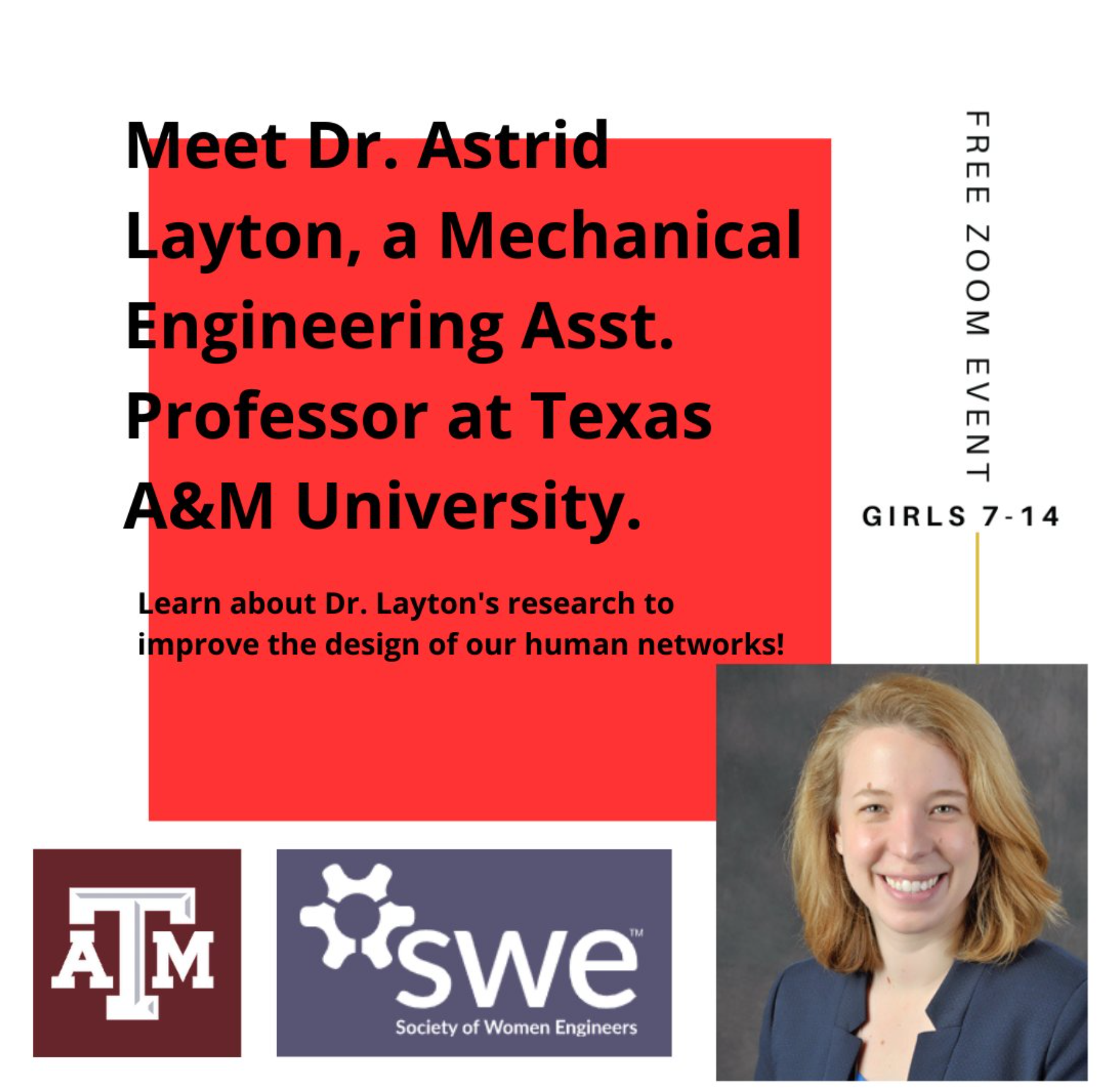

Excited to share our BiSSL group’s research to the Environmental & Ecological Engineering Department at Purdue! Feel free to virtually stop by if you’re free, I’ll be talking about “Ecosystems as Design Inspiration for Resilient and Sustainable Human-Engineered Networks.”
Seminar Abstract: Biological ecosystems have been through millions of years of R&D, producing complex networks of interacting species that are able to support individual needs while maintaining system-level functions. In this talk, Dr. Layton will show that biological networks offer a relatively untapped source of design inspiration for improving the sustainability and resilience of our human-engineered networks. Quantitative descriptors and analysis techniques are adapted from ecology through close collaboration with ecologists, enabling desirable ecosystem characteristics to be used as optimization guides for industrial resource networks (or eco-industrial parks, EIPs), water networks, supply chains, and power grids. Characteristics such as a high level of cycling of materials/energy within the system and a unique balance between redundant and efficient pathways are connected back to the achievement of traditional engineering goals such as cost and robustness.
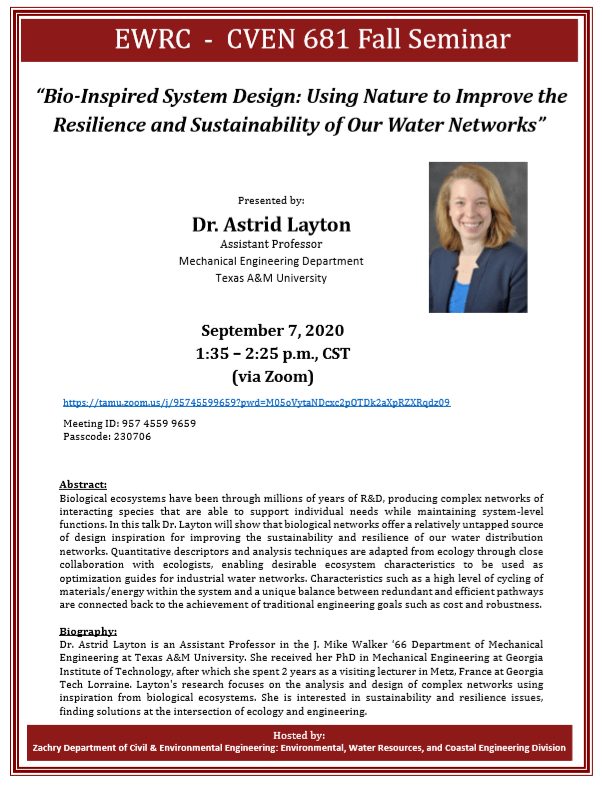
Honored to have been invited to give a graduate seminar in A&M’s Civil Engineering Department for the Environmental, Water Resources, and Coastal Engineering students. Feel free to virtually stop by if you’re free, I’ll be talking about my research regarding “Bio-Inspired System Design: Using Nature to Improve the Resilience and Sustainability of Our Water Networks.”
Seminar Abstract: Biological ecosystems have been through millions of years of R&D, producing complex networks of interacting species that are able to support individual needs while maintaining system-level functions. In this talk Dr. Layton will show that biological networks offer a relatively untapped source of design inspiration for improving the sustainability and resilience of our water distribution networks. Quantitative descriptors and analysis techniques are adapted from ecology through close collaboration with ecologists, enabling desirable ecosystem characteristics to be used as optimization guides for industrial water networks. Characteristics such as a high level of cycling of materials/energy within the system and a unique balance between redundant and efficient pathways are connected back to the achievement of traditional engineering goals such as cost and robustness.
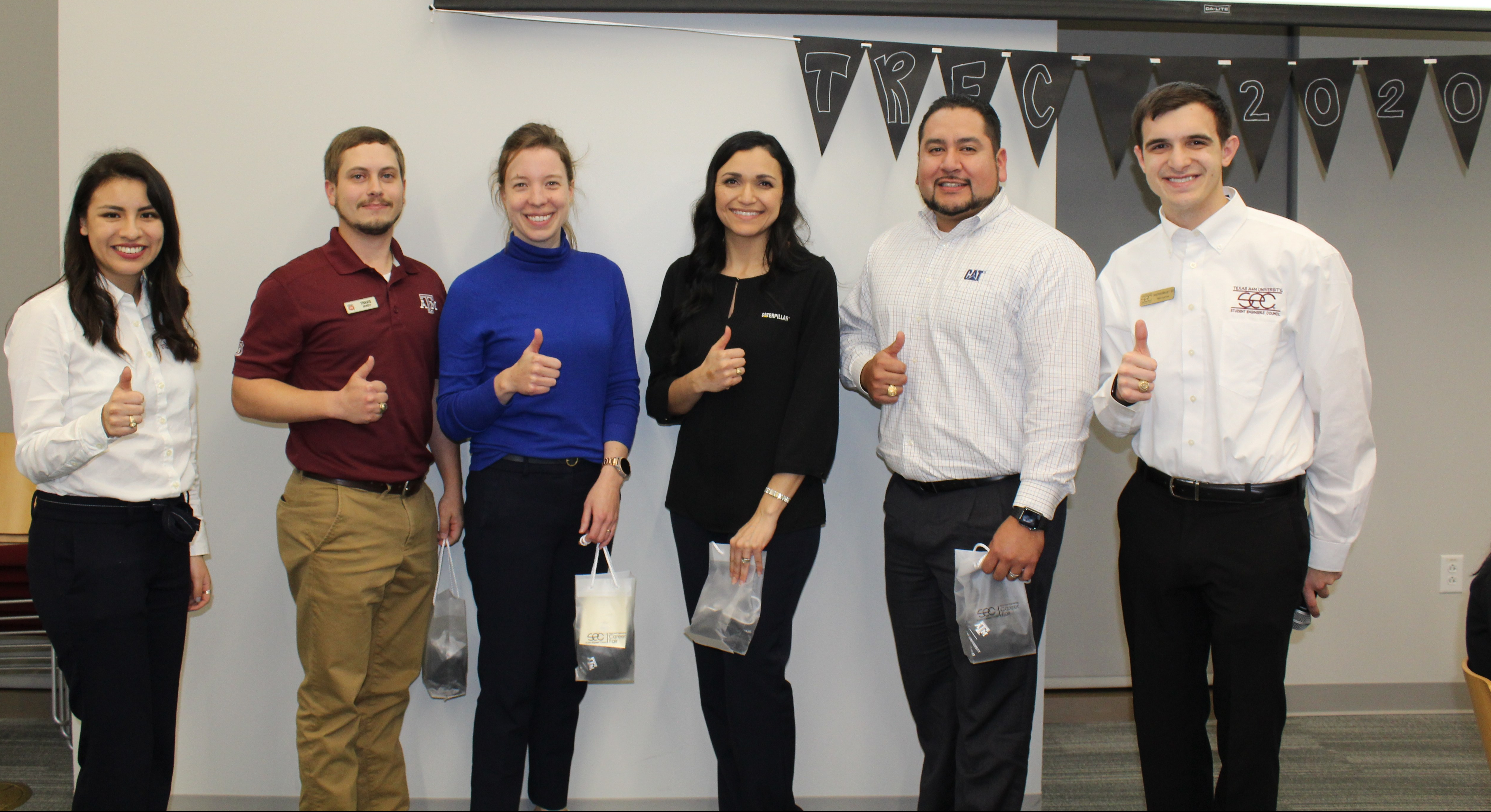
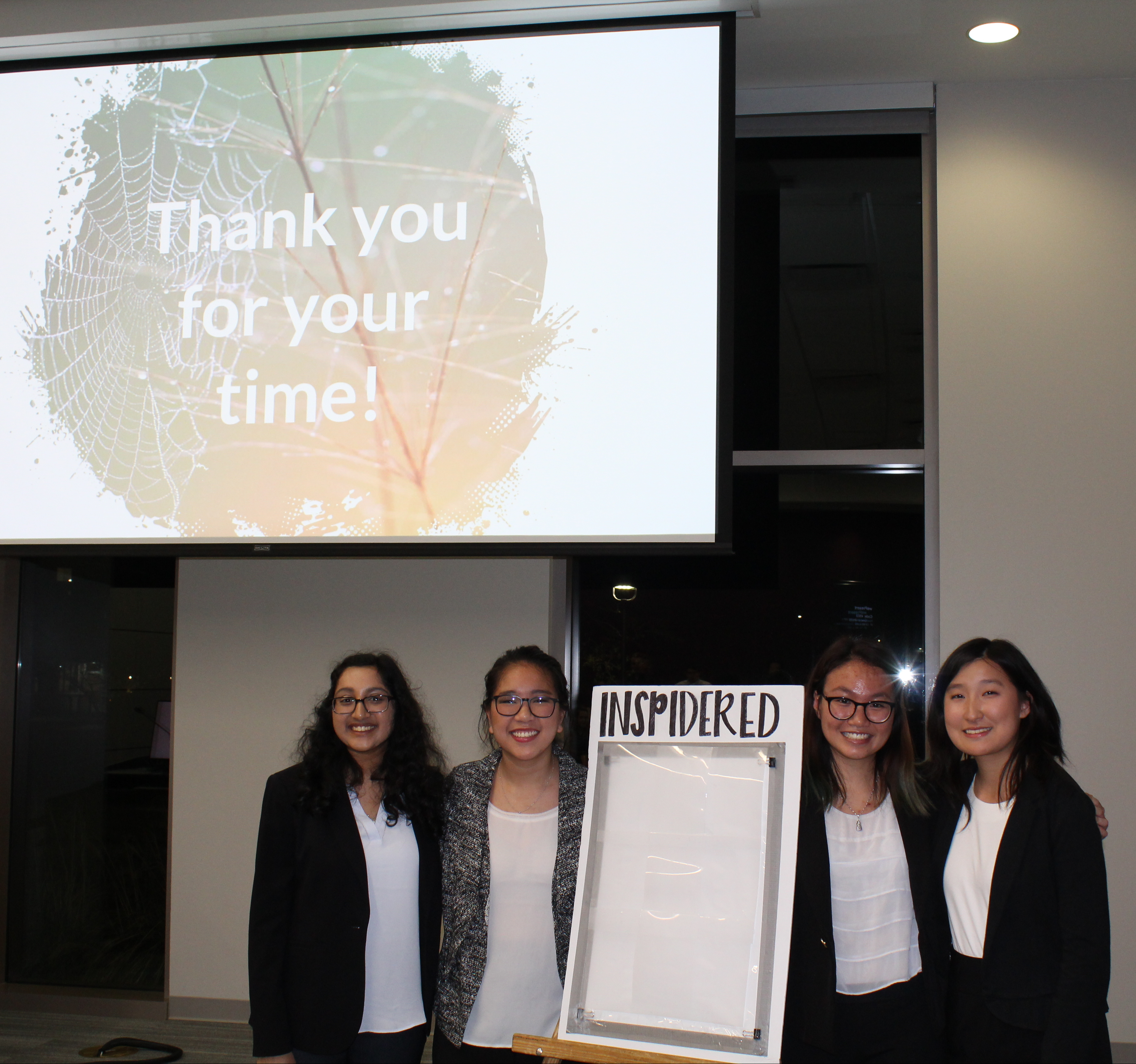
The final presentations of the 2020 Texas A&M Regional Engineering Conference (TREC) were a huge success! The student teams presented innovative bio-inspired designs that could have a real impact on hurricane prone areas. A lot of the students had first hand experience with the problems they were looking to solve.
First prize went to the INSPIDERED team from SWE! They created a spider silk glass cover to protect from and prevent shattered glass from falling into homes and the environment – protecting clean up crews from glass shards. Congratulations!
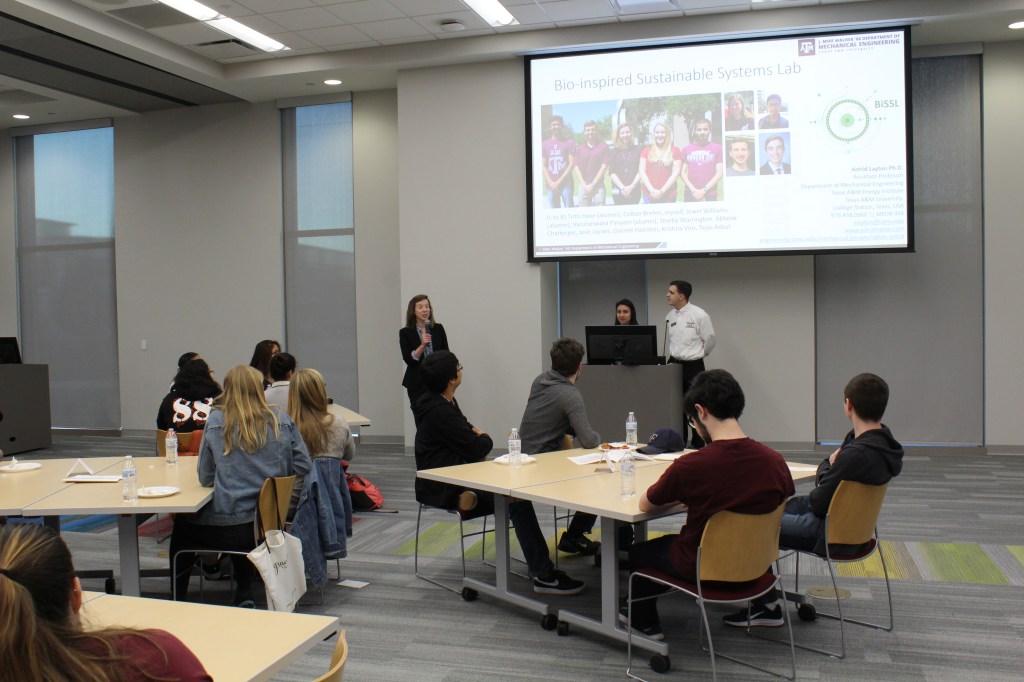
I’m excited to help kick-off the Texas A&M Regional Engineering Conference (TREC) this Saturday with a keynote speech! TREC co-chairs Laura Orellana and Keeton Bailey have done an excellent job creating an impactful problem statement for the interdisciplinary freshmen teams to work on for the next three weeks.
TREC is an event hosted annually by the Student Engineers’ Council (SEC) at Texas A&M Engineering to foster professionalism and interdisciplinary collaboration among freshmen by developing a solution to a sustainability-related problem and presenting their product 3 weeks later.
It’s not too late to register! http://trec.tamu.edu
 BiSSL: Bio-inspired Systems Lab