October 11-13, 2026
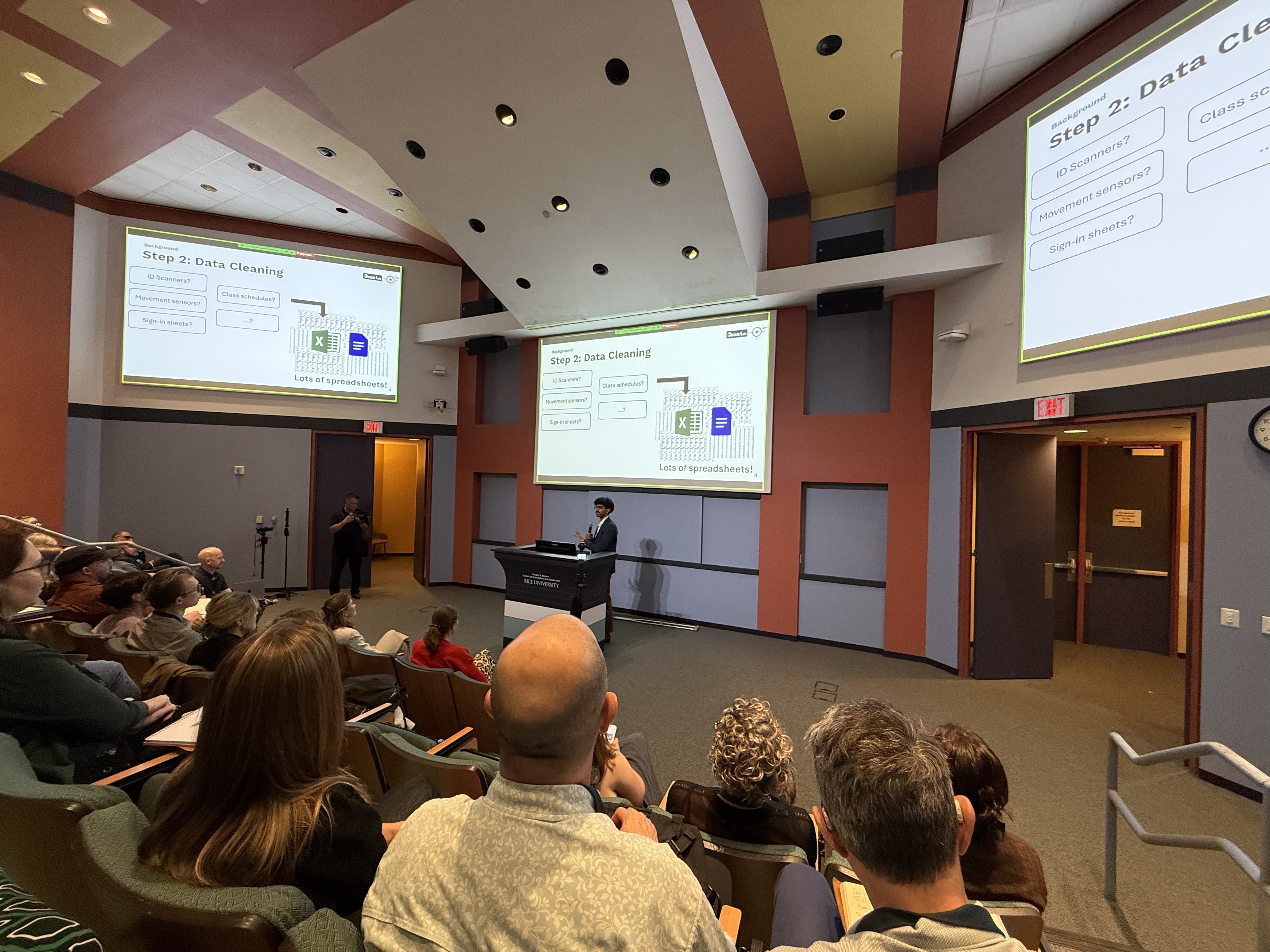
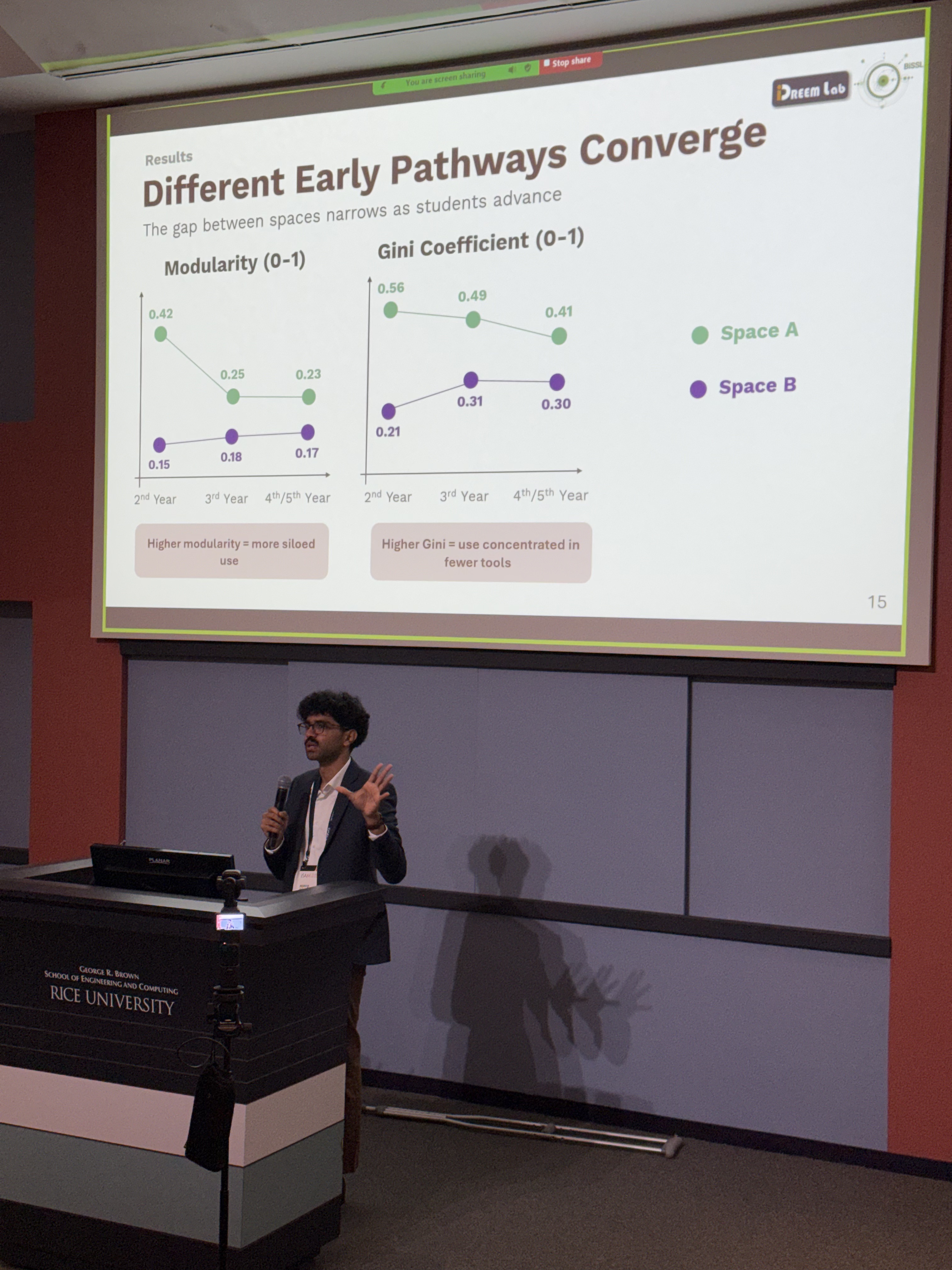
Pepito presented a paper on our academic engineering makerspace research in collaboration with Dr. Julie Linsey from Georgia Tech. The paper is titled “Personal Projects vs. Course-Based Makerspace Use: Tool Usage Trends Uncovered by Bipartite Network Analyses” and investigates patterns found in our network analysis of student-tool usage in the makerspaces at 2 universities, highlighting the impact on usage of a more open space where personal projects are allowed vs a more restricted space where usage is limited to courses only. Patterns were seen by year across the spaces, with some convergence occurring in the final when students complete their senior capstone design projects.
Abstract:
“Makerspaces are critical to the education of engineers, providing invaluable hands-on think-design-build experiences that cannot be gained from a textbook or classroom. Recent work has shown that analyzing makerspaces as student-tool bipartite networks can provide quantitative feedback highlighting patterns that traditional makerspace data collection methods are unable to uncover. This paper preliminarily tests a newly proposed conjoined bipartite model that merges the interactions between 3 representations of the space, users, user class year, and general tool groupings generated from short end-of-semester usage surveys. A set of 4 bipartite metrics then analyze the results, including one new to makerspaces – the Gini coefficient, which focuses on node-based patterns to complement the network level patterns measured by the other 3 metrics. The metrics are able to highlight meaningful patterns between class years, with the largest structural differences being between the two spaces in usage by 2nd year students. Space A has lower nestedness and connectance and higher modularity than Space B, indicating that 2nd year students at Space A interact with tools in a more compartmentalized manner reflecting usage that is strongly tied to the curriculum, limiting their ability to explore tools. The result suggests a stabilization of the usage pattern mismatch between Space A and B by the 4th/5th year. This suggests that open-ended projects, such as capstone design may encourage a broader set of tool usage and likely knowledge gained. One suggestion made by the analysis is that the disadvantaged Space A, which is limited to being course-use only, could combat the negative effects by introducing more open-ended design projects, through courses and personal projects earlier. The results here suggest that while space design and organizational structure both play a part in space usage, different design pathways may lead to similar late-stage usage outcomes, and likely learning.”
Thelly, P., J. Linsey, and A. Layton. (2026) ”Personal Projects vs. Course-Based Makerspace Use: Tool Usage Trends Uncovered by Bipartite Network Analyses.” 10th International Symposium on Academic Makerspaces (ISAM). Houston, TX, USA.

