BiSSL PhD student Abheek Chatterjee was awarded a J. Mike Walker ’66 Department of Mechanical Engineering Graduate Summer Research Grant for Summer 2020 for his proposal titled: “Ecology-inspired design of resilient and affordable System of Systems.” Congratulations Abheek!
Author: alayton6
BiSSL student paper accepted to 2020’s ASEE conference

Congratulations to BiSSL MS student Colton Brehm for his American Society for Engineering Education (ASEE) paper, in collaboration with Dr. Julie Linsey at Georgia Tech’s George W. Woodruff School of Mechanical Engineering, being accepted! He’s done some really interesting work applying our bio-inspired system modeling and design methods to engineering makerspaces!
Two BiSSL students get papers accepted to 2020’s IDETC-CIE conference

Two BiSSL students, PhD student Abheek Chatterjee and MS almuni Tirth Dave, have had their “International Design Engineering Technical Conference & Computers and Information in Engineering Conference” (IDETC-CIE) papers accepted to the 2020 conference, to be held in St. Louis, MO August 16-19, 2020.
Abheek’s paper was accepted to the CIE sub-conference on Systems Engineering Information Knowledge Management (SEIKM):
Chatterjee, A., Malak, R., & Layton, A. (2020). Exploring a Bio-Inspired System of Systems Resilience vs. Affordability Tradespace. ASME 2020 Computers and Information in Engineering Conference, St. Louis, MO.
Tirth’s paper was accepted to the IDETC sub-conference on Design Theory and Methodology (DTM):
Dave, T., & Layton, A. (2020). Extending the Use of Bio-Inspiration for Water Distribution Networks to Urban Settings. ASME 2020 International Design Engineering Technical Conference, St. Louis, MO.
Texas A&M Engineering: SoundBytes Podcast Episode “Engineer This!: Taking inspiration from food webs to power grids” (Featuring Dr. Astrid Layton)

On this episode of Engineer This!” the SoundBytes team asks Dr. Astrid Layton about one of her research projects looking at the design of power grids using inspiration from nature. You can find a full transcript of the episode here.
Nature and industry may have more in common than we think. Dr. Astrid Layton, assistant professor in the J. Mike Walker ’66 Department of Mechanical Engineering, is taking concepts from food webs and applying them to power grids to find ways to help the systems run with more resilience.
Successful BiSSL MS Thesis Defense by Colton Brehm
BiSSL MS student Colton Brehm successfully defended his MS thesis!
His thesis is titled: “Improving the Environmental and Economic Outcomes of Industrial Networks using Nestedness to Design Resource Distribution Infrastructure” and focused on using the nested structure of biological food webs to advise engineering system design.
Texas A&M Engineering: SoundBytes Podcast Episode “Ask an Engineer: What’s wrong with recycling?” (Featuring Dr. Astrid Layton)

On this episode (Season 1 Episode 28) of “Ask an Engineer,” the SoundBytes team asks Dr. Astrid Layton about the challenges facing recycling. You can find a full transcript of the episode here.
Layton Invited Keynote at Texas A&M Regional Engineering Conference, hosted by the Student Engineers’ Council
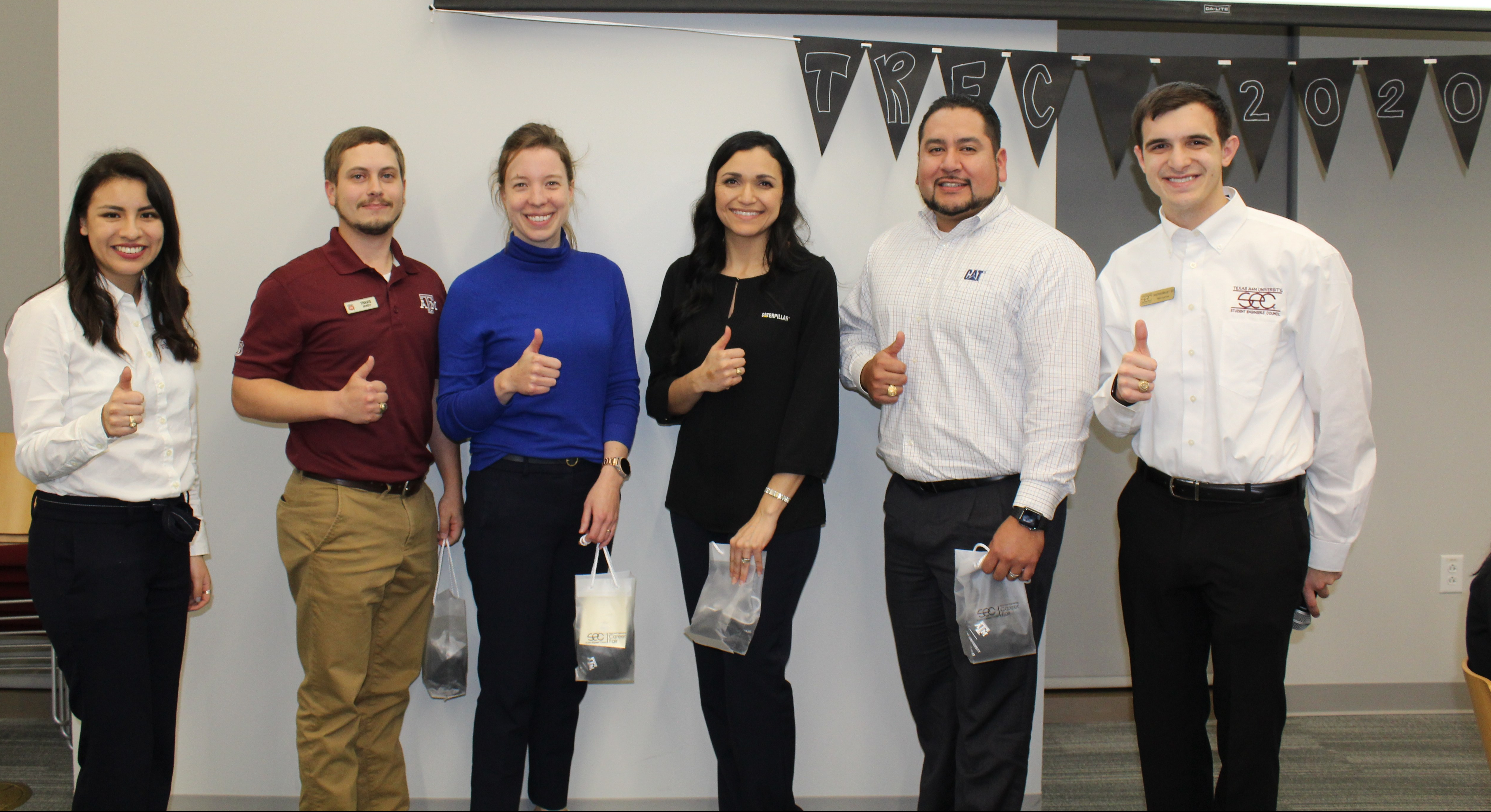
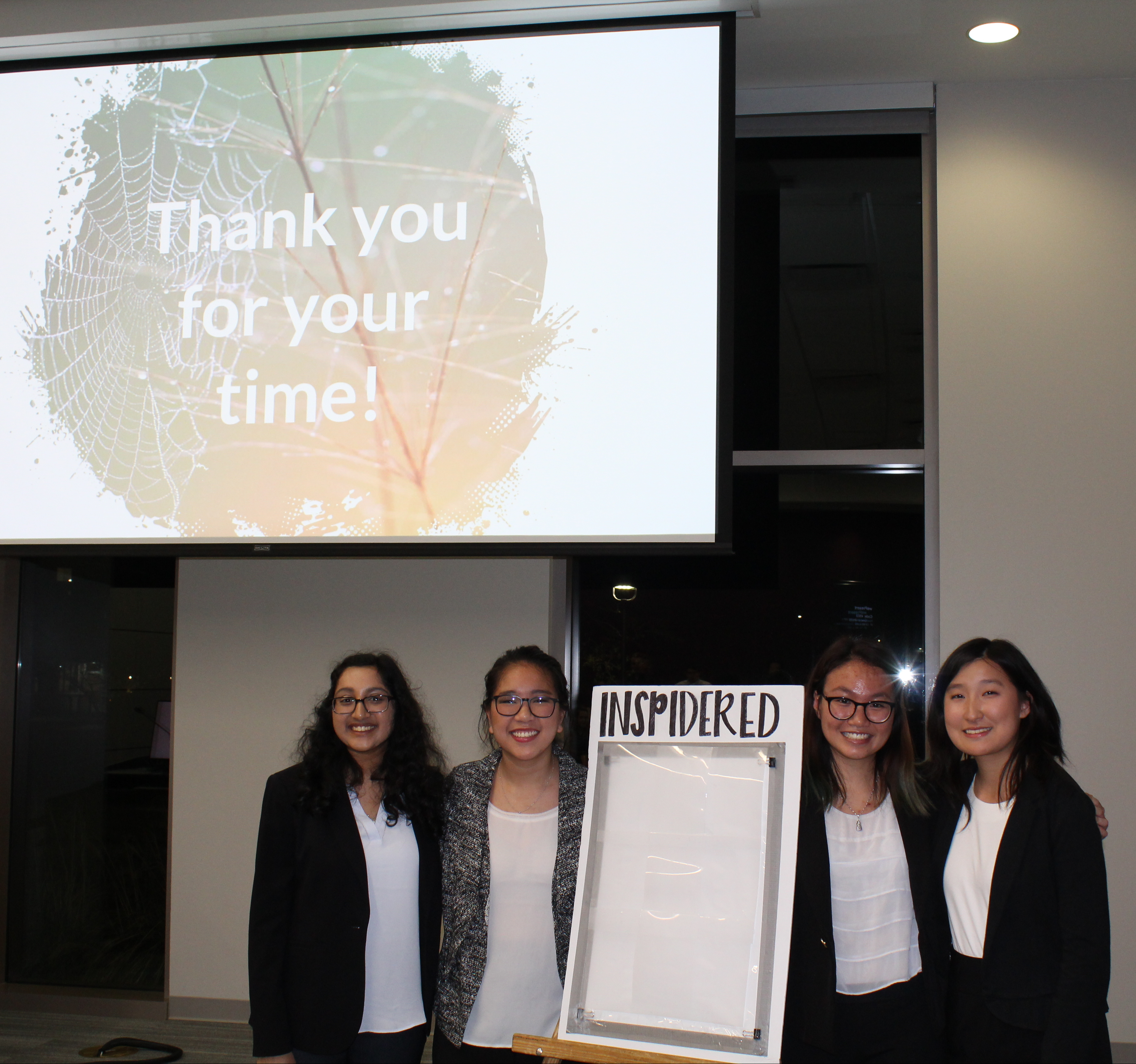
The final presentations of the 2020 Texas A&M Regional Engineering Conference (TREC) were a huge success! The student teams presented innovative bio-inspired designs that could have a real impact on hurricane prone areas. A lot of the students had first hand experience with the problems they were looking to solve.
First prize went to the INSPIDERED team from SWE! They created a spider silk glass cover to protect from and prevent shattered glass from falling into homes and the environment – protecting clean up crews from glass shards. Congratulations!
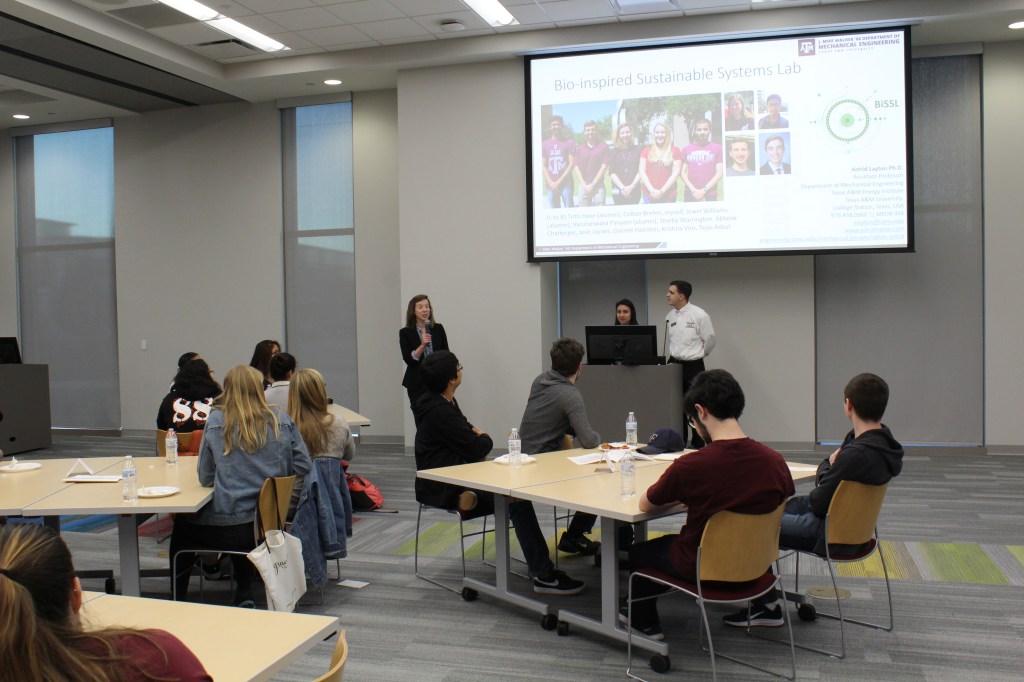
I’m excited to help kick-off the Texas A&M Regional Engineering Conference (TREC) this Saturday with a keynote speech! TREC co-chairs Laura Orellana and Keeton Bailey have done an excellent job creating an impactful problem statement for the interdisciplinary freshmen teams to work on for the next three weeks.
TREC is an event hosted annually by the Student Engineers’ Council (SEC) at Texas A&M Engineering to foster professionalism and interdisciplinary collaboration among freshmen by developing a solution to a sustainability-related problem and presenting their product 3 weeks later.
It’s not too late to register! http://trec.tamu.edu
BiSSL Presentation at 18th Annual Conference on Systems Engineering Research (CSER 2020)

BiSSL is looking forward to representing our bio-inspired systems of systems (SoS) design work at this year’s 18th Annual Conference on Systems Engineering Research in Redondo Beach, CA. The conference this year is focused on “Recent Trends and Advances in Model-based Systems” and will be going on from March 19-21, 2020. PhD student Abheek Chatterjee is first author on a paper with our collaborator Dr. Richard Malak titled: “A Bio-inspired Framework for Analyzing and Predicting the Trade-off between System of Systems Attributes.” We hope to see you all there!
BiSSL Student Led Publication in Journal of Cleaner Production
Congratulations to BiSSL alumni Tirth Dave (MS graduate December 2019) on the publication of his paper in the Journal of Cleaner Production! “Designing ecologically-inspired robustness into a water distribution network” covers Tirth’s work on bio-inspired network design coupled with modeling of a water distribution network, showing that we can draw inspiration from nature to improve the resilience and reduce freshwater use in industrial resource networks.
ABSTRACT: Eco-Industrial Parks (EIPs), network of industries that collaborate by utilizing each other’s byproducts and wastes, are highly desirable for both the industries themselves, their environment, and governments due to their economic, environmental, and social advantages. Previous work has shown that EIPs are not as successful as they could be in terms of mimicking the behavior of biological ecosystems, highlighting that more work needs to be done for EIPs to truly mimic their biological-counterparts. The Kalundborg EIP, located in Kalundborg, Denmark, is a well documented example of an EIP with long-term success. Using the water network within the Kalundborg EIP as a case study, two bio-inspired networks are selected from an optimization based on the ecosystem metric robustness. The bio-inspired solutions are compared with a traditionally cost-minimized solution to understand what bio-inspired design can offer when a network is disturbed. Disturbances such as connection breakages and industry shutdowns are tested, showing that the bio-inspired designs require minimal recovery costs – in stark contrast to the traditional network solution. The results show that the bio-inspired designs reduce the network’s dependence on a scarce import (freshwater) and have higher overall network resilience in the event of disturbances. The three network solutions are discussed from a ecological perspective, explaining differences from the standpoint of ecosystem characteristics. The analysis highlights the benefits of using ecology to understand the nature of and improve the design of industrial networks.
JCP (2020) “Designing ecologically-inspired robustness into a water distribution network” Dave, T. and Layton, A.
BiSSL Student Led PLOS ONE Publication
We can finally share this open access PLOS ONE publication “A quantitative engineering study of ecosystem robustness using thermodynamic power cycles as case studies” written with MS BiSSL alumni Varuneswara Panyam (TAMU graduate December 2019). Understanding the characteristics of biological systems from an engineering perspective is an important part of bio-inspired engineering design!
ABSTRACT: Human networks and engineered systems are traditionally designed to maximize efficiency. Ecosystems on the other hand, achieve long-term robustness and sustainability by maintaining a unique balance between pathway efficiency and redundancy, measured in terms of the number of flow pathways available for a given unit of flow at any node in the network. Translating this flow-based ecosystem robustness into an engineering context supports the creation of new robust and sustainable design guidelines for engineered systems. Thermodynamic cycles provide good examples of human systems where simple and clearly defined modifications can be made to increase efficiency. Twenty-three variations on the Brayton and Rankine cycles are used to understand the relationship between design decisions that maximize a system’s efficient use of energy (measured by thermodynamic first law efficiency) and ecological measures of robustness and structural efficiency. The results reveal that thermodynamic efficiency and ecological pathway efficiency do not always correlate and that while on average modifications to increase energy efficiency reduce the robustness of the system, the engineering understanding of ecological network design presented here can enable decisions that are able to increase both energy efficiency and robustness.
PLOS ONE (2019) “A quantitative engineering study of ecosystem robustness using thermodynamic power cycles as case studies” Panyam, V. and Layton, A.
 BiSSL: Bio-inspired Systems Lab