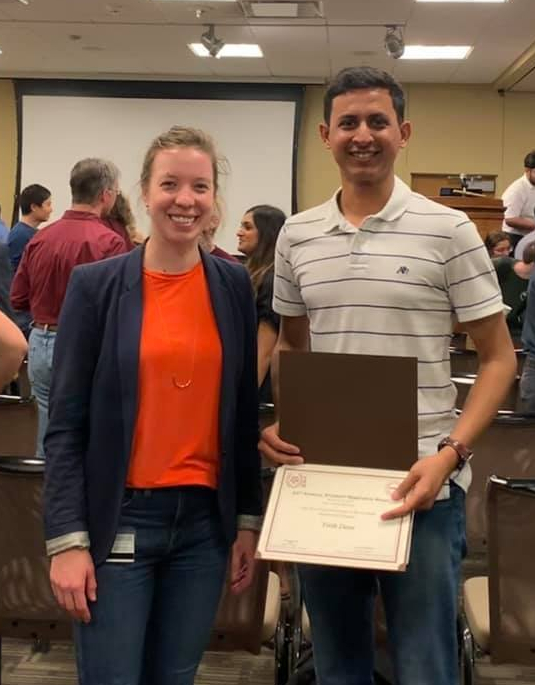
Dr. Astrid Layton and BiSSL MS student Tirth Dave with his award
BiSSL Master’s student Tirth Dave just won 1st place out of all Engineering Graduate Student Presentations at Student Research Week at Texas A&M University! His presentation was titled: “Sustainable Water Networks Design: A Bio-inspired Approach”
Everyone here in the BiSSL group is so proud!
Student Research Week at Texas A&M is the largest, single-university student-run research symposium in the nation. Students get to show their research and have a chance to win up to $1,000 in award money and receive feedback from faculty and graduate student judges.
Clare Boothe Luce scholar and J. Mike Walker ’66 Department of Mechanical Engineering undergrad Shelby Warrington did an excellent job presenting her work at Student Research Week – Texas A&M University from our last 2 years working together on bio-inspired human system modeling!
Student Research Week at Texas A&M is the largest, single-university student-run research symposium in the nation. Students get to show their research and have a chance to win up to $1,000 in award money and receive feedback from faculty and graduate student judges.
The Clare Boothe Luce Scholar Program has, since its first grants in 1989, become one of the single most significant sources of private support for women in science, mathematics, and engineering in Higher Education in the United States. Clare Boothe Luce, the widow of Henry R. Luce, was a playwright, journalist, U.S. Ambassador to Italy, and the first woman elected to Congress from Connecticut. In her bequest establishing this program, she sought “to encourage women to enter, study, graduate, and teach” in science, mathematics, and engineering. To date, the program has supported more than 2,500 women. Learn more here.
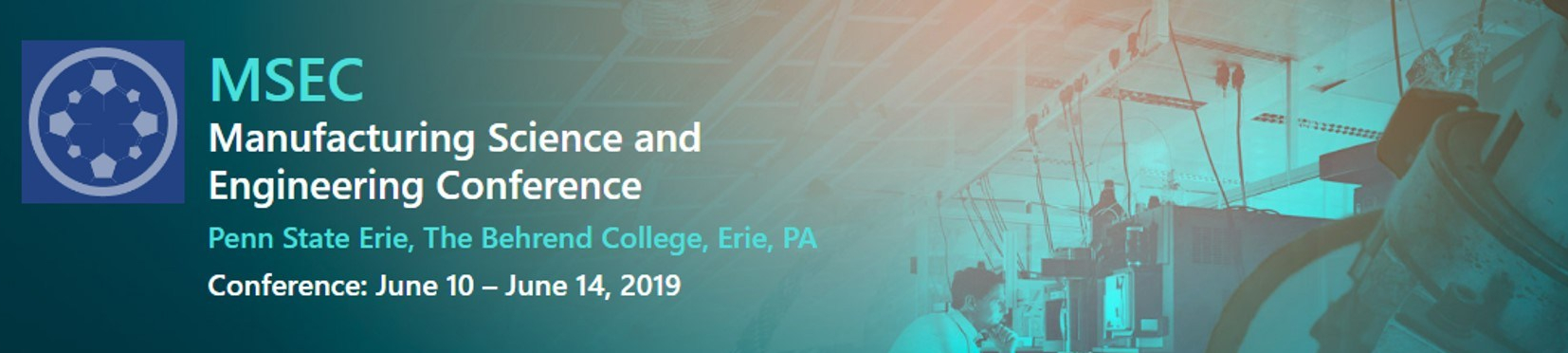
Congratulations to BiSSL grad student Jewel Williams for winning a Graduate Travel Award to attend the ASME conference for Manufacturing Science and Engineering (MSEC) in June at Penn State Erie, The Behrend College. Jewel will be presenting her first authored paper titled WASTE REDUCTION: A REVIEW OF COMMON OPTIONS AND ALTERNATIVES.
Congratulations to BiSSL Masters student Jewel Williams and undergraduate Clare Boothe Luce scholar Shelby Warrington for the acceptance of their peer-reviewed conference paper titled WASTE REDUCTION: A REVIEW OF COMMON OPTIONS AND ALTERNATIVES. The ASME Conference for Manufacturing Science and Engineering (MSEC) will be held in June at Penn State Erie, The Behrend College.
Paper Abstract:
Circular economy aims to address limited resources through the continuous circulation of materials and energy. Re-circulating low quality materials for reuse is a sustainability goal that is analogous to the primary function of Nature’s detritus species, a keystone for the proper functioning of ecosystems. Prior applications of ecosystem structure to human network design uncovered that even the most economically successful networks of industries demonstrate a lack of analogous detritus actors in the form of reuse and recycling. The recycling industry’s volatile nature, dependency on international factors, and financial difficulties prevent this strategy from becoming an efficient alternative. Creativity in design, inspired by ecosystems, is proposed here as a method to repurpose manufacturing byproducts that are otherwise seen as low quality waste materials. Realizing the reuse potential of these materials can create detrital-type feedback loops, an attribute that supports the characteristic resilience and efficiency of ecosystems. The work here analyzes existing methods of pursuing circular economy and investigates the potential benefits generated by purposefully adding connects that create detrital-feedback-loops at the consumer and producer levels.
“WASTE REDUCTION: A REVIEW OF COMMON OPTIONS AND ALTERNATIVES“
At Texas A&M University, diversity is changing the face of engineering, so join us in celebrating Women’s History Month! Throughout March, hear what Texas A&M Mechanical Engineering students, staff, and faculty have to say about embracing differences.
This afternoon’s shoutout goes to Assistant Professor Dr. Astrid Layton:
“Just because a subject is hard for you and seems easy for everyone else, doesn’t mean it isn’t for you! The hard stuff is often the most interesting and rewarding, and it’s hard work – not talent that creates success.”
BiSSL MS student Jewel Williams was one of only 60 students selected to participate in this weekend’s 48 hour Aggies Invent for the Planet event! We’re all wishing her good luck!
Feb. 15-17, 2019
Invent for the Planet: The sun never sets on innovation.
For 48 hours, college students from 30 universities around the world will be joining Texas A&M University virtually as we tackle some of the most challenging issues facing the planet today. From water insecurity solutions to stopping the spread of disease and creating new technology for the classroom, this competition will test the limits of your creativity and resourcefulness. Will your idea help save lives and improve life on Earth? From Feb. 15–17, the sun won’t set on innovation.
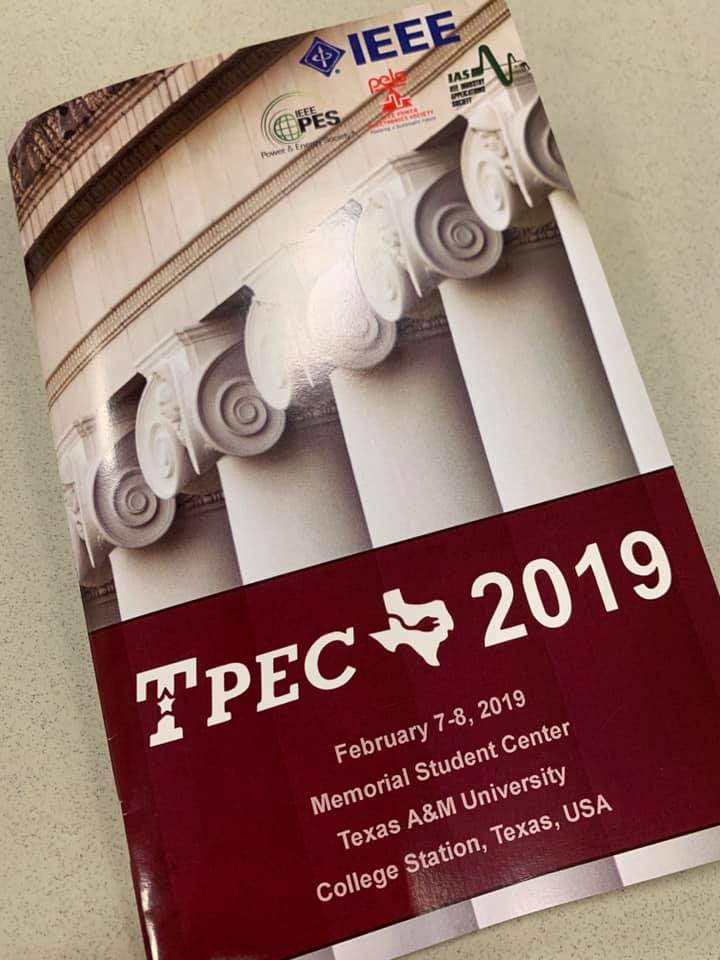
Enjoying the presentations going on at IEEE TPEC2019 (Texas Power and Energy Conference), including work we did with Dr. Kate Davis and her group, being presented by BiSSL MS student Varuneswara Panyam in College Station, TX.
Extreme events continue to show that existing power grid configurations can be vulnerable to disturbances. Drawing inspiration from naturally robust biological ecosystems presents a potential source of robust design guidelines for modern power grids. The robust network structure of ecosystems is partially derived from a unique balance between pathway efficiency and redundancy. Structural and basic-functional similarities support the application of ecological properties and analysis techniques to power grid design. The work presented here quantitatively investigates the level of similarity between ecosystems and power grids by applying ecological network metrics to a basic, realistic hypothetical 5-bus power system. A comparison between the power grid’s performance and average ecosystem performance substantiates the use of the ecological robustness metric for the development of a bio-inspired power grid optimization model. The bio-inspired optimization model re-configures the five-bus grid to mimic ecosystem robustness. The results demonstrate the potential of ecosystems to provide new robust design principles for power grids.
“Bio-Inspired Design for Robust Power Networks” first authored by Varuneswara Panyam
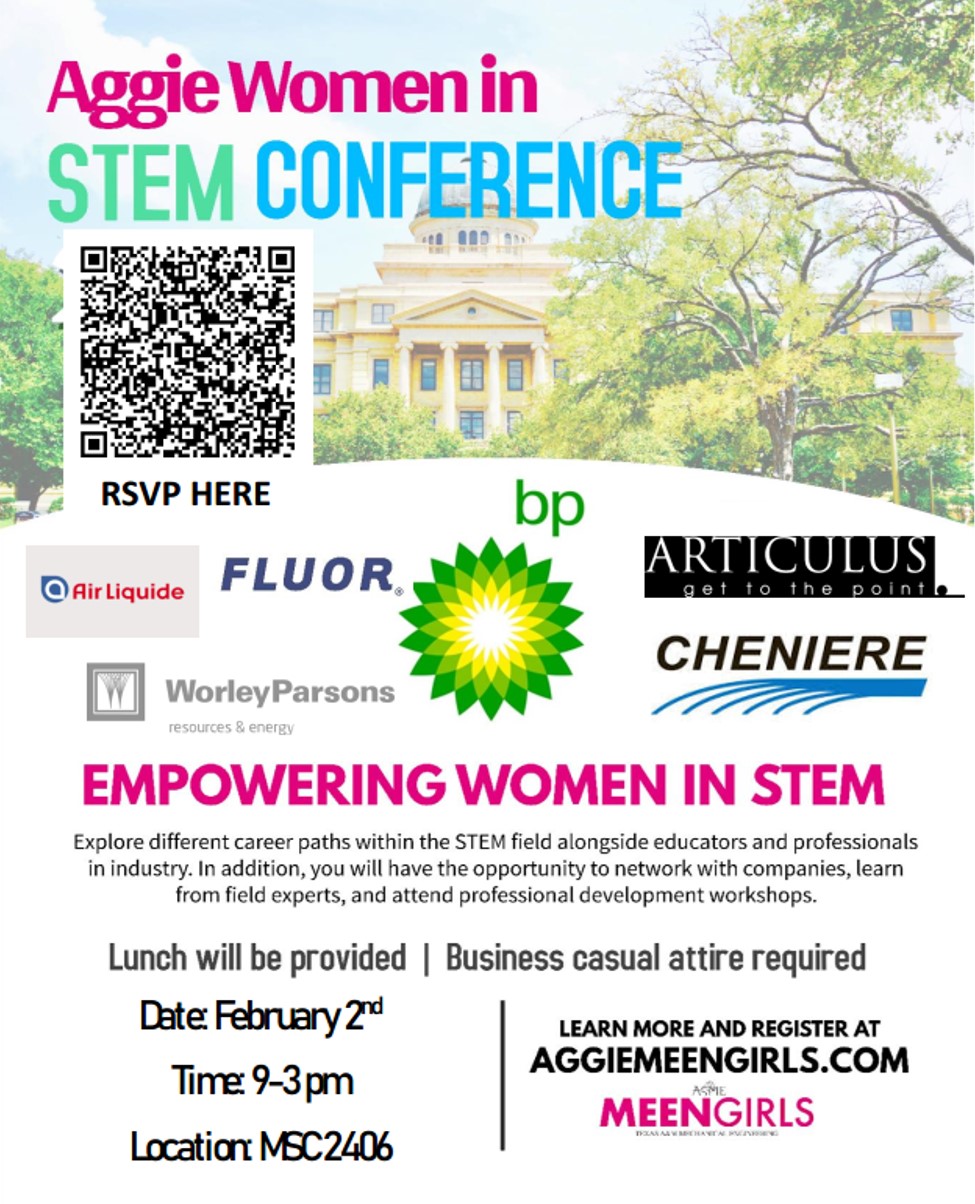
Come check out the 2nd annual Aggie Women in STEM conference hosted by the amazing undergraduate female student in Mechanical Engineering at Texas A&M (MEEN Girls) and open to all! February 2nd, 2019 9-3pm at MSC2406
The evolution of power systems has recently seen a strong increase in renewable energy integration. This evolution has resulted in bidirectional pathways with two-way exchanges between the grid and consumers that is beginning to resemble the cyclic organization of food webs. Ecologically-similar cycling of materials and energy in industrial networks has previously been shown to improve network efficiency and reduce costs. The cyclic organization of food webs is proposed here as a design principle to quantify the effectiveness of two-way connections between the grid and consumers. The presence of ecosystem-like cycling in traditional power grid networks is investigated using the ecological metrics cyclicity and cycling index. Two hypothetical 5-bus grids are modified to replicate the two-way exchanges of real power systems with consumer renewable energy generation. The results show a positive correlation between increased structural cycling in grids and reliability improvements measured by the North American Electric Reliability Corporation (NERC) standard N-1 contingency analysis. These results suggest that the metrics cyclicity and cycling index can play a role in quantifying and improving the sustainability of power grids.
“An ecosystem perspective for the design of sustainable power systems” first authored by Varuneswara Panyam
Economic, environmental, and social advantages have been achieved over the years through byproducts and waste exchanges between industries. These Eco-Industrial Parks (EIPs) are touted to be ecologically similar, however when they are analyzed using Ecological Network Analysis (ENA) techniques it has been found that they do not successfully mimic analogous ecosystems. ENA coupled with average food webs characteristics are used here to create a bio-inspired design optimization for the water distribution network of the Kalundborg EIP in Denmark. The bio-inspired solution is compared to a cost-based solution to illustrate what the former can offer beyond a conventional approach. Both solutions similarly minimize freshwater consumption, however the bio-inspired solution has additional benefits that suggest a more sustainable and robust design, such as the ability to maintain network function in the event of a connection losses. The results suggest that consumption and cost reductions alone may not be the best optimization route.
“Bio-inspired design for resilient water distribution networks” first authored by Tirth Dave
Industrial Ecology uses ecological systems as a guide for improving the sustainability of complex industrial systems. Eco-Industrial Parks (EIPs) have gained support as a solution that seeks to simultaneously reduce environmental burdens and promote economic interests by exchanging materials and energy between industries to their mutual benefit. Recent studies have focused on drawing relations between food webs (FWs) and EIPs to improve the sustainability of the latter using ecological metrics, such as the level of cycling or average connections between actors. This study incorporates a new ecological metric, nestedness, into the discussion of sustainable design for EIPs. The association of nestedness with mutualistic ecological networks supports its application to EIP design. The work here improves the understanding of holistic network structure with the goal of improving future design decisions for EIPs with purposeful placement of material and energy flows.
“Designing eco-industrial parks in a nested structure to mimic mutualistic ecological networks” first authored by Colton Brehm





 BiSSL: Bio-inspired Systems Lab